




Importing Wooden Crafts to Europe: Compliance, Certification & Quality Standards
Importing wooden crafts into Europe involves complex regulatory frameworks that have evolved significantly. If you source handcrafted wooden products from Asia or Africa for European distribution, understanding the EU Deforestation Regulation (EUDR), timber legality requirements, and customs documentation prevents costly shipment rejections.
This guide clarifies what compliance looks like from factory documentation to port of entry, helping you avoid common pitfalls that delay shipments and increase costs.
Why EU Wooden Product Regulations Keep Getting Stricter
The European Union prioritizes environmental sustainability and legal timber sourcing. The EUDR (EU Deforestation Regulation) replacing EUTR reflects stricter enforcement of supply chain transparency and consumer demand for deforestation-free products.
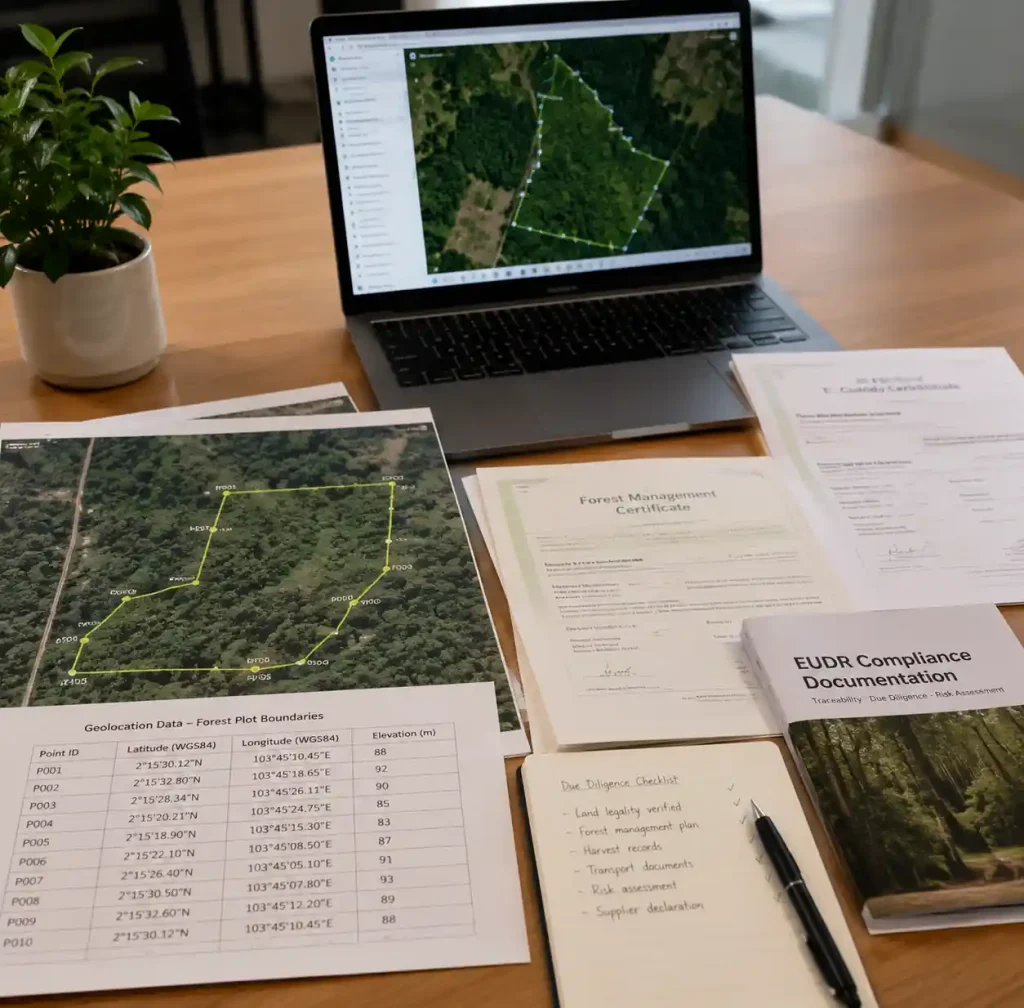
Taking effect December 30, 2025 for large operators and June 30, 2026 for small enterprises, EUDR requires geolocation data proving timber origin and deforestation-free status after December 31, 2020. This demands GPS coordinates and satellite imagery analysis—far beyond previous “legal harvest” verification.
For wooden animal sculptures, wooden desktop figurines, and handcrafted wooden art, this means documented supply chains from forest to finished product.
Understanding the EU Regulatory Framework
Three primary regulations govern wooden product imports, each addressing different compliance aspects.
| Regulation | Primary Focus | Implementation | Key Requirement | Products Affected |
|---|---|---|---|---|
| EUTR (995/2010) | Legal timber sourcing | Since March 2013 | Due diligence proving legal harvest | All timber products |
| EUDR (2023/1115) | Deforestation-free supply chains | Dec 2025/June 2026 | Geolocation + deforestation verification | Timber, furniture, paper, packaging |
| Toy Safety Directive (2009/48/EC) | Chemical and physical safety | Ongoing | EN 71 compliance + CE marking | Wooden toys under 14 |
| REACH Regulation | Chemical substance control | Ongoing | Restriction of hazardous substances | Products with surface treatments |
EUTR focuses on legality: Timber must comply with harvesting laws in the origin country, requiring harvest permits, concession licenses, and tax records. For wooden bracelets & beads using sandalwood or rosewood, CITES permits may be mandatory.
EUDR adds deforestation criteria: Even legally harvested timber fails if sourced from recently deforested land (after December 31, 2020). Operators must submit due diligence statements with precise geolocation coordinates.
Product-specific standards: Wooden toys need EN 71 testing. Wooden DIY puzzles for children require CE marking. Decorative items like wooden pendants face fewer restrictions unless marketed for children.
FSC and PEFC Certification: Are They Mandatory?
FSC/PEFC certification is not legally required but substantially simplifies due diligence verification. FSC-certified wood comes with chain-of-custody documentation proving timber moved through certified handlers. This satisfies most EUTR requirements and, combined with geolocation data, provides strong EUDR compliance evidence.
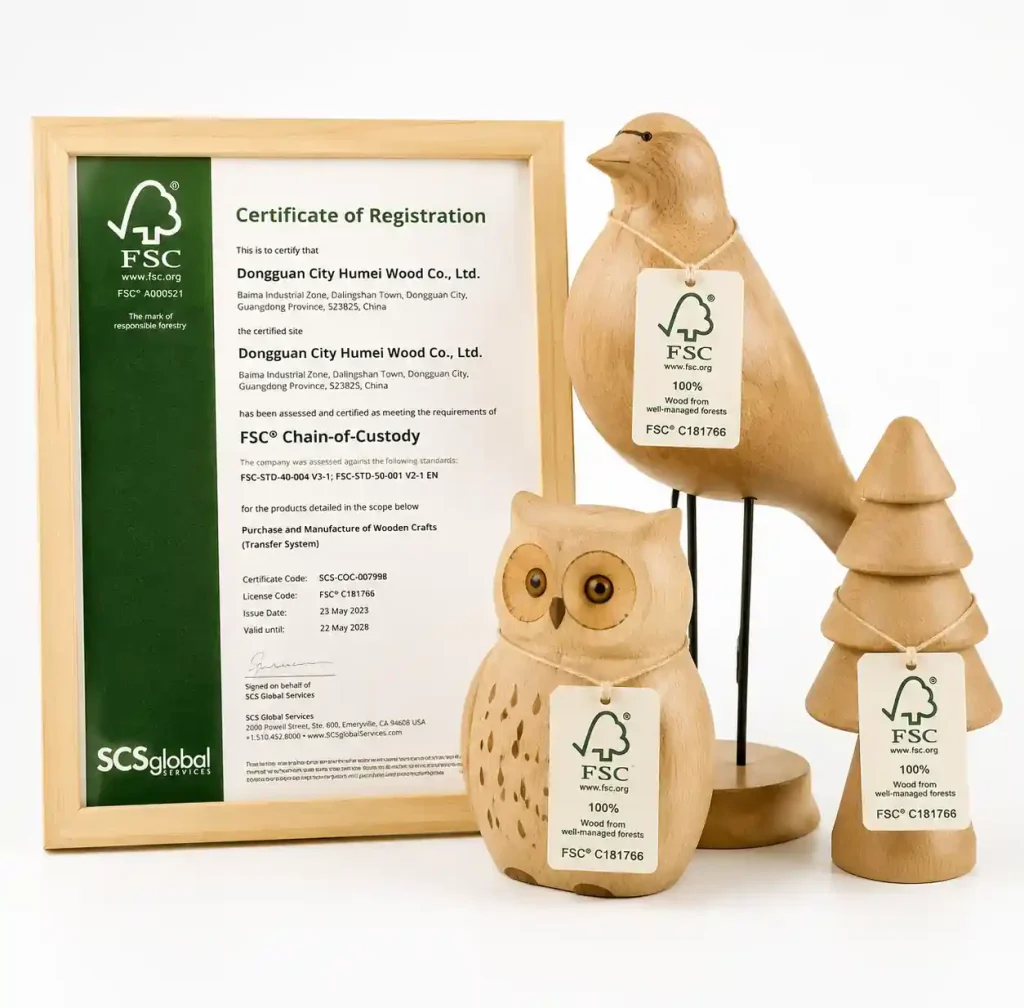
Major European retailers often require FSC/PEFC as supplier qualification. For executive office decor contracts with corporate clients, certification signals environmental responsibility.
Forest-level FSC certification costs $500-$5,000 annually, plus chain-of-custody certification ($1,000-$10,000 per facility). For artisan wooden sculptures, this can represent 5-15% of product value. Non-certified timber requires alternative documentation: harvest permits, land use rights, tax receipts, and regional risk assessment.
Essential Customs Documentation for Wooden Imports
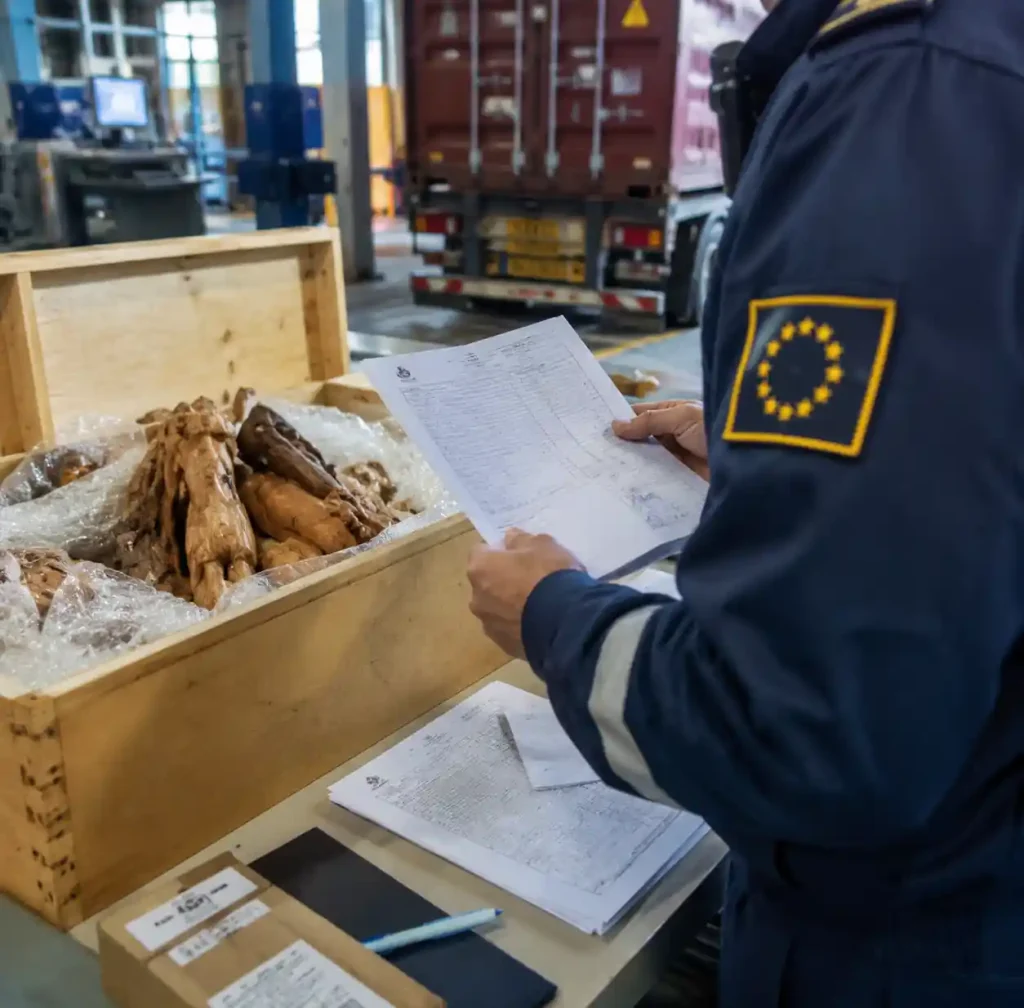
Proper documentation prevents customs delays. Here’s what European customs checks at point of entry.
Required documents for all wooden products:
- Commercial Invoice with detailed descriptions, HS codes, unit values, and origin
- Packing List itemizing contents with weights and dimensions
- Bill of Lading/Airway Bill proving shipment ownership
- Certificate of Origin for preferential duty rates

Wood-specific compliance documents:
- Phytosanitary Certificate certifying ISPM 15 heat treatment (56°C for 30 minutes)
- EUTR/EUDR Documentation including harvest permits, FLEGT licenses, and geolocation data
- CITES Permit for protected species (rosewood, sandalwood)
- EN 71 Test Reports (for toys) from accredited labs
- REACH Declaration for surface treatments
Quality Standards That Affect Market Access
Moisture Content Management: European climates are drier than tropical manufacturing regions. Holzskulpturen from 80% humidity regions shipped to 40% humidity areas develop cracks unless conditioned to 10-12% moisture content before carving.
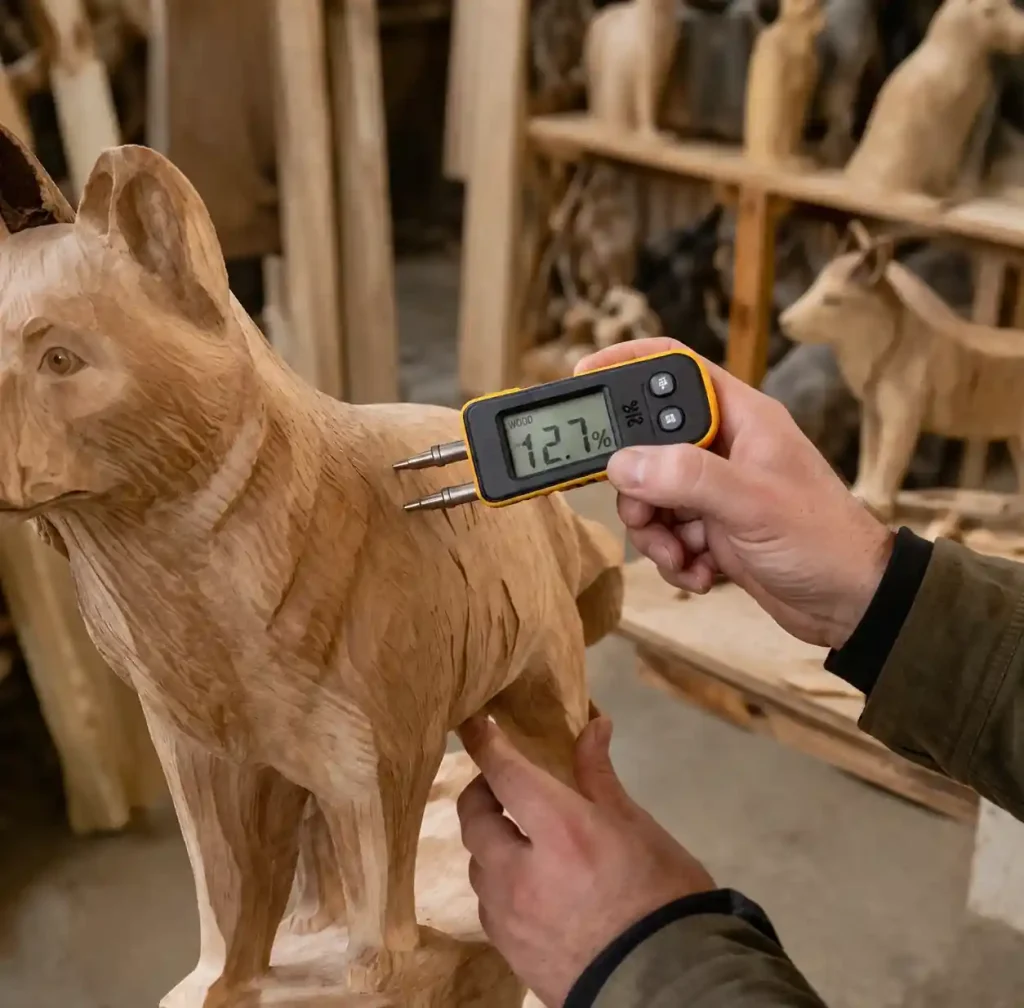
Our moisture management process uses controlled drying chambers where wood equilibrates 3-6 weeks before production, eliminating the 15-30% return rates from skipping conditioning.
Surface Finish Safety: EN 71-3 limits heavy metals in toy coatings (lead <90 ppm, chromium <60 ppm). Safe finishes include natural oils (tung, linseed), water-based polyurethanes, shellac, and carnauba wax.
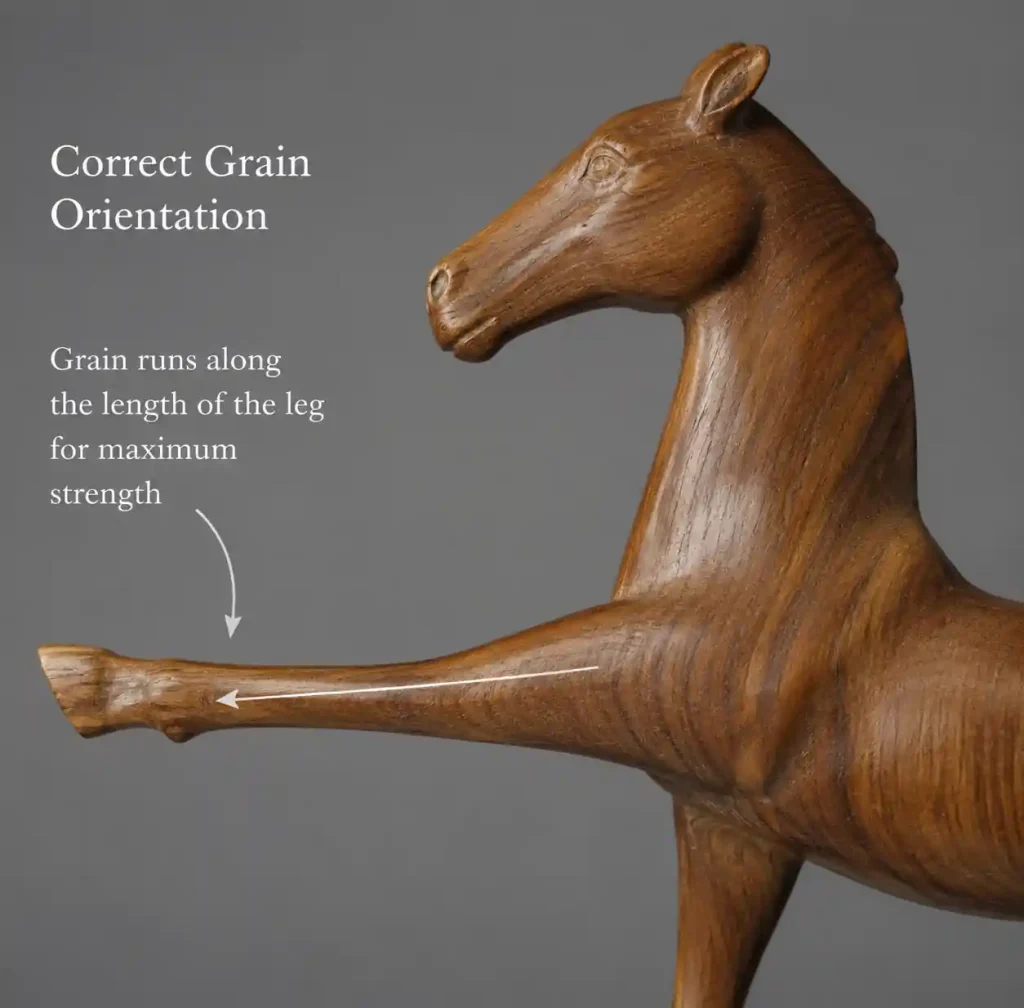
Structural Quality: Export quality requires grain orientation along vulnerable points, mortise-and-tenon joinery (not just glue), and packaging with individual bubble wrap plus 10cm edge cushioning.
Customs Duties and Import Costs
| Kostenkomponente | Typical Range | Notes |
|---|---|---|
| Customs Duty | 0-6.5% of CIF value | GSP may reduce to 0% |
| VAT | 19-27% | Applied on (CIF + duty) |
| Customs Broker Fee | €50-200 per shipment | Higher for complex documentation |
| Phytosanitary Inspection | €75-150 | If selected for physical inspection |
| Storage Fees | €20-50 per day | If documents delay clearance |
| CITES Permit Fee | €100-300 | One-time per permit application |
Example calculation for €10,000 FOB shipment to Germany:
- FOB: €10,000 + Freight €1,500 + Insurance €100 = €11,600 CIF
- Duty (2.7%): €313 + VAT (19% on €11,913): €2,263 + Broker Fee: €120
- Total Landed Cost: €14,296

Shipping Logistics Considerations
Sea freight: 25-45 days, €3,000-6,000 from Asia. Economical for volumes over 15m³.
Air freight: 5-10 days, €4-8/kg. Suitable for high-value premium sculptures or rush orders.
Express courier: 3-7 days, €8-15/kg for samples and corporate gifts under 100kg.

Incoterms: FOB (buyer manages shipping), CIF (seller handles freight), DDP (seller manages everything including duties). We recommend CIF for new importers.
Common Compliance Mistakes
Incomplete CITES documentation: Verify current permit requirements for your specific botanical name. Rules change frequently for species like rosewood.
Missing phytosanitary certificates: Europe requires pest treatment certification for virtually all solid wood.
Vague product descriptions: List detailed descriptions with dimensions and wood species.
Inadequate EUDR preparation: Start mapping supply chains now. The regulation requires historical data with GPS coordinates.
Mixing certified/non-certified products: Don’t claim FSC for shipments containing both without proper segregation documentation.
Working with Manufacturers Who Understand EU Compliance
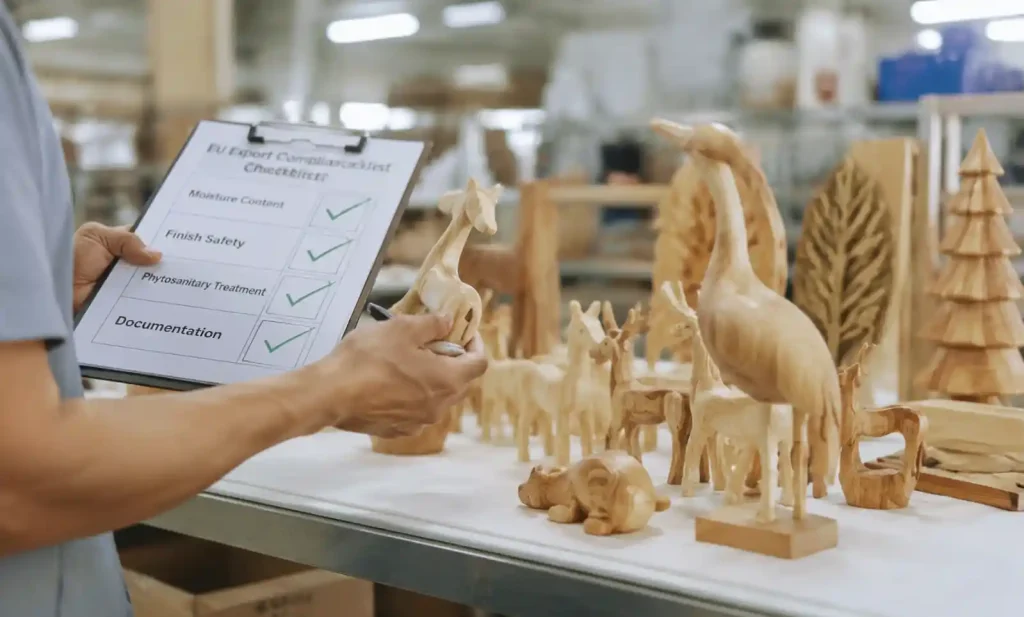
Verify these capabilities:
Supply chain transparency: Can they provide forest origin with GPS coordinates?
Quality control systems: Do they measure moisture content and test surface treatments?
Export documentation experience: Have they successfully shipped to Europe with customer references?
Regulatory awareness: Do they track EUDR timelines and understand required documentation?
At FineWoodArt, we maintain geolocation mapping for timber sources, FSC chain-of-custody certification, and partnerships with European customs brokers for pre-clearance. Our OEM/ODM services include compliance consultation, phytosanitary certification, and EN 71 testing arrangements for wooden toys.
Häufig gestellte Fragen
Do all wooden products need FSC certification to enter Europe?
No. FSC/PEFC is not legally mandatory but substantially simplifies EUTR/EUDR compliance. Non-certified timber requires more extensive due diligence documentation proving legal harvest and deforestation-free status.
What’s the difference between EUTR and EUDR?
EUTR (2013) prohibits illegally harvested timber, requiring proof of legal harvest. EUDR (late 2025) adds deforestation-free requirements with mandatory geolocation data, applying even to legally harvested timber from recently deforested areas.
Are wooden decorative items subject to EN 71 standards?
Only if marketed for children under 14 or with child-appeal. Adult decorative sculptures, office décor, and art pieces don’t require EN 71 compliance, though REACH chemical safety rules still apply.
How long does customs clearance typically take?
With complete documentation: 2-4 days. If documents are missing: 2-6 weeks while obtaining proper certification, often requiring shipment return to origin. Incomplete EUTR documentation can delay clearance indefinitely.
Can I import items made from protected species with CITES permits?
Yes, but both export permits (origin country) and import permits (EU member state) are required before shipping. Processing takes 2-8 weeks. We recommend avoiding CITES-listed species unless specifically required, as permit complexity adds significant cost and timing risk.
Fazit
Successfully importing wooden crafts to Europe requires understanding timber legality and deforestation verification under EUTR/EUDR, product-specific safety standards, and customs documentation including phytosanitary certification. EUDR’s 2025-2026 implementation demands geolocation data and deforestation analysis beyond previous requirements.
Working with manufacturers who maintain supply chain transparency, proper moisture conditioning, and complete export documentation eliminates common delays and rejections. The investment in compliance systems pays through faster clearance, lower rejection rates, and access to major retailers requiring verified sustainable sourcing.
If you need compliant wooden crafts for European distribution, FineWoodArt offers comprehensive OEM/ODM services with regulatory support, FSC options, and EUDR readiness documentation. Contact us for compliance guidance specific to your product category and target markets.