





Authentic Sandalwood & Ebony: How to Identify Premium Wooden Bead Bracelets
Wooden bead bracelets have surged in popularity as mindful accessories that connect wearers to nature’s timeless beauty. Yet the market is flooded with imitations—dyed wood masquerading as sandalwood, composite materials posing as ebony, and artificially scented beads that fade within weeks. For anyone seeking the genuine therapeutic aroma of sandalwood or the deep, lustrous elegance of ebony, knowing how to distinguish authentic premium pieces from counterfeits is essential.
This guide draws on traditional woodworking knowledge and material science to help you identify high-quality wooden bead bracelets with confidence. Whether you’re purchasing for personal wear, wellness practices, or as a meaningful gift, understanding the markers of authenticity ensures your investment delivers lasting value—both aesthetically and spiritually.
1. Why Authenticity Matters in Wooden Bead Bracelets
Authentic wooden bead bracelets are more than fashion accessories—they represent centuries of craftsmanship, sustainable harvesting practices, and cultural heritage. Premium sandalwood and ebony command higher prices because of their rarity, slow growth cycles, and unique properties that cannot be replicated synthetically.
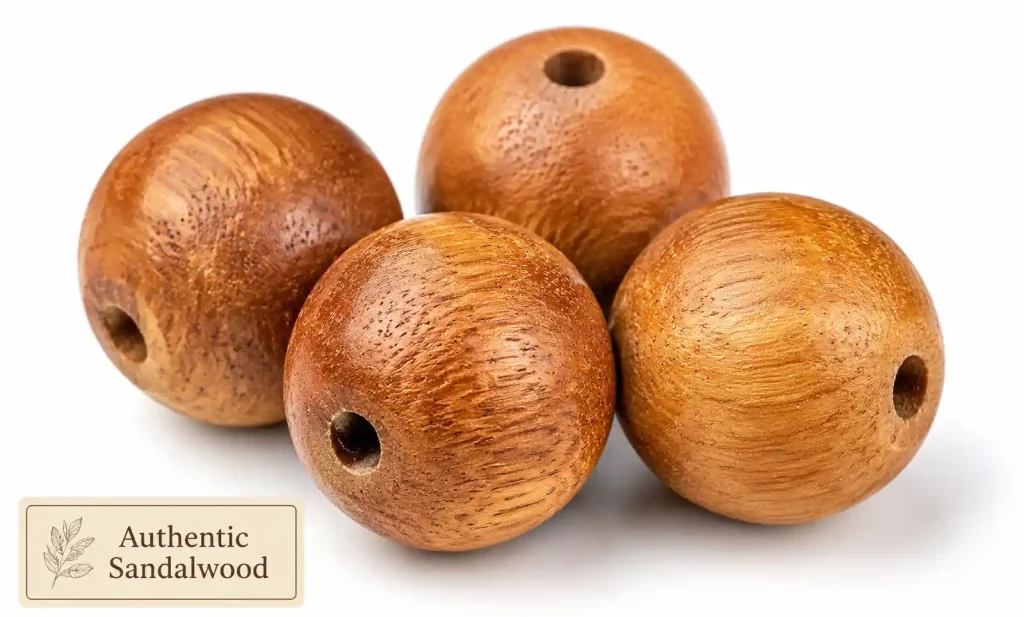
Genuine sandalwood (Santalum album or Santalum spicatum) contains natural aromatic oils that release a calming, slightly sweet fragrance when worn against the skin. This scent has been valued in meditation practices, traditional medicine, and spiritual rituals across Asia and the Middle East for thousands of years. Authentic ebony (Diospyros species), particularly Macassar ebony and African blackwood, is prized for its exceptional density, fine grain, and deep, almost metallic luster that develops over time.
Counterfeit pieces rob buyers of these intrinsic qualities. Dyed pine or low-grade hardwoods may look similar initially but lack the aromatic complexity, weight, grain structure, and aging characteristics of genuine materials. Beyond personal disappointment, purchasing fake wooden beads perpetuates unsustainable practices and undermines artisan communities who depend on the authentic wood carving trade.
Understanding what separates premium from imitation protects both your investment and the integrity of traditional woodcraft. When you can confidently identify authentic materials, you support ethical sourcing, reward skilled craftsmanship, and acquire a piece that will deepen in character with age rather than deteriorate.
2. Understanding Sandalwood & Ebony: Origins and Cultural Significance
Sandalwood: The Sacred Aromatic
Sandalwood has been revered across Hindu, Buddhist, and Islamic traditions for millennia. Indian sandalwood (Santalum album), often called “liquid gold,” grows primarily in Karnataka and Tamil Nadu, requiring 15 to 30 years to mature before harvest. Australian sandalwood (Santalum spicatum) offers a similar but slightly earthier aroma and is harvested under strict sustainability protocols in Western Australia.
The wood’s aromatic compounds—alpha-santalol and beta-santalol—are concentrated in the heartwood and have been studied for their calming effects on the nervous system. Traditional Ayurvedic medicine uses sandalwood paste for cooling and anti-inflammatory purposes, while Buddhist monks have long incorporated sandalwood malas in meditation to enhance focus and tranquility.
In Chinese culture, sandalwood is associated with purification and spiritual protection. High-quality sandalwood beads are often passed down through generations, their scent deepening and mellowing with age and body oil absorption—a phenomenon impossible to replicate with synthetic fragrances.
Ebony: The Dark Treasure
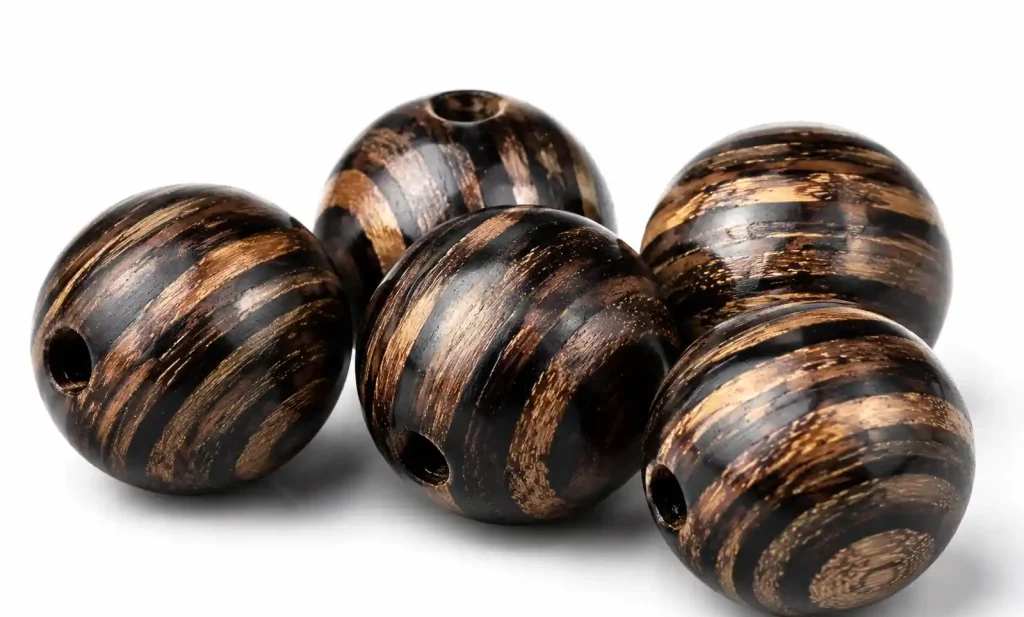
Ebony has symbolized strength, elegance, and permanence across African, Southeast Asian, and South Asian cultures. Macassar ebony (Diospyros celebica), native to Indonesia, displays dramatic black and tan striping and has been used in high-end furniture, musical instruments, and ceremonial objects for centuries. African blackwood (Dalbergia melanoxylon), one of the world’s densest timbers, is prized for woodwind instruments and fine carvings.
In Feng Shui practice, ebony is believed to absorb negative energy and provide grounding stability. Its extreme hardness—often rating above 3,000 on the Janka scale—makes it highly durable yet challenging to carve, which is why authentic ebony beads command premium prices. The wood’s natural oils give it a subtle sheen that intensifies with wear, creating a patina that synthetic materials cannot achieve.
Both woods are now subject to international trade regulations under CITES (Convention on International Trade in Endangered Species) due to overharvesting. Reputable suppliers should provide certification or documentation of sustainable sourcing, particularly for Indian sandalwood and certain ebony species.
3. Key Identification Methods for Premium Wooden Beads
Identifying authentic sandalwood and ebony requires examining multiple sensory and physical characteristics. Counterfeiters often replicate one or two markers—such as color or basic scent—but rarely master all the subtle details that genuine materials exhibit.
Visual Inspection: Grain and Color Consistency
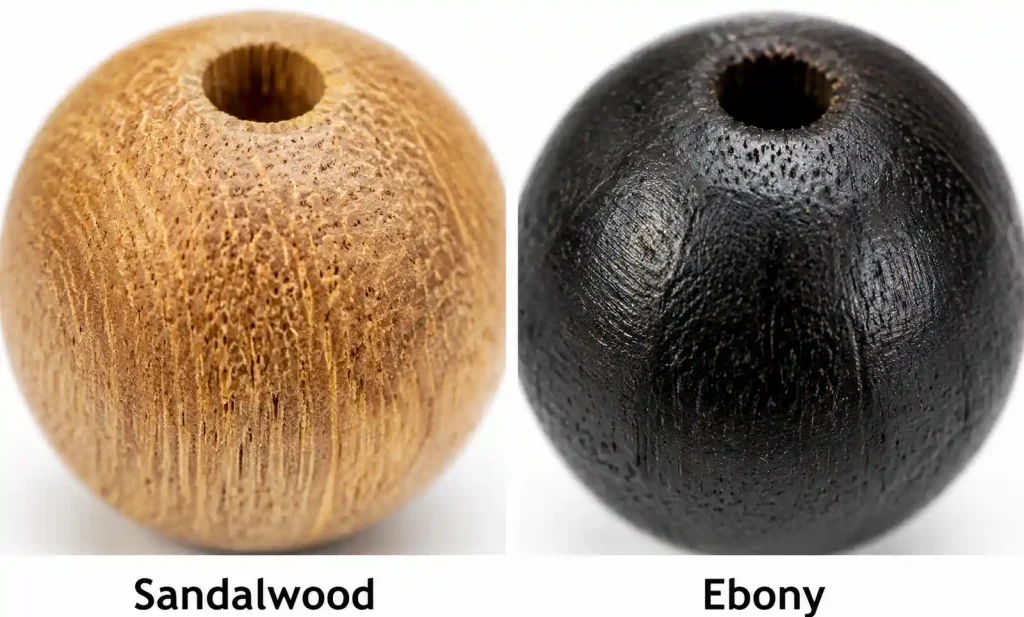
Authentic sandalwood heartwood ranges from pale golden-yellow to reddish-brown, often with subtle variations within a single bead. The grain is typically fine and close, sometimes exhibiting slight darker streaks. Under magnification, you should see natural wood pores and fibers—uniform, perfectly smooth surfaces suggest resin casting or plastic.
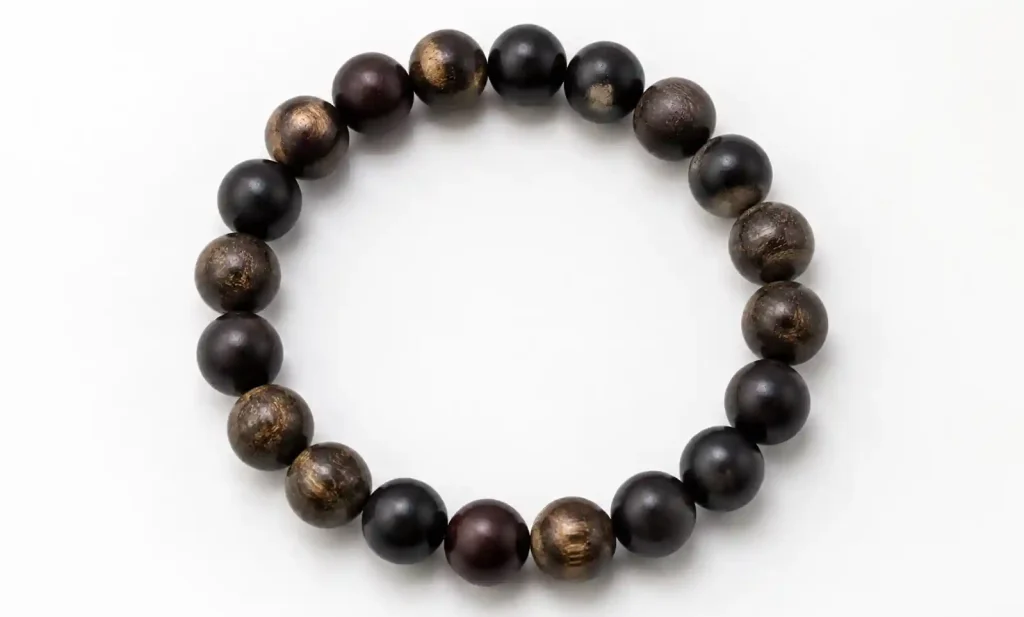
Genuine ebony displays deep black to dark brown tones, often with natural tan, gray, or reddish striping (especially in Macassar varieties). The grain is exceptionally fine and dense. Beads that appear perfectly uniform in color without any tonal variation are likely stained lower-grade wood. Authentic ebony’s surface, when unpolished, has a matte texture that transforms into a glass-like finish with prolonged wear.
| Wood Type | Authentic Color Range | Grain Characteristics | Surface Texture |
|---|---|---|---|
| Indian Sandalwood | Pale gold to reddish-brown | Fine, close grain with occasional darker streaks | Slightly waxy, smooth but not glassy when new |
| Australian Sandalwood | Light tan to honey-brown | Fine, even grain with subtle color variation | Dry to touch, develops slight sheen with wear |
| Macassar Ebony | Black with tan/brown striping | Extremely fine, tight grain with dramatic color contrast | Dense, heavy feel; takes high polish naturally |
| African Blackwood | Deep black to dark purple-brown | Uniform ultra-fine grain, occasionally with reddish tints | Hardest of all; cold to touch, naturally lustrous |
This table helps you match visual characteristics to specific wood species. If a seller cannot specify which type of sandalwood or ebony variety they’re offering, that’s often a warning sign of low-quality or misrepresented material.
Scent Test: The Aromatic Signature
This is perhaps the most reliable identifier for sandalwood. Authentic sandalwood releases a warm, creamy, slightly sweet fragrance with woody and milky undertones. The scent should be subtle when the beads are at rest but intensify slightly when rubbed or warmed between your palms.
Fake sandalwood often smells artificially sweet, chemically sharp, or overly perfume-like. If the scent is strong immediately upon opening the package, it’s likely from applied fragrance oils rather than the wood itself. Genuine sandalwood’s aroma persists for years, even decades, though it becomes more mellow and less immediately detectable over time. If the seller claims the scent will “recharge” by adding essential oil, the beads are probably not authentic sandalwood.
Ebony has minimal natural scent—perhaps a faint earthy or slightly resinous note when freshly cut, but mature ebony beads should be virtually odorless. Any strong chemical smell indicates treatment with dyes or stabilizers.
Weight and Density: The Heft Test
Density is a key physical property that counterfeiters struggle to replicate. Genuine sandalwood has a specific gravity of approximately 0.90–1.05, meaning it feels moderately heavy for wood—distinctly denser than pine or bamboo. A standard 8mm sandalwood bead bracelet should have noticeable weight in your palm.
Ebony is exceptionally dense, with specific gravity ranging from 1.10 to 1.33 depending on the species. Authentic ebony beads feel almost stone-like—cold, heavy, and solid. They will sink in water, unlike most wood species. If a bracelet advertised as ebony feels lightweight or warm to the touch like regular wood, it’s likely stained walnut, palm wood, or composite material.
Surface Characteristics and Finishing
Premium wooden bead bracelets are typically hand-finished with natural oils or wax, never thick lacquer or synthetic coatings. Run your fingertips over the surface—authentic pieces should feel smooth but slightly organic, with minor variations in texture between beads. Factory-produced imitations often have perfectly uniform, almost plastic-like surfaces.
Examine the bead holes closely. In handcrafted authentic bracelets, hole sizes and edges may vary slightly, and you’ll see the natural wood grain continuing through the bore. Machine-drilled holes in composite or resin beads often show no internal grain structure or reveal a different core color than the surface.
4. Red Flags: How to Spot Fake or Low-Quality Pieces
Even with the best identification techniques, some counterfeits are sophisticated. Being aware of common deceptions helps you avoid costly mistakes.
Price Too Good to Be True
Authentic Indian sandalwood bracelets typically start around $40–60 for basic 8mm beads, with premium old-growth pieces reaching $150–300 or more. Genuine ebony bracelets of comparable size range from $50–100 for African blackwood to $200+ for exhibition-grade Macassar ebony. If you encounter “sandalwood” or “ebony” bracelets priced under $20, they are almost certainly not authentic.
Unethically harvested or lower-grade materials may be cheaper but come with environmental and quality concerns. Reputable sellers transparently explain their sourcing and pricing structure.
Vague Material Descriptions
Watch for terms like “sandalwood scent,” “sandalwood fragrance beads,” “ebony-toned wood,” or “sandalwood-inspired.” These phrases indicate the material is not genuine but treated to resemble authentic wood. Legitimate sellers specify the exact species—Santalum album, Santalum spicatum, Diospyros celebica, etc.
Similarly, “compressed wood,” “composite wood,” or “wood blend” are euphemisms for wood particles bonded with resin—functionally closer to plastic than solid wood.
Uniform Perfection Across All Beads
Natural wood always shows variation. If every bead in a bracelet is identical in color, grain pattern, and size, it’s likely mass-produced from synthetic material or low-grade wood. Authentic wooden bead bracelets embrace slight imperfections—subtle color shifts, tiny knots, minor grain irregularities—that reflect the organic nature of the material.
Strong Initial Scent That Fades Quickly
Applied fragrance oils can mimic sandalwood’s aroma temporarily, but they dissipate within days or weeks. Genuine sandalwood’s scent is embedded in the wood’s cellular structure and persists for years. If a seller warns that the scent “needs time to develop” or recommends applying oil to maintain fragrance, the beads are not authentic sandalwood.
Lack of Sourcing Information or Certifications
Given CITES regulations on endangered wood species, reputable suppliers should offer transparency about sourcing. For sandalwood, look for documentation indicating legal harvest from certified plantations or sustainable forestry programs. For ebony, ask about species identification and legal import documentation.
Sellers who cannot or will not provide this information may be trading in illegally harvested or misrepresented materials.
| Red Flag | What It Indicates | What to Ask For |
|---|---|---|
| Price under $20 for “sandalwood” or “ebony” | Likely fake or heavily treated low-grade wood | Detailed material specification and sourcing info |
| Strong artificial scent out of the package | Applied fragrance oils, not genuine sandalwood | Scent longevity guarantee or return policy |
| Perfect uniformity across all beads | Mass-produced synthetic or composite material | Photos of actual product showing natural variation |
| No species name, just “sandalwood” or “ebony” | Ambiguous sourcing, possibly mixed or fake materials | Exact botanical name and harvest region |
| No information on sustainability or legality | Potential illegal harvest or CITES violation | Certifications, plantation source, or legal import docs |
When any of these red flags appear, ask detailed questions. A knowledgeable, ethical seller will welcome inquiries and provide clear, specific answers. Evasive or generic responses are a strong signal to look elsewhere.
5. Comparing Sandalwood vs Ebony Bracelets
Both materials offer unique qualities suited to different preferences and purposes. Understanding their distinct characteristics helps you choose the right piece for your needs or recommend appropriate options to others.
Aesthetic and Tactile Experience
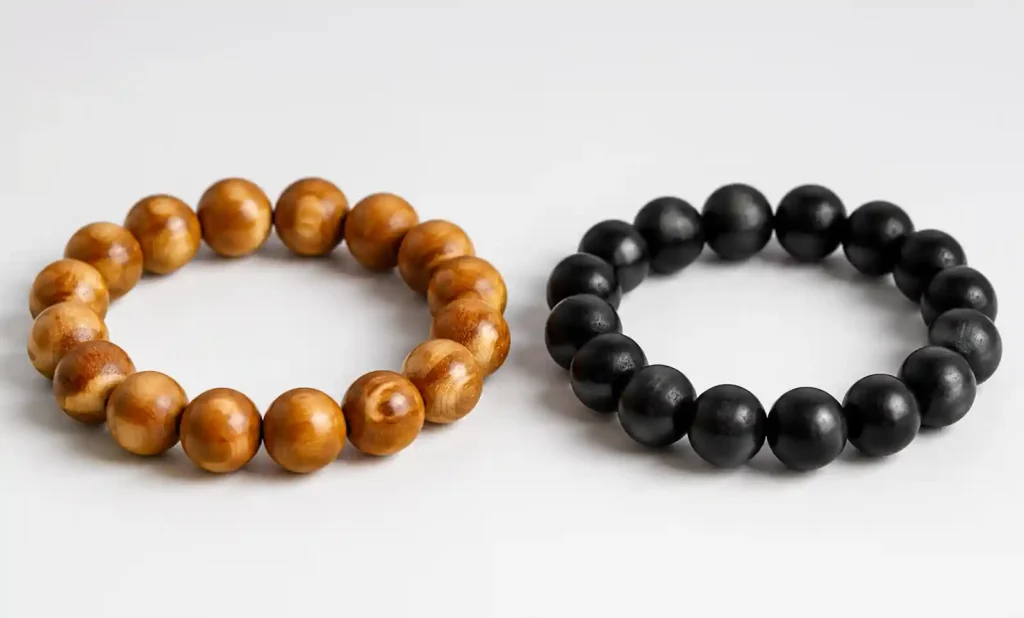
Sandalwood bracelets offer warm, honeyed tones that pair beautifully with both casual and refined wardrobes. The lighter color makes them versatile and unobtrusive, while the subtle aromatic presence creates a personal sensory experience. Sandalwood feels slightly waxy and warm to the touch, developing a gentle patina as natural body oils absorb into the wood over time.
Ebony bracelets make a bold visual statement with their dark, lustrous finish. The color ranges from pure black to dramatic black-and-tan striping, depending on the species. Ebony feels distinctly cooler and harder than sandalwood, with a substantial heft that conveys permanence and strength. The surface takes on a mirror-like polish with prolonged wear, creating an elegant sophistication.
Cultural and Symbolic Associations
Sandalwood is often chosen by those drawn to meditation, mindfulness practices, or spiritual traditions rooted in Hinduism, Buddhism, and Ayurveda. It symbolizes purity, devotion, and inner peace. Wearing sandalwood is considered auspicious in many South Asian cultures and is believed to promote calm mental states.
Ebony resonates with those seeking grounding, protection, and resilience. In African traditions, ebony represents ancestral strength and enduring wisdom. In Feng Shui, ebony is thought to absorb negative energy and provide stability during times of change. It appeals to individuals who appreciate understated power and timeless elegance.
Durability and Longevity
Ebony outperforms sandalwood in pure physical durability. Its extreme hardness resists scratching, denting, and wear, making it ideal for everyday wear in demanding environments. Ebony beads can last multiple lifetimes with minimal care.
Sandalwood is moderately durable but softer than ebony. It can develop minor surface wear over years of use, which many wearers appreciate as part of the wood’s evolving character. However, sandalwood is more susceptible to damage from impacts or abrasive contact.
Aromatic Dimension
This is sandalwood’s defining advantage. The continuous release of natural fragrance provides an ongoing sensory experience that ebony cannot offer. For individuals who value aromatherapy, natural perfumes, or simply enjoy subtle scent throughout the day, sandalwood is unmatched.
Ebony is odorless and appeals to those who prefer their accessories without scent—particularly useful for professional settings with fragrance-sensitive colleagues or individuals with scent sensitivities.
| Factor | Sandalwood Bracelets | Ebony Bracelets |
|---|---|---|
| Color & Appearance | Warm honey to reddish-brown tones, lighter and more neutral | Deep black to black-with-striping, bold and dramatic |
| Weight | Moderate density, comfortable for all-day wear | High density, substantial and noticeable on wrist |
| Scent | Signature warm, creamy, woody fragrance that lasts years | Virtually odorless, neutral |
| Hardness | Medium hardness; develops character marks over time | Extremely hard; resists wear and maintains polish |
| Cultural Associations | Meditation, spirituality, purity, devotion (South Asian traditions) | Strength, protection, grounding, resilience (African, Asian traditions) |
| Best For | Mindfulness practices, aromatherapy enthusiasts, versatile daily wear | Statement accessory, professional settings, high-durability needs |
| Price Range (8mm beads) | $40–$300+ depending on age and origin | $50–$250+ depending on species and quality |
Use this comparison to align your choice with personal style, intended use, and symbolic meaning. For meditation or yoga practice, sandalwood’s aromatic and cultural associations make it particularly appropriate. For formal business settings or as a long-term heirloom piece, ebony’s durability and sophisticated appearance offer distinct advantages.
6. Care and Maintenance for Longevity
Premium wooden bead bracelets are investments that, with proper care, improve with age. Both sandalwood and ebony benefit from mindful maintenance practices that preserve their beauty and functional qualities.
Daily Wear Practices
Wear your wooden bead bracelet directly against skin when possible. Natural body oils help condition the wood, enhancing its luster and depth over time. For sandalwood, skin contact also activates the aromatic oils, releasing fragrance gradually throughout the day.
Remove your bracelet before showering, swimming, or washing hands. Prolonged water exposure can cause wood fibers to swell and contract repeatedly, leading to microcracks. Chlorinated or saltwater is particularly harsh on organic materials.
Avoid exposing wooden beads to harsh chemicals, perfumes, lotions, or cleaning products. Apply personal care products before putting on your bracelet, allowing them to fully absorb into skin first.
Cleaning Methods
For routine maintenance, simply wipe beads with a soft, dry cloth after wearing to remove perspiration and skin oils. This prevents buildup that can dull the wood’s natural sheen.
For deeper cleaning, use a barely damp cloth with plain water, then immediately dry thoroughly with a soft towel. Never soak wooden bracelets or use soap, alcohol, or commercial cleaners unless specifically formulated for fine wood.
If sandalwood begins to look dry or dull after months or years of wear, you can lightly condition it with a tiny amount of jojoba oil or unscented wood conditioner applied with a soft cloth, then buffed away. Use this treatment sparingly—over-oiling can darken the wood excessively.
Ebony rarely requires conditioning due to its natural oil content and density. Buffing with a soft cloth is usually sufficient to maintain its polish.
Storage Guidelines
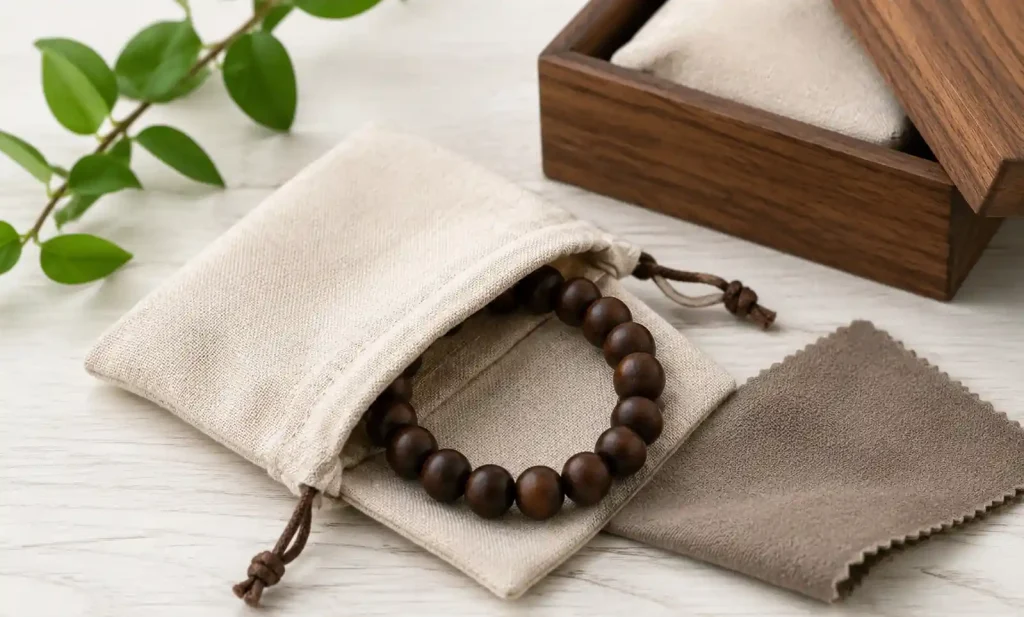
Store wooden bead bracelets in a cool, dry place away from direct sunlight, which can fade color and dry out aromatic oils. A fabric pouch or wooden box provides ideal protection while allowing air circulation.
Avoid storing in sealed plastic bags or airtight containers, which can trap moisture and promote mold growth. If you live in a very dry climate, placing a small humidity pack in your storage box can prevent excessive drying.
Keep sandalwood separate from other jewelry to allow its fragrance to develop without interference from metal or synthetic materials. Ebony can be stored alongside other pieces without issue.
Addressing Wear and Aging
Minor surface scratches on sandalwood often blend naturally into the wood’s patina over time. For deeper scratches, very fine sandpaper (1000-grit or higher) followed by conditioning can restore smoothness, though this is rarely necessary.
Ebony’s hardness makes it highly scratch-resistant, but if surface damage occurs, a jeweler experienced with exotic hardwoods can re-polish the beads. The wood’s density allows for repeated polishing without structural compromise.
Both materials benefit from occasional “rest days” when not worn, allowing accumulated moisture to evaporate and giving the wood time to stabilize. This is particularly important in humid climates or during summer months.
7. FAQ
What is the difference between Indian and Australian sandalwood?
Indian sandalwood (Santalum album) is considered the premium variety, with a richer, creamier fragrance and slightly denser wood. It’s more expensive due to limited supply and high demand. Australian sandalwood (Santalum spicatum) offers a similar but earthier, slightly sharper aroma at a more accessible price point. Both are genuine sandalwood, and Australian varieties are often more sustainably sourced due to established plantation systems.
How can I tell if my sandalwood bracelet is real by scent alone?
Rub a few beads between your palms for 10-15 seconds to generate warmth, then smell immediately. Authentic sandalwood releases a warm, woody, slightly sweet aroma with creamy and milky undertones—never sharp, synthetic, or overly perfume-like. The scent should be subtle yet distinct, not overwhelming. If it smells like department store fragrance or fades within days, it’s likely applied oil on fake wood.
Does genuine ebony always sink in water?
Yes, authentic ebony has such high density (specific gravity above 1.0) that it will sink in fresh water. This is a reliable field test for ebony versus stained lighter woods, which float. However, be cautious with this test if beads are already strung, as the cord may affect buoyancy, and prolonged water exposure isn’t ideal for maintaining the bracelet.
Why are some “sandalwood” bracelets so cheap?
Bracelets under $20-25 are typically made from lower-grade woods like pine or acacia, dyed and scented to resemble sandalwood. Genuine sandalwood requires decades to mature, is subject to strict harvesting regulations, and involves skilled handcrafting—all of which contribute to higher costs. Authentic pieces start around $40-60 for basic quality and increase significantly for old-growth or premium-grade wood.
Can I restore the scent if my sandalwood bracelet loses fragrance?
Genuine sandalwood’s aroma can become less noticeable over time as surface oils are absorbed by skin and environmental exposure. Lightly sanding the bead surfaces with very fine sandpaper (1500-grit or higher) exposes fresh wood and revives the scent. This works because the aromatic compounds are throughout the wood, not just on the surface. If scent doesn’t return after this treatment, the material was likely not authentic sandalwood.
How do I know if my ebony bracelet is Macassar or African blackwood?
Macassar ebony typically shows dramatic striping with tan, brown, or gray streaks against black. African blackwood is more uniform in color—deep black to dark purple-brown with minimal striping. Macassar is slightly less dense and has more visible grain contrast, while African blackwood is among the densest woods in the world and often appears almost stone-like. Reputable sellers should identify the specific species.
Are wooden bead bracelets suitable for people with sensitive skin?
Generally yes, particularly sandalwood and ebony, which are natural, unprocessed materials. However, some individuals may react to specific wood oils. If you have known wood allergies or very sensitive skin, test by wearing the bracelet for short periods initially. Avoid pieces with applied dyes, fragrances, or finishes, which are more likely to cause irritation than pure wood.
How long do authentic wooden bead bracelets last?
With proper care, sandalwood bracelets can last 10-20 years or more, with the wood developing a beautiful patina and the scent mellowing but persisting. Ebony bracelets can last multiple lifetimes—50-100 years or longer—due to the wood’s exceptional hardness and stability. Both improve with age when cared for properly, making them true heirloom pieces.
8. Final Thoughts: Making an Informed Choice
Spotting real sandalwood and ebony beads isn’t about a single magic test—it’s about putting the pieces together: grain, weight, smell, price, and who you’re buying from. Look for all of them, not just one.
If you love sandalwood for its warm scent and calming vibe, buy from sellers that name the species (Santalum album or spicatum) and can tell you where it was grown. For ebony’s bold look and durability, ask for clear IDs like Macassar or African blackwood, and proof of legal sourcing.Beyond the bracelet itself, buying genuine stuff supports sustainable forestry, skilled artisans, and fair supply chains. You’re not just getting an accessory—you’re getting a piece of craft that ages beautifully.
Whether for yourself or as a gift, use the tips here, ask questions, and trust your senses. Real sandalwood and ebony speak for themselves—and they reward careful buyers with lasting beauty.