





Why High-Quality Wooden Swords Are Becoming a Trendy Collectible Globally
The global collectibles market reached $320.3 billion in 2025 and is projected to hit $535.5 billion by 2033 (CAGR 6.9%). Within this booming landscape, high-quality wooden swords have emerged as one of the most sought-after categories—blending artistry, craftsmanship, and cultural heritage into pieces that resonate with martial artists, interior designers, and discerning collectors across North America, Europe, and Australia.
The Rising Appeal of Wooden Sword Collectibles
The surge in wooden sword collecting reflects a broader shift toward authenticity and craftsmanship in the collectibles market. Unlike mass-produced decorative items, high-quality wooden swords offer a tangible connection to martial arts traditions spanning centuries.
Social media has amplified this trend significantly. Martial arts enthusiasts, interior designers, and collectors have built vibrant online communities on Instagram and Pinterest, driving aesthetic appreciation for these functional art pieces. The rise of HEMA (Historical European Martial Arts) and Asian martial arts practice in Western countries has further legitimized wooden training weapons as both practical tools and display-worthy collectibles.
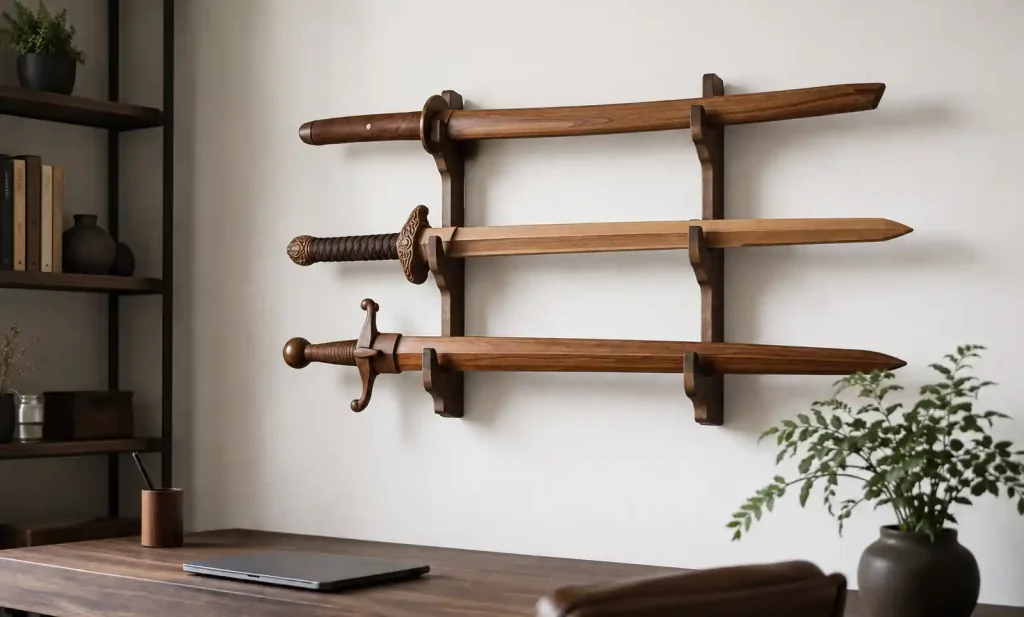
Additionally, the shift toward sustainable, natural materials in home decor positions wooden swords as environmentally conscious alternatives to metal replicas. Each piece showcases unique wood grain patterns, making every sword a one-of-a-kind artifact that complements both traditional and contemporary interiors.
Cultural Heritage and Craftsmanship
Understanding the cultural significance of wooden swords enhances their collectible appeal.
Japanese Tradition: The bokken is more than a training substitute for a katana—it’s a respected tool used in kata practice and ceremonial demonstrations. Master craftsmen spend years perfecting the subtle curves and balance. Wood choice—typically Japanese white oak (shiro kashi) or red oak (aka kashi)—directly impacts durability, weight distribution, and resonance.
Chinese Tradition: Wooden swords include the straight jian and broader dao, traditionally crafted from hardwoods like wax wood (baila) or rosewood. Artisan swordsmiths incorporate carved hilts, silk wrapping, and ornamental tassels reflecting regional crafting traditions.
European Tradition: Experiencing a renaissance through HEMA communities, European wasters, federschwerts, and buckler trainers are recreated by modern craftsmen studying historical dimensions. Hardwoods like ash, beech, and hickory connect contemporary practitioners to centuries-old training lineages.
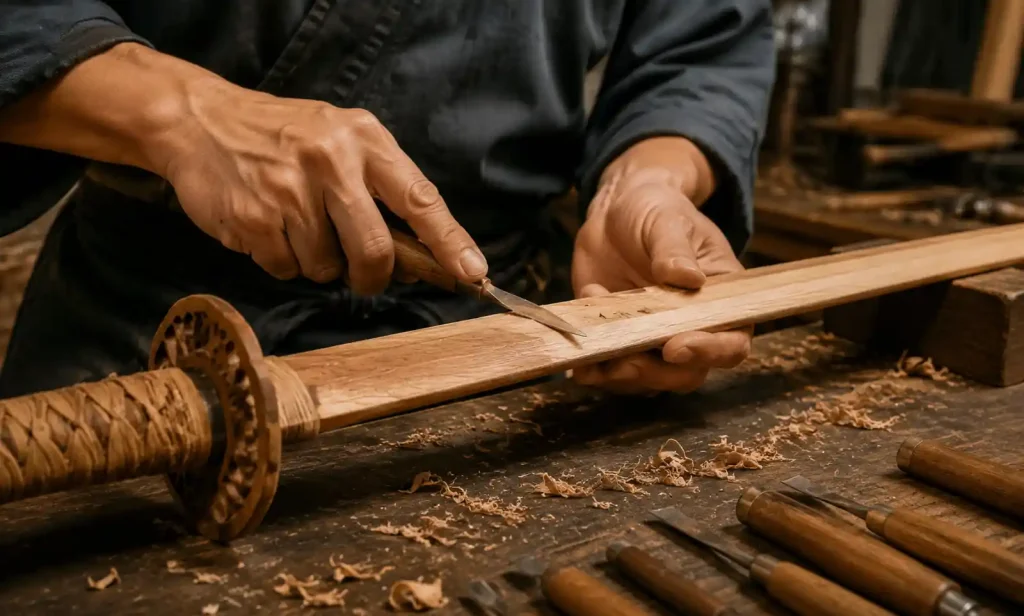
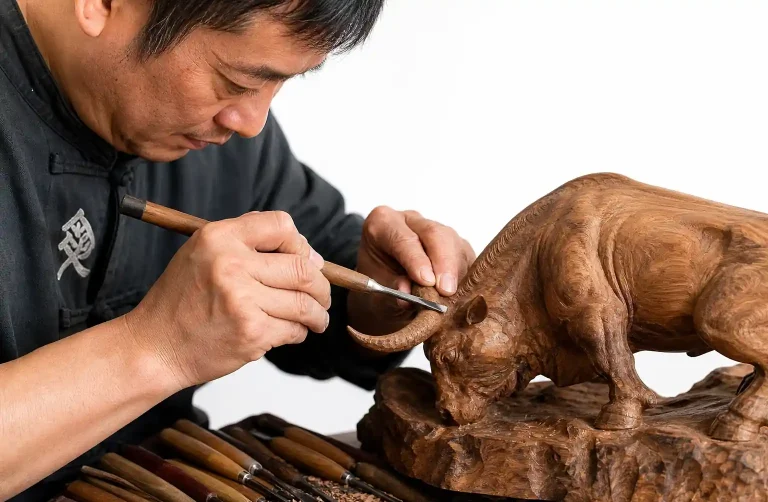
The craftsmanship itself represents a specialized skill set. Collectible-quality wooden swords feature hand-shaping, precise weight distribution, and finishing techniques requiring years of experience. Master craftsmen understand grain orientation for maximum strength, proper balance points, and protective finishes that enhance rather than mask natural wood beauty.
Types of High-Quality Wooden Swords
| Sword Type | Origin | Typical Wood | Length | Distinctive Features | Best For |
|---|---|---|---|---|---|
| Bokken | Japan | White/Red Oak | 40-42″ | Curved blade, oval cross-section, refined balance | Japanese martial arts, traditional collectors |
| Suburito | Japan | Oak/Hickory | 43-45″ | Thicker blade, heavier weight | Strength training, serious practitioners |
| Jian | China | Wax wood, Rosewood | 36-40″ | Straight double-edged, tassel | Tai chi, wushu, elegant displays |
| Dao | China | Wax wood, Beech | 38-42″ | Single-edged curve, distinct hilt | Kung fu, dynamic displays |
| Longsword Waster | Europe | Ash, Beech | 42-48″ | Crossguard, straight blade, spatulated tip | HEMA, historical enthusiasts |
| Rapier Waster | Europe | Hickory, Maple | 40-44″ | Long blade, complex hilt, narrow profile | Fencing, Renaissance collectors |
Beyond traditional forms, contemporary artisans create hybrid designs using exotic hardwoods like ebony, purpleheart, and bloodwood—pieces that transcend pure functionality and appeal to collectors valuing craftsmanship and aesthetic innovation.
What Makes a Wooden Sword Collectible-Quality
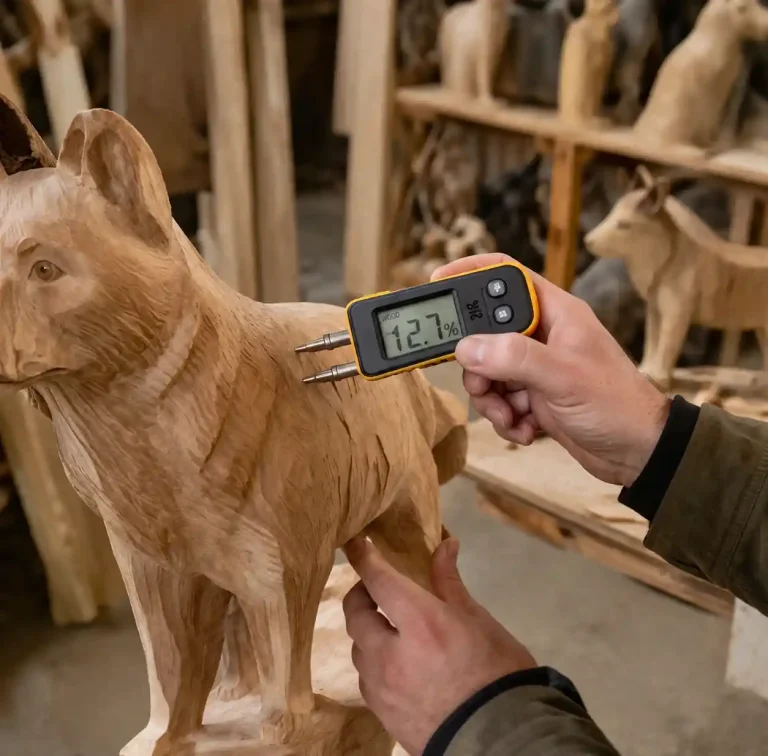
Wood Selection and Preparation: Premium swords use carefully selected hardwood with 8-12% moisture content to prevent warping. Collectible pieces feature attractive grain patterns, natural color variations, and grain orientation maximizing strength along the blade.
Handcrafted Details: Look for smooth, consistent surfaces free from machine marks. The blade-to-hilt transition should flow naturally. Hand-carved details demonstrate artisan involvement beyond simple production.
Balance and Handling: A well-crafted sword exhibits proper balance appropriate to its style. The pivot point should align with historical parameters. Premium pieces feel responsive, with weight distributed for natural movement.
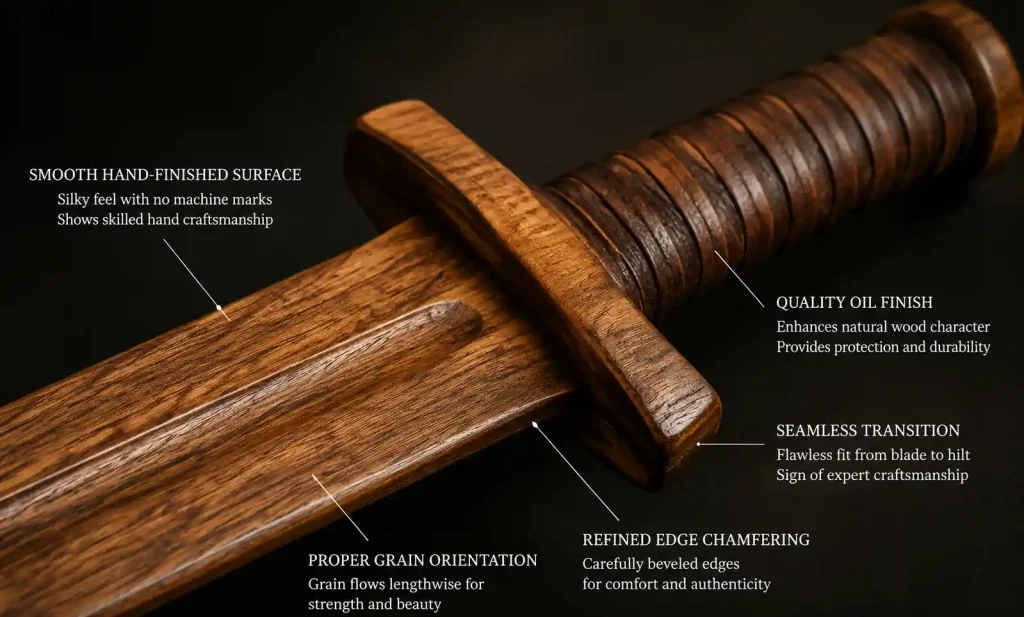
Finishing and Protection: High-quality swords receive multiple coats of protective finish—traditional oils (tung, linseed), modern polyurethane, or specialized lacquers. The finish enhances natural color and grain without a plasticky appearance.
Documentation and Provenance: Collectible pieces often include maker’s marks, signatures, or documentation. Limited editions, works by recognized master craftsmen, or swords with historical connections command premium prices and appreciation potential.
Display and Styling Ideas
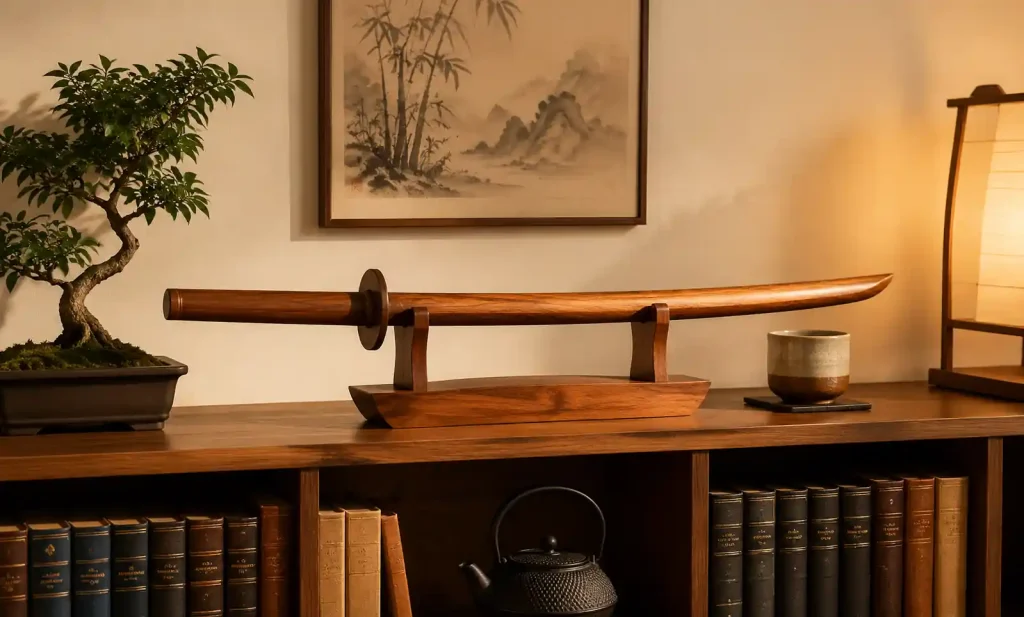
Traditional Display: Horizontal sword stands and wall-mounted racks honor martial heritage. Japanese-style katana stands create clean, minimalist presentations. Multi-tier stands allow impressive focal walls in home dojos or offices.
Contemporary Integration: In minimalist spaces, a single bokken mounted on a white wall becomes sculptural art. Scandinavian-inspired interiors complement the warm, natural aesthetic. Position at eye level in hallways or above console tables.
| Display Location | Recommended Sword | Styling Approach | Lighting |
|---|---|---|---|
| Home Office/Study | Bokken, Jian | Horizontal stand on bookshelf | Adjustable desk lamp |
| Living Room Feature Wall | Longsword, Dao | Wall-mounted with museum brackets | Directional spot lighting |
| Dojo/Training Space | Multiple functional pieces | Multi-tier vertical rack | Ambient overhead |
| Bedroom Accent | Wakizashi-length bokken | Horizontal on dresser | Soft ambient |
| Entryway Statement | Ornate Jian or Longsword | Single dramatic wall mount | Statement lighting |
Climate Considerations: Avoid direct sunlight and heating vents. Maintain 40-60% relative humidity. Use protective padding on stands to prevent finish damage.
Investment Value and Market Trends
Price Segments:
- Entry-level: $80-150 (solid construction, proper materials)
- Mid-range: $150-400 (superior wood, refined finishing, recognized craftsmen)
- Premium: $400-1000+ (master-crafted, limited editions, exotic woods, documented provenance)
Value Drivers: Swords by recognized master craftsmen appreciate most reliably, particularly after retirement. Limited editions with documentation gain premium over open production. Historical connections dramatically increase value. Condition remains paramount.
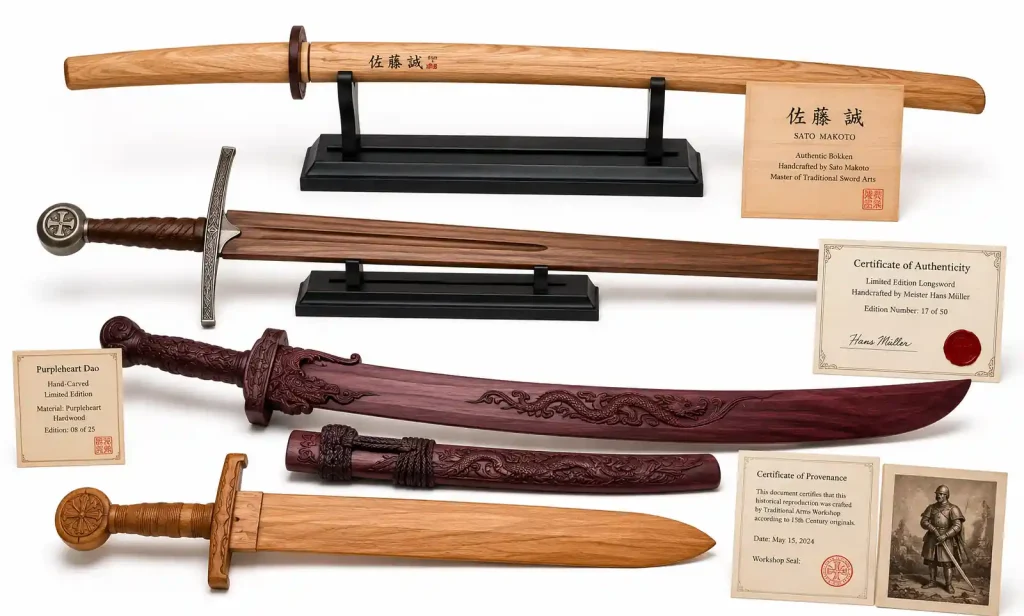
Emerging Trends: Contemporary artisans combining traditional techniques with modern aesthetics are gaining recognition. Exotic, sustainably sourced hardwoods appeal to environmentally conscious collectors. Custom commissions allow unique ownership while supporting living craftsmen. Streaming media and period dramas continue expanding the collector base.
Care and Preservation
Routine Maintenance: Wipe monthly with a soft, lint-free cloth. Apply wood conditioner (boiled linseed oil, tung oil, or specialized weapon oil) 2-3 times yearly. Apply sparingly, work into wood with circular motions, wipe excess, and cure 24-48 hours.
| Issue | Cause | Prevention | Remedy |
|---|---|---|---|
| Surface drying | Moisture loss | Regular oiling | Restore with wood oil |
| Grain raising | Humidity exposure | Climate control | Light sanding, refinish |
| Warping | Uneven moisture | Proper storage | Professional correction |
| Finish degradation | UV exposure | Avoid sunlight | Strip and refinish |
| Mold/mildew | Excessive humidity | Dehumidification | Dilute vinegar, dry, refinish |
Long-term Storage: Choose climate-controlled spaces (40-60% humidity). Store horizontally or properly supported. Wrap in breathable cotton—never plastic. Check stored pieces every few months.
Insurance: Maintain detailed documentation including photographs, purchase records, and provenance. Consider specialized collectibles insurance for valuable collections.
FAQ
What types of wood are best for collectible wooden swords?
Traditional choices: Japanese white oak, red oak, Chinese wax wood. Hardwoods: ash, beech, hickory, maple. Exotics: ebony, rosewood, purpleheart, cocobolo. Best choice depends on intended use—practice weapons prioritize durability; display pieces emphasize visual appeal.
How do I authenticate a high-quality wooden sword?
Examine wood quality, grain consistency, and absence of defects. Check balance by supporting on one finger. Inspect finishing for smooth, even surfaces. Look for maker’s marks or documentation. Research the seller’s reputation. Be skeptical of prices that seem too low.
Are wooden swords suitable as investment pieces?
They can appreciate, particularly pieces by recognized master craftsmen, limited editions, or those with historical significance. However, collect primarily for personal interest. The market is niche, so liquidity varies. Well-chosen pieces from reputable makers typically hold value and appreciate modestly over time.
Can I use a collectible wooden sword for martial arts training?
Some serve dual purposes, but the most valuable collectibles often feature delicate finishing or exotic woods unsuited for heavy contact. Consider maintaining separate swords for training and display. Training use will eventually show wear affecting collectible value.
How should I display wooden swords to prevent damage?
Avoid direct sunlight and heating vents. Maintain 40-60% humidity. Use padded stands or mounts. Clean regularly. Rotate displayed pieces occasionally to prevent uneven fading. Ensure wall mounts use appropriate anchors for the sword’s weight.
What’s the difference between a bokken and a European waster?
Bokken replicate Japanese katana design—curved single-edged blades with oval cross-sections. Wasters represent European longswords, rapiers, or other Western styles—straight double-edged profiles with crossguards. They reflect distinct martial traditions with different handling characteristics.
Are custom-made wooden swords worth the additional cost?
Custom commissions offer unique value—you specify wood type, dimensions, weight, and decorative elements. For serious collectors, custom work provides one-of-a-kind pieces. However, expect several months lead time and clear communication. For beginners, established pieces from proven makers may offer better value.
How do I start a wooden sword collection on a limited budget?
Begin with one or two quality pieces rather than multiple lower-grade swords. Research makers offering solid craftsmanship at entry-level prices. Attend martial arts events for direct sales. Join collector communities for secondary market opportunities. Focus on a specific tradition initially, then expand.
Conclusion
The global rise of wooden sword collecting reflects a broader cultural appreciation for handcrafted objects that combine functional heritage with artistic expression. These pieces offer tangible connections to martial traditions spanning continents and centuries, while serving as sophisticated design elements in contemporary spaces.
Starting a collection requires understanding the craftsmanship markers that separate genuine collectibles from mass-produced training equipment. Prioritize proper wood selection, hand-finishing quality, authentic balance, and maker reputation. Display thoughtfully, maintain properly, and engage with the communities of martial artists, historians, and fellow collectors who share your appreciation.
If you’re ready to begin your wooden sword collecting journey, explore established makers specializing in traditional craftsmanship. For custom designs or bulk purchases for martial arts schools or retail, reach out to experienced wooden weapon craftsmen who can guide you toward pieces that will provide lasting satisfaction and potential value appreciation.