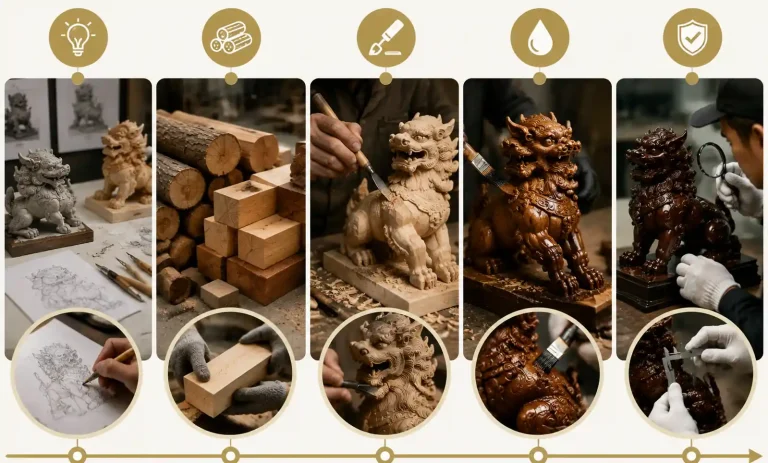






Complete Guide to Wooden Animal Sculptures: Types, Materials & Cultural Significance
Wooden animal sculptures blend centuries of tradition with natural materials. Whether you’re an interior designer sourcing statement pieces, a collector evaluating authenticity, or drawn to handcrafted art, understanding carving styles, wood species, and cultural contexts transforms how you select these timeless objects. This guide helps you navigate material choices, recognize quality craftsmanship, and understand the symbolism that elevates wooden animal carvings beyond decoration.
Why Wooden Animal Sculptures Remain Relevant
Unlike mass-produced resin figurines, authentic wooden animal sculptures reveal their origins through tool marks, grain variations, and subtle asymmetries that define genuine handwork. This authenticity addresses growing demand for sustainable materials—particularly strong among North American and European buyers.
Quality hardwood carvings maintain structural integrity across humidity changes when properly conditioned, unlike composites that degrade or crack. Wood’s organic texture suits both minimalist and eclectic spaces, making these pieces versatile for home healing décor and executive office environments.
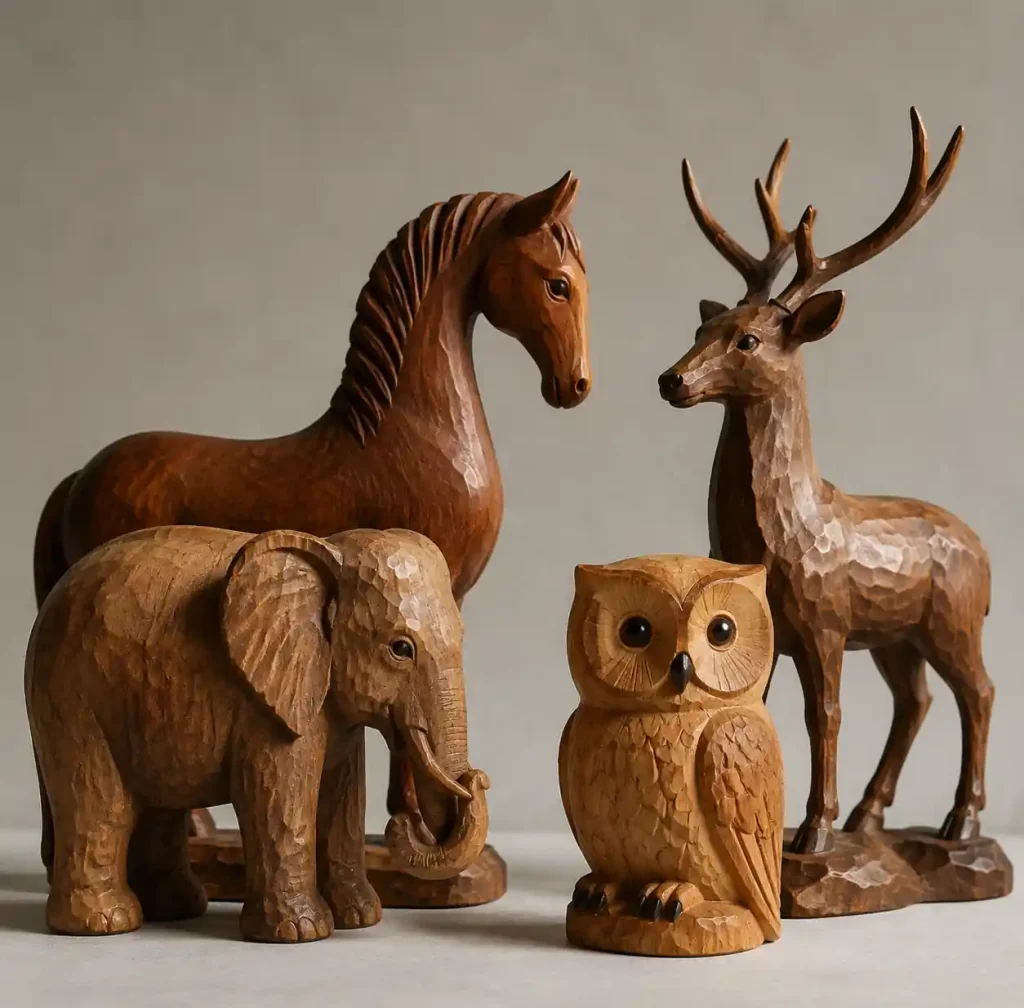
Our wholesale data shows consistent growth in three categories: feng shui-inspired figures for corporate gifting, large-scale wildlife carvings for hospitality, and small symbolic animals for personal placement. Wooden sculptures serve aesthetic, cultural, and spiritual functions that synthetics cannot replicate.
Traditional Carving Techniques That Define Quality
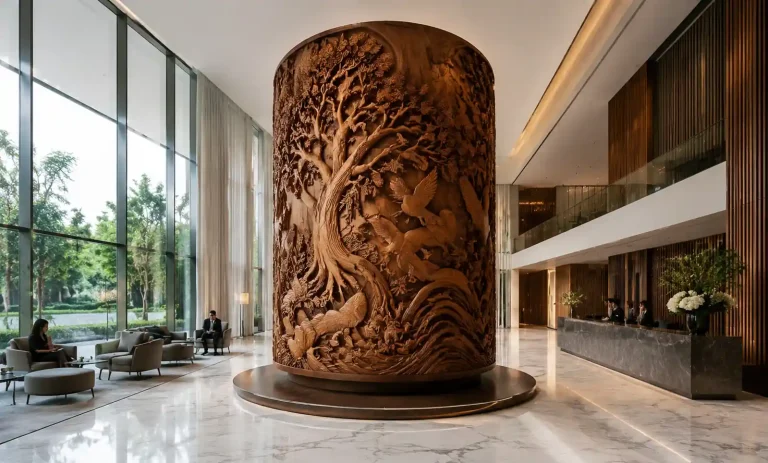
Relief carving creates dimensional forms emerging from flat panels—ideal for wall-mounted pieces. In-the-round carving produces fully three-dimensional sculptures viewable from all angles. Watch for consistent detail on all sides; commercial work often refines fronts but leaves backs rough.
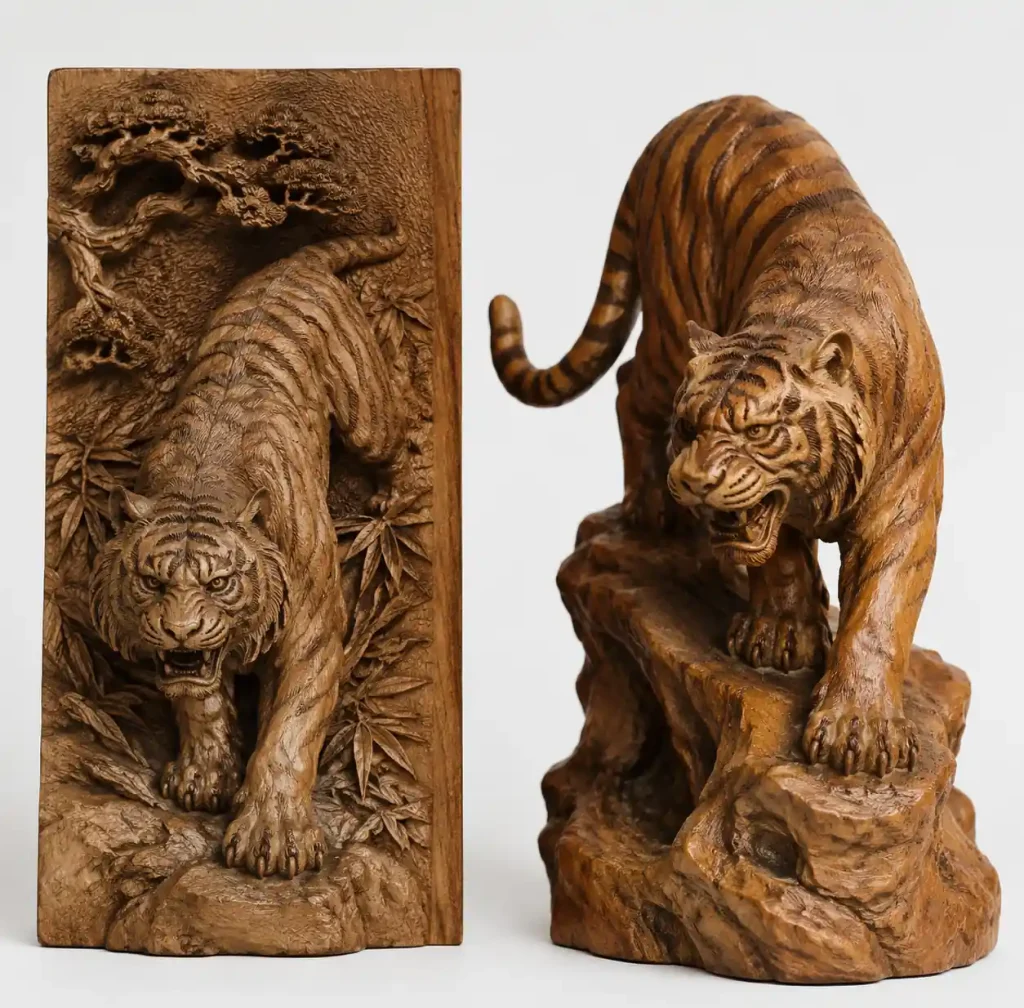
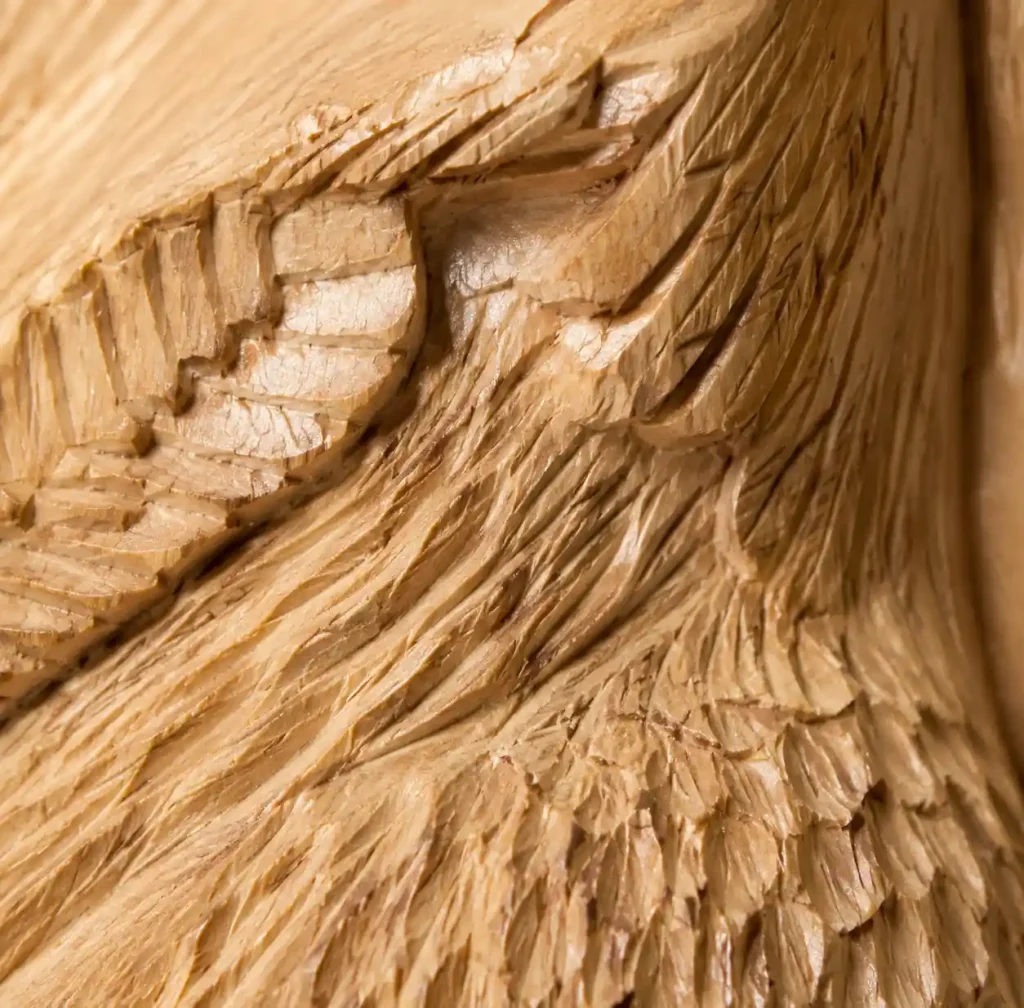
Chainsaw carving handles large-scale wildlife where dramatic gesture matters more than fine detail, leaving distinctive scalloped surfaces. Power tool detailing with rotary burrs allows intricate texturing—feathers, fur—impossible with hand chisels alone. High-end carvings combine both approaches, representing current wood working best practice. Expert carvers orient grain along vulnerable points—a bird’s wing, a horse’s legs—providing natural reinforcement.
Wood Species Comparison: Properties and Applications
| Wood Species | Density (lb/ft³) | Carving Detail | Climate Stability | Cultural Association | Cost |
|---|---|---|---|---|---|
| Teak | 41-43 | High | Excellent | Southeast Asian maritime | $$$$ |
| African Mahogany | 31-33 | Very High | Good | West African prestige | $$$ |
| Indian Rosewood | 51-55 | Exceptional | Moderate | South Asian ceremonial | $$$$ |
| Suar Wood | 37-39 | Moderate-High | Very Good | Indonesian rustic | $$ |
| Ebony | 60-67 | Exceptional | Good | African luxury | $$$$$ |
| Acacia | 44-48 | Moderate | Good | African savanna themes | $ |
Teak justifies premium pricing through natural oils that repel insects and resist moisture. African Mahogany offers ideal workability for detailed carvings, maintaining dimensional stability across climate zones—critical for international wholesale operations. Rosewood occupies the luxury segment with extreme density, but CITES regulations restrict trade—legitimate suppliers provide harvest permits.
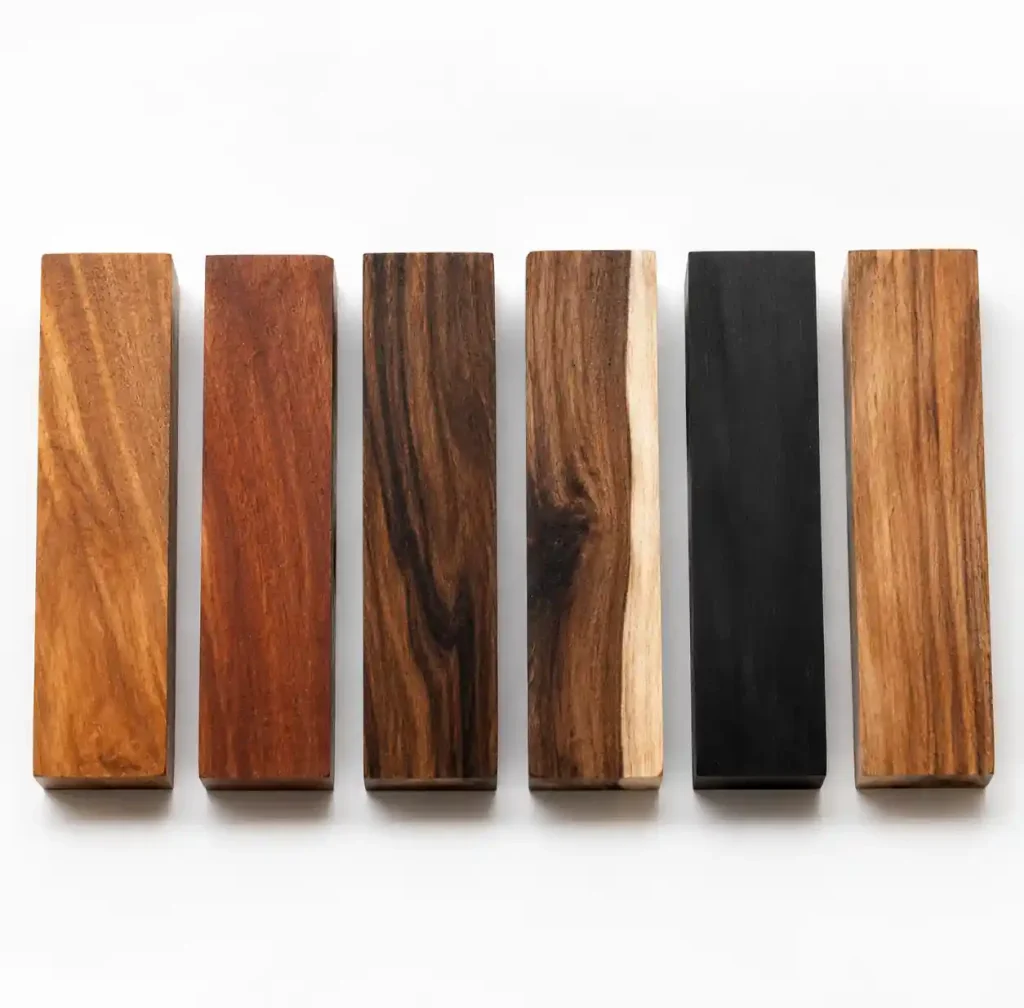
Suar Wood balances affordability with visual impact, making it popular for creative gift décor. Ebony’s near-black colour suits small, detailed figures. Tropical hardwoods can develop surface checking when moved to arid climates without proper moisture content management. Responsible manufacturers equilibrate wood to destination humidity before carving.
Cultural Symbolism Across Traditions
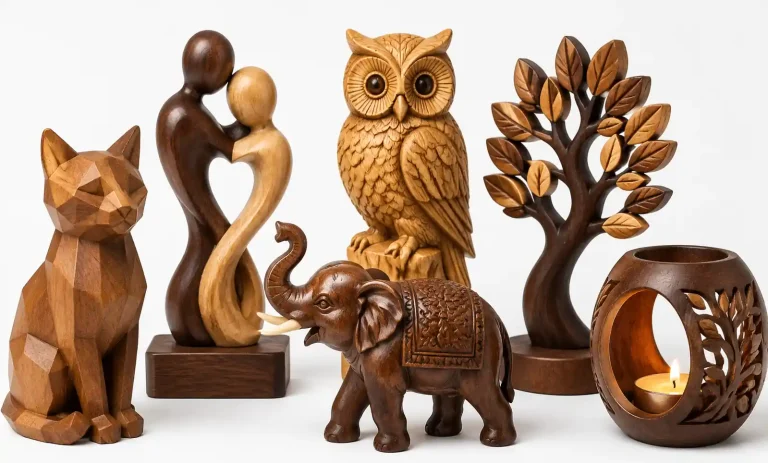
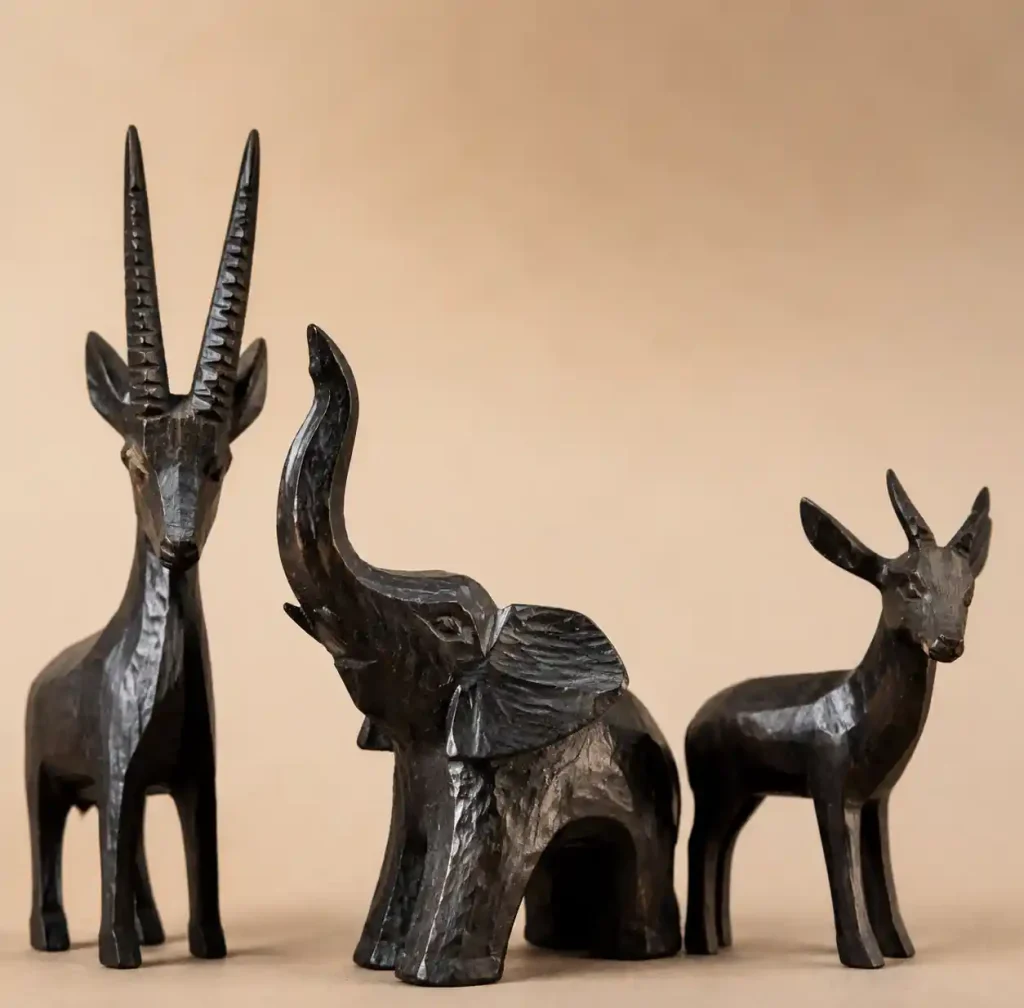
African Carving Traditions: West African sculptures serve protective or commemorative functions. Elephants symbolize ancestral wisdom and authority. Antelope figures reference agricultural fertility. Authentic African carvings show tool marks as intentional design elements, connecting the piece to its maker’s spiritual intention.
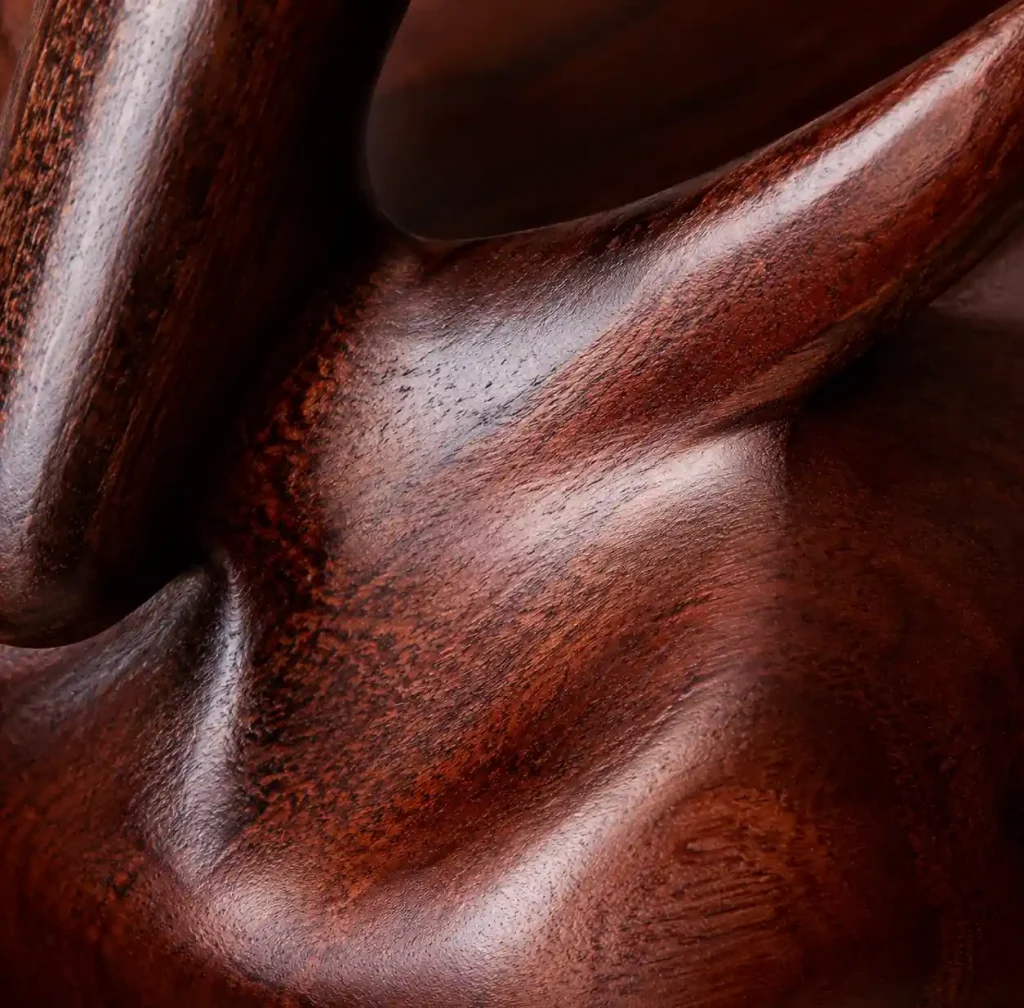
Asian Symbolic Animals: Dragons represent imperial power—appropriate for business entrances but avoided in bedrooms. Tigers symbolize protection, positioned facing doorways. Cranes signify longevity, making them suitable wooden desktop figurines for meditation spaces. Feng Shui Applications: Horses facing inward attract success. Pairs of mandarin ducks symbolize marital harmony. Fish represent abundance near entrances.
Evaluating Craftsmanship Quality
| Quality Indicator | Premium Handwork | Standard Commercial | Machine Shortcuts |
|---|---|---|---|
| Tool Mark Pattern | Irregular, follows grain | Consistent direction, uniform depth | Perfect parallel lines |
| Symmetry | Balanced but not identical | Generally even | Perfect bilateral symmetry |
| Fine Detail | Sharp edges, clean | Adequate definition | Soft edges, blurred |
| Underside Finish | Consistent with top | Basic smoothing | Rough, minimal attention |
| Grain Orientation | Strategic for strength | Adequate | Random, problematic |
Anatomical accuracy separates quality tiers. Exceptional carvers capture subtle details like raptor talon angles. Surface finish reveals priorities—premium pieces progress through multiple grit stages (80→→320), preserving detail while creating flawless surfaces. When evaluating wooden animal sculpture purchases, request photos of the base. Makers confident in craftsmanship show all angles.
Selecting Pieces for Specific Applications
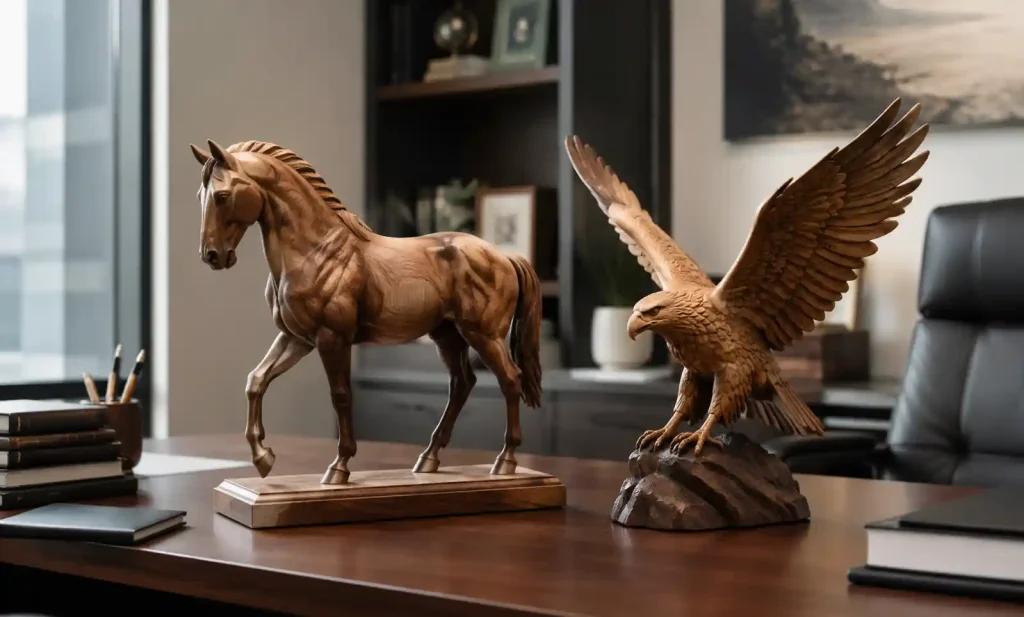
Residential spaces: Living room sculptures function as conversation pieces—larger scale (12-24 inches), dramatic grain. Bedrooms favour calming animals (deer, rabbits, birds) in softer woods. Corporate environments: Executive office décor demands cultural neutrality. Horses, eagles, and bears work across cultures—10-16 inches for desk placement. Hospitality installations: Specify sealed surfaces, stable species, and forms without fragile protrusions. Gift contexts: Consider cultural background. Include documentation explaining symbolism and care.
Essential Care and Maintenance
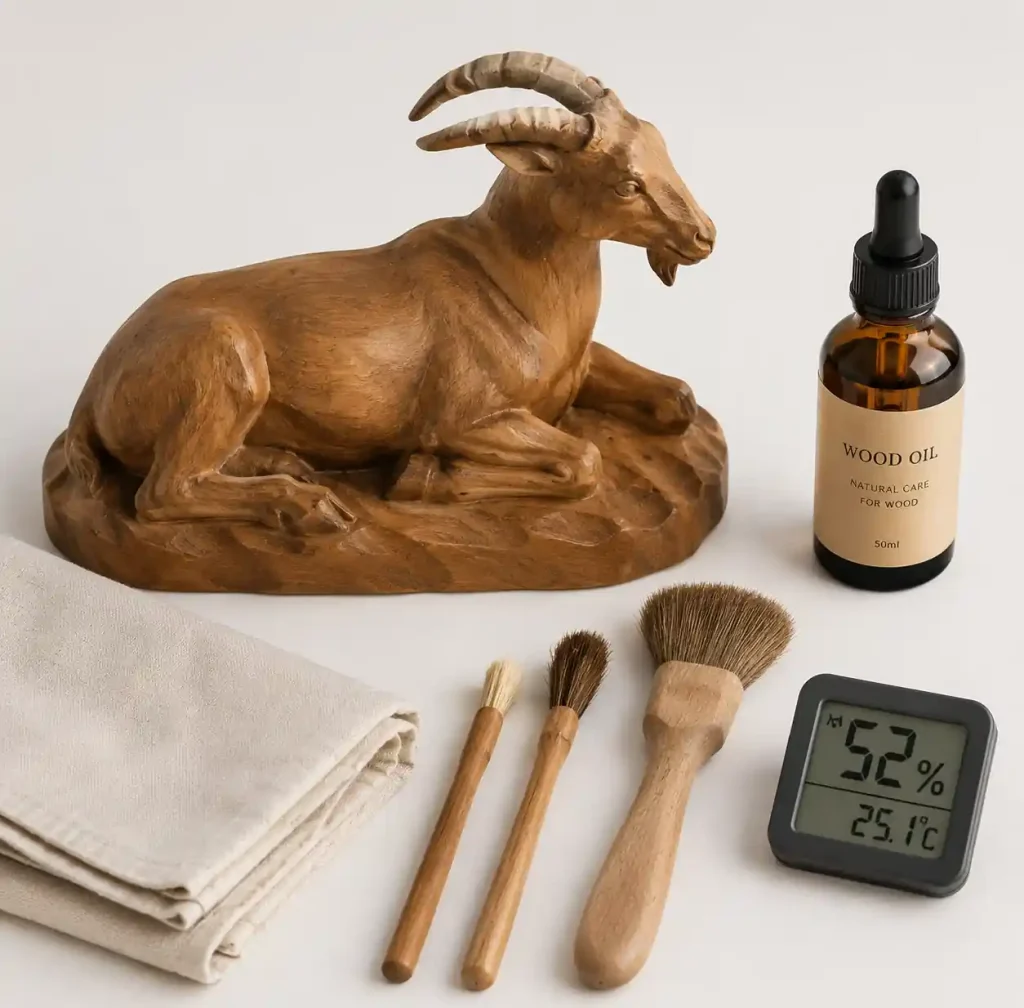
Climate acclimation: New pieces need 2-4 weeks to equilibrate. Place away from direct sun, heating vents, or AC flow. Minor surface checking is normal. Cleaning: Dust weekly with soft cloths. Avoid water-based cleaners on unsealed wood. Never use silicone furniture polish. Oil maintenance: Unsealed hardwood benefits from annual tung or specialised oil treatment. Environmental protection: Maintain 40-55% RH. Avoid display above fireplaces or in direct sunlight. Damage repair: Small scratches respond to stain markers. Structural cracks need professional assessment.
FAQ
How can I verify if a wooden animal sculpture is genuinely handcarved?
Examine tool mark patterns under good lighting. Handcarved pieces show irregular marks varying in direction and depth, following wood grain. Machine-carved work displays uniform parallel marks. Check the underside—handcarvers finish these areas similarly to visible surfaces; commercial producers often leave them rough.
Which wood types work best for outdoor display?
Teak and ipe offer the best outdoor performance without treatment due to natural oil content. Other species require marine-grade spar varnish with UV inhibitors, reapplied annually. Even treated pieces should occupy covered areas rather than full weather exposure.
Do wooden animal sculptures require special humidity control?
Maintain 40-55% relative humidity for optimal preservation. Most modern homes fall within this range naturally. Symptoms of humidity problems include surface checking (too dry) or mould/darkening (too humid). Use a hygrometer to monitor conditions.
Are there cultural considerations when gifting wooden animal sculptures?
Yes. Elephants hold sacred meaning in Hinduism and Buddhism. Owls symbolise wisdom in Western traditions but represent death omens in some Middle Eastern and African cultures. Dragons are auspicious in Chinese culture but associated with evil in some Christian traditions. When uncertain, neutral wildlife (deer, horses, rabbits) avoids problematic associations.
What causes wooden sculptures to crack, and can it be prevented?
Cracking results from uneven moisture loss causing internal stress. Prevention involves gradual acclimation when moving between climates, maintaining stable humidity, and ensuring proper moisture content conditioning before sale. Small surface checks are normal; deep structural cracks indicate quality problems.
Conclusion
Selecting wooden animal sculptures that deliver lasting value requires understanding material science, cultural tradition, and craftsmanship standards. Match wood species to environment, verify carving quality through specific inspection criteria, and understand symbolism that adds depth beyond decoration. As sustainable materials and authentic craftsmanship gain consumer priority, these sculptures represent both timeless tradition and forward-looking choices. For custom requirements or wholesale inquiries, explore our manufacturing capabilities and case studies.