




How to Choose the Perfect Wooden Sculpture for Your Office Space
If you want to transform your office from generic corporate space into an environment reflecting professionalism and cultural depth, then you need to understand how wooden sculptures can anchor your design while staying within budget. After working with corporate clients from Fortune 500 companies to boutique firms, I’ve seen how the right wooden piece becomes a conversation starter and signals investment in quality.
Understanding Office Space Requirements
Most wooden sculpture selection mistakes happen because buyers choose pieces before checking spatial constraints. Measure your display surfaces first, then shop.
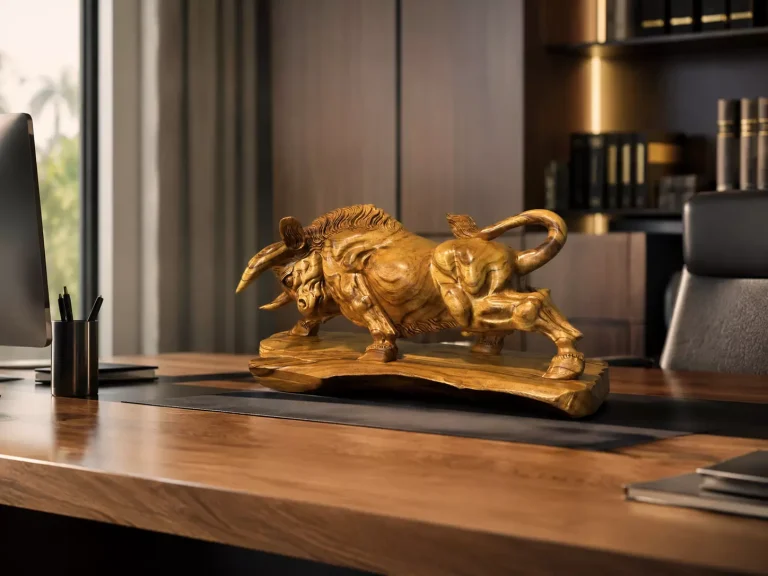
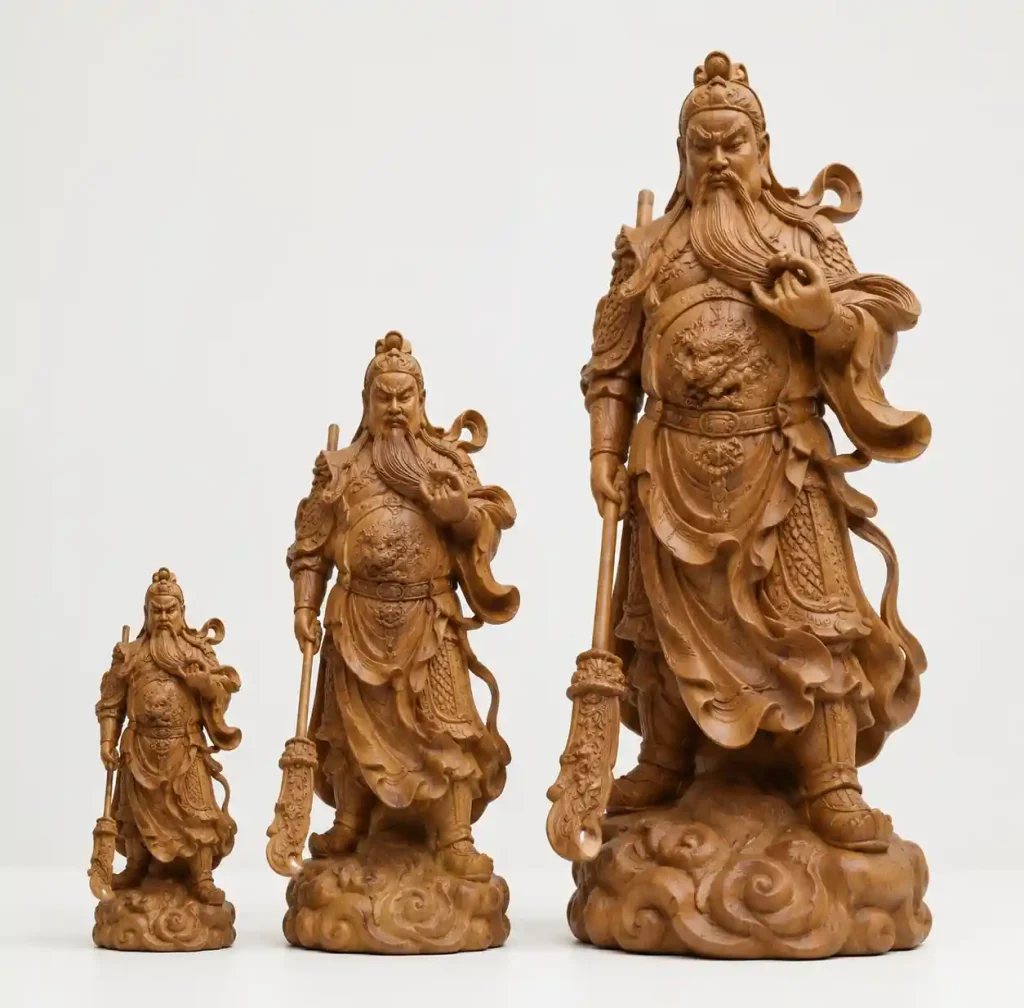
Desktop pieces (10-20cm height) work for individual desks and bookshelves without overwhelming the space. Medium display pieces (25-40cm) suit reception counters and conference room sideboards. Large statement sculptures (50cm and above) belong in lobbies or spacious executive offices as focal points.
The most common error: placing undersized sculptures in oversized spaces. A 15cm piece on a 3-meter reception desk looks lost. Use this guideline: the sculpture should occupy roughly 1/3 to 1/2 the width of its display surface, with height proportional to viewing distance.
Lighting Considerations
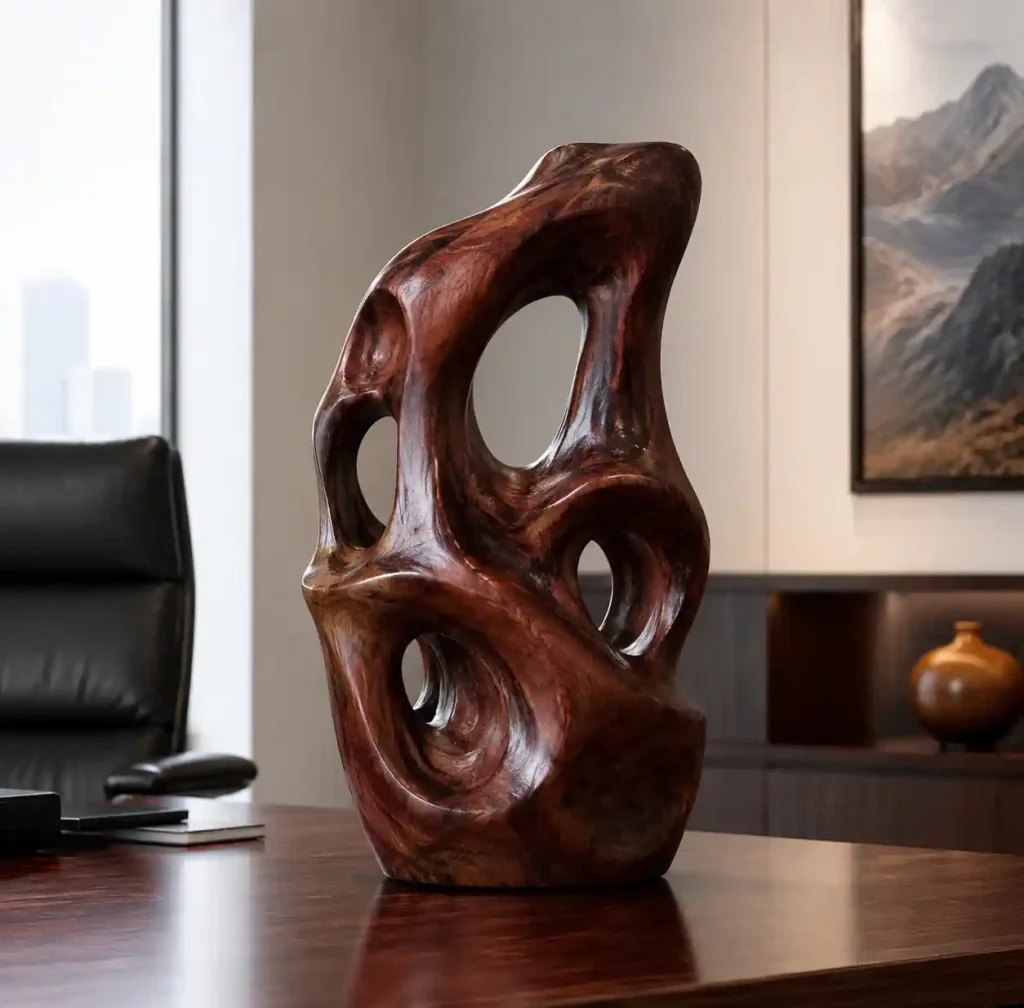
Wood responds to light differently than paintings or prints. Natural wood grain becomes pronounced under direct light, while matte-finished pieces work better in ambient lighting. Spaces with abundant natural light can handle darker woods like ebony or walnut. Offices with overhead fluorescents benefit from lighter woods like maple or beech with polished finishes.
Wood Type Selection for Corporate Settings
Not all woods suit office environments equally. Based on projects requiring pieces to last decades without intensive maintenance, here are woods that perform best professionally.
| Holzart | Visual Characteristics | Haltbarkeit | Maintenance | Best Office Use | Preisspanne |
|---|---|---|---|---|---|
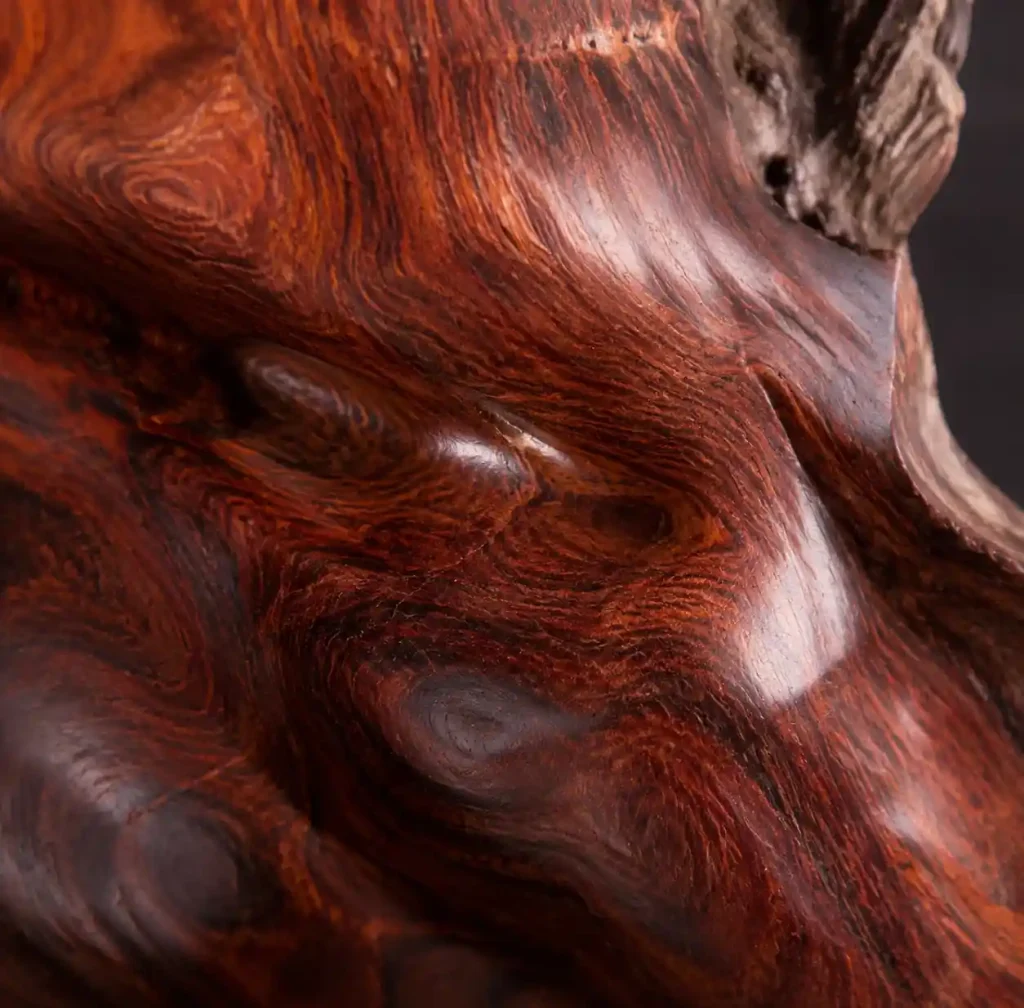
| Palisander | Rich reddish-brown, distinct grain | Extremely high | Low | Executive offices, boardrooms | $$$$ |
| Teakholz | Golden to medium brown, uniform | Sehr hoch | Very low | Humid climates, outdoor spaces | $$$ |
| Walnuss | Dunkelbraun, gerade Maserung | Hoch | Low | Modern minimalist offices | $$$ |
| Ebony | Deep black, fine texture | Extremely high | Minimal | Luxury offices, galleries | $$$$$ |
| Ahorn | Pale cream to light brown | Hoch | Moderate | Bright spaces, Scandinavian design | $$ |
Rosewood remains the gold standard for executive offices because it handles air conditioning without cracking, maintains color without fading, and provides visual interest without distraction. I specify rosewood for 70% of corporate projects.
Teak deserves special mention for offices in tropical or coastal locations. Teak sculptures in Jakarta and Singapore offices survive years of humidity without warping—something softer woods cannot do.
Cultural Appropriateness and Symbolism
Wooden sculptures often carry cultural meanings that can enhance your message or create awkward situations. Understanding context matters.
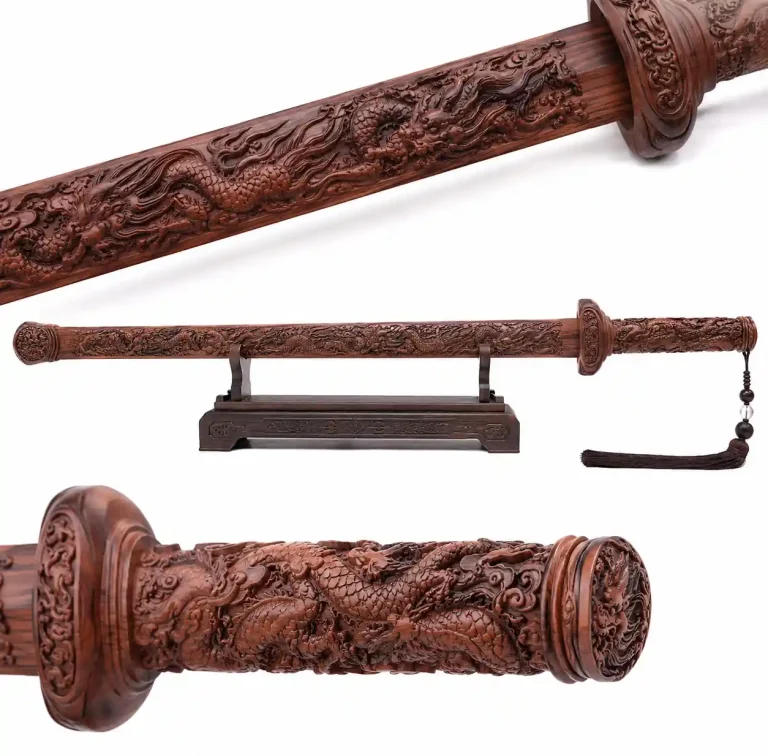
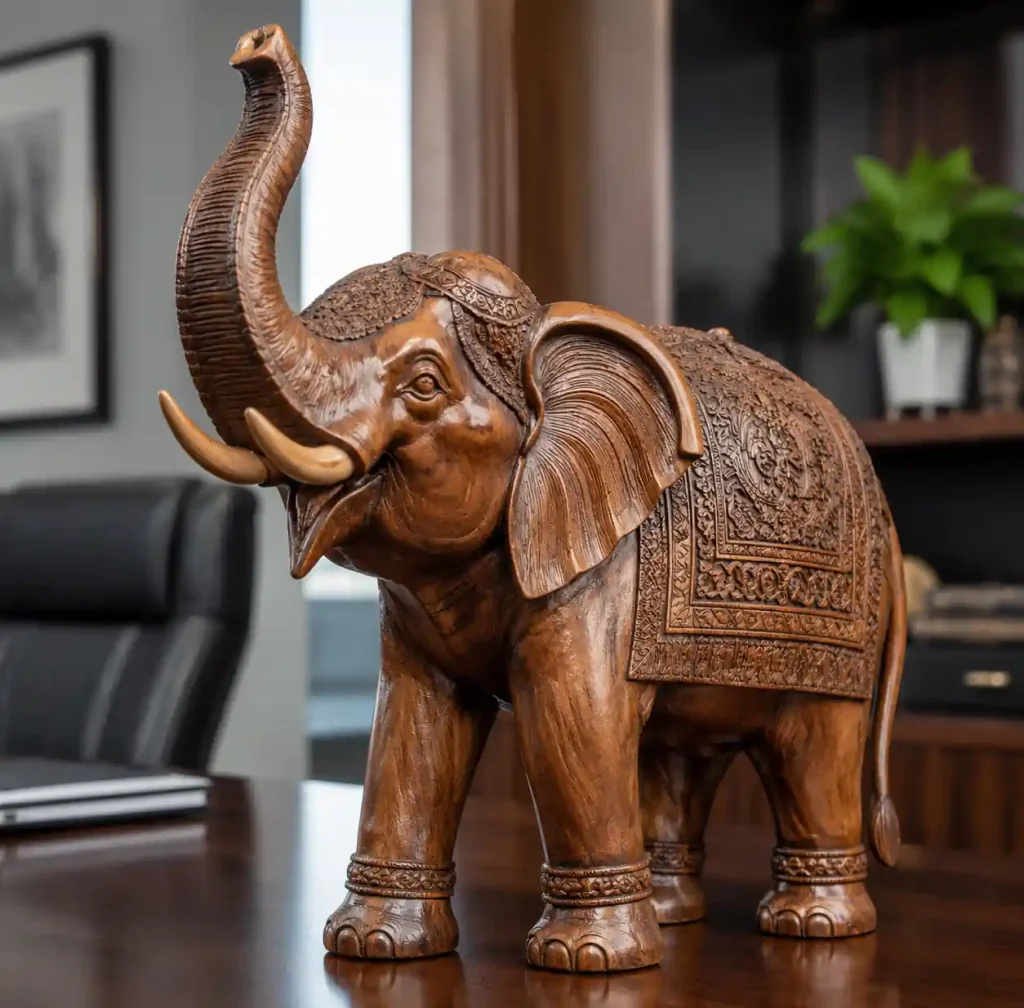
A dragon sculpture in a Chinese investment firm reinforces cultural identity and symbolizes power—appropriate and intentional. An elephant sculpture in a hotel serving Indian clients honors meaningful cultural symbolism. A phoenix in a startup office represents rebirth and innovation without cultural insensitivity because the metaphor translates clearly.
The key question: does this symbol have specific cultural or religious significance, and do you have the cultural connection to display it meaningfully?
Culturally Neutral Options
Abstract geometric wooden sculptures, natural wood forms, and stylized animal forms without specific cultural attribution work well in multinational offices. Contemporary wooden art emphasizing grain, form, and craftsmanship offers a safe path. Browse our home and healing decor collection for culturally neutral options.
Style Matching: Modern vs Traditional
Your existing office aesthetic constrains your options. Forcing a traditional carved deity into a glass-and-chrome tech office creates visual dissonance.
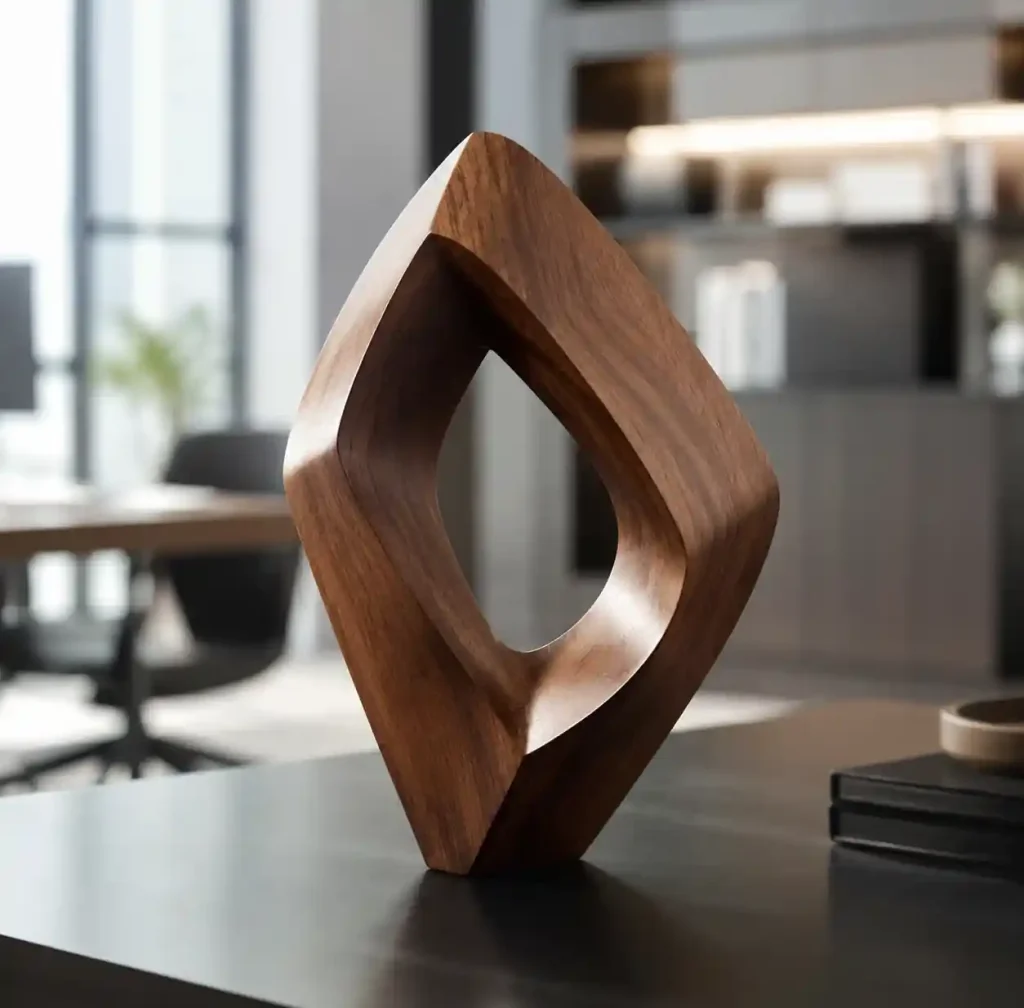
For Modern Minimalist Offices: Choose clean-lined abstract wooden sculptures emphasizing negative space. Walnut or maple pieces with simple geometric forms complement minimalist furniture. Avoid heavily carved traditional pieces.
For Traditional Office Spaces: Hand-carved animal figures and pieces referencing historical traditions complement wood paneling and classical architecture. Law firms and historic buildings often choose traditional carved pieces.
For Transitional Offices: Mix contemporary and traditional by maintaining consistency in wood tone. Unified wood species creates visual cohesion. See our case studies for similar projects.
Budget Planning and Investment
Wooden sculpture pricing varies dramatically based on wood species, carving complexity, and size.
| Sculpture Category | Size Range | Price Range (USD) | Am besten geeignet für | Lifespan |
|---|---|---|---|---|
| Desktop figurines | 10-20cm | $30-$150 | Individual offices, gifts | Replaceable |
| Medium display pieces | 25-40cm | $150-$600 | Reception, conference rooms | 10+ years |
| Executive statement pieces | 50-80cm | $600-$2,500 | Executive offices, boardrooms | 20+ years |
| Large installations | 1m+ | $2,500-$15,000+ | Lobbies, headquarters | Permanent |
| Custom commissions | Variiert | $1,000-$50,000+ | Branded corporate pieces | Unique asset |
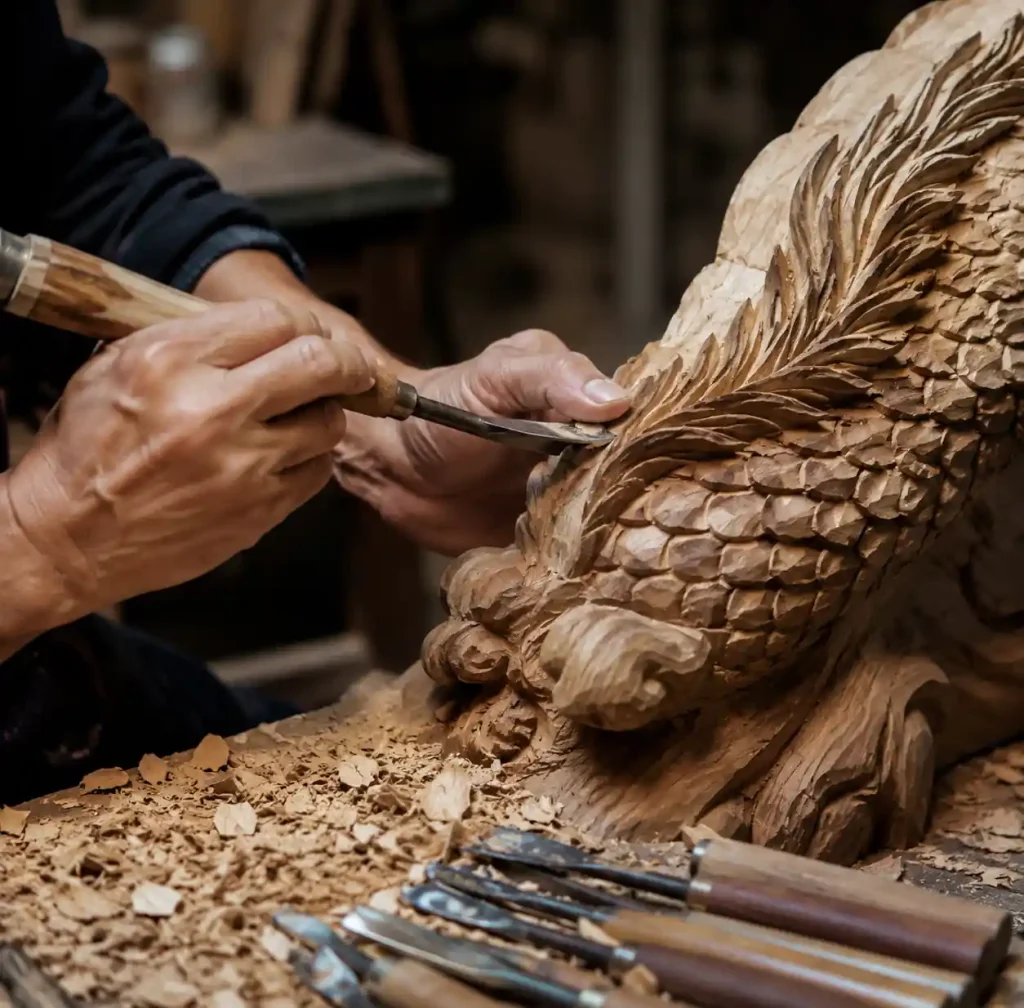
Machine-carved pieces start around $30-100, while hand-carved pieces by skilled artisans begin at $150-200 for small works. The difference is immediately visible—hand-carved pieces show tool marks, grain adaptation, and subtle asymmetries. Machine-carved pieces look uniform and lack soul.
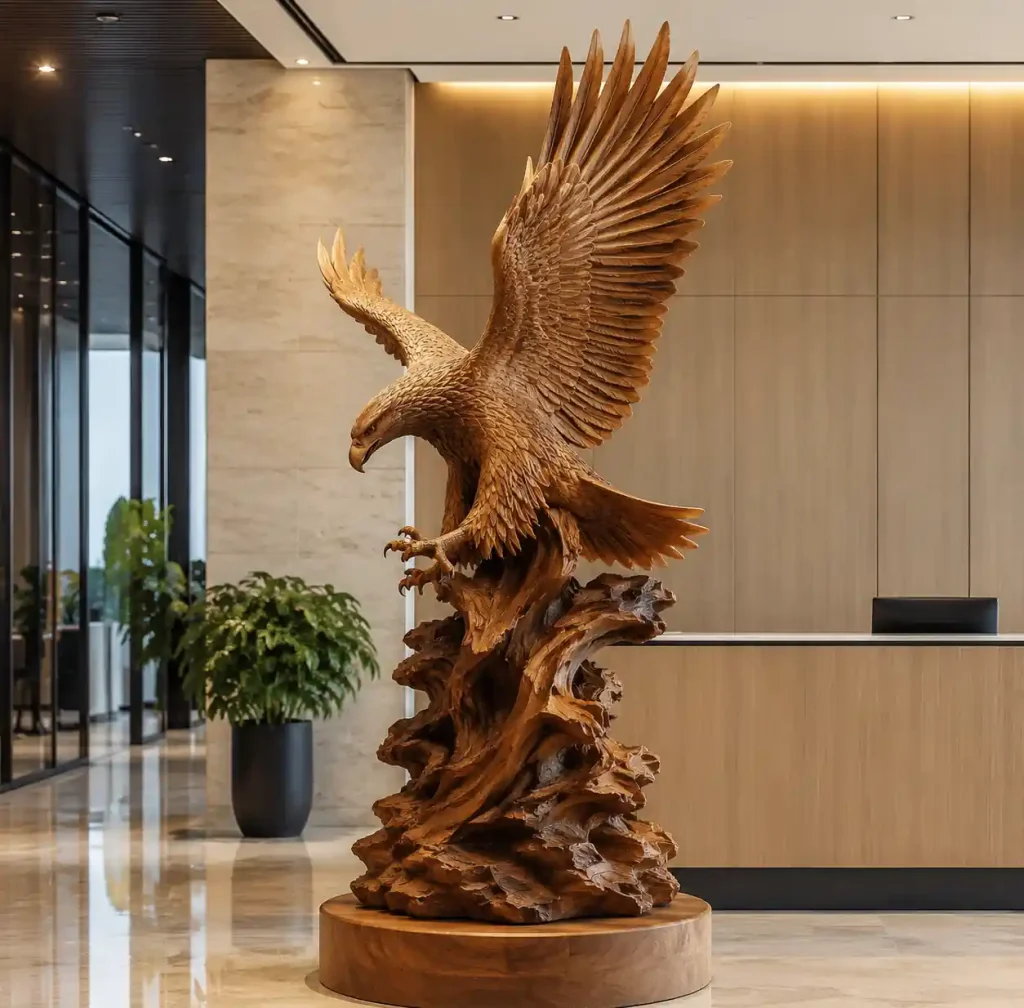
For corporate facilities: allocate $200-400 per executive office for desktop pieces, $800-1,500 for reception display pieces, and $3,000-8,000 for lobby statement pieces.
Customization and Branding Options
For corporate clients, customization makes the difference between generic decor and branded environmental design. Subtle logo integration works—heavy-handed branding does not. The sculpture should be beautiful first, branded second. Explore our OEM/ODM custom services for corporate projects.
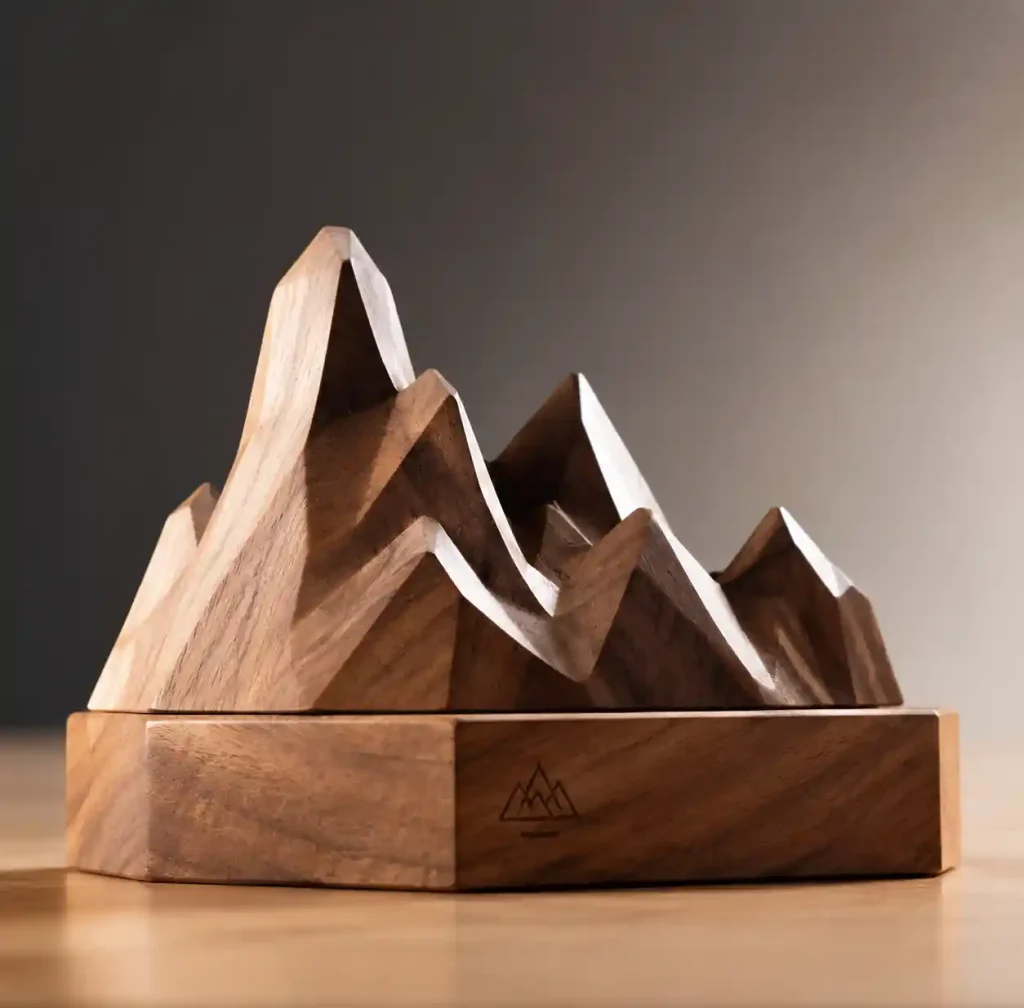
For a technology company headquarters, we created geometric wooden sculptures where negative space formed the company logo when viewed from specific angles.
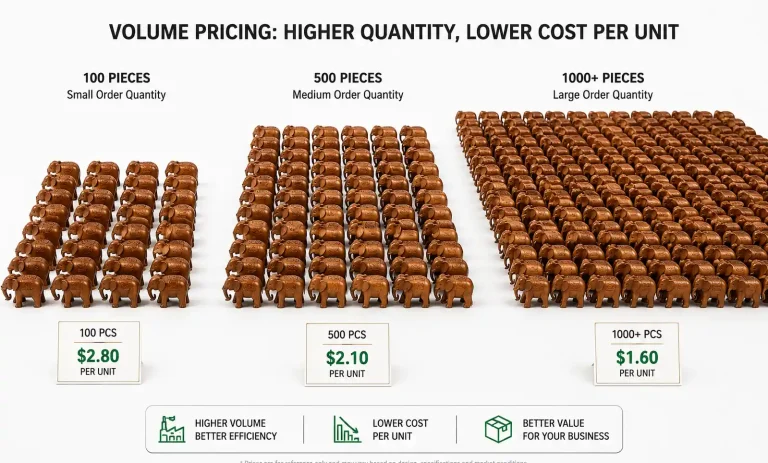
Minimum order quantities for custom work start at 50-100 pieces. Lead times run 4-8 weeks depending on complexity. For unique commissions, expect 8-12 weeks and higher pricing.
Maintenance and Longevity
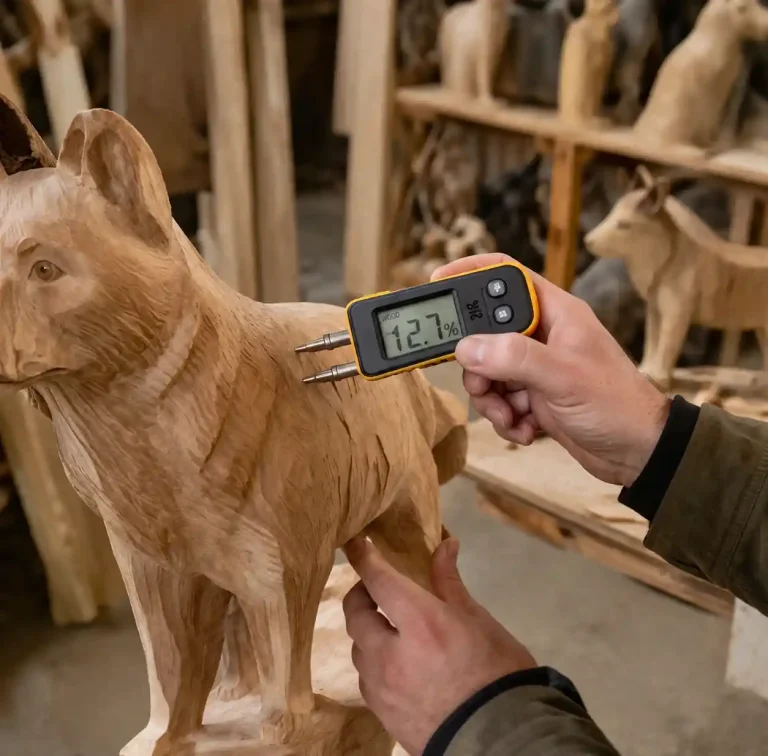
Wooden sculptures require minimal maintenance. Quality hardwoods need dusting weekly and light furniture wax or wood oil application every 6-12 months. Understanding wood moisture content helps maintain sculpture integrity.
Never position wooden sculptures near air conditioning vents, heating registers, or in direct sunlight. Temperature fluctuations and UV exposure cause wood to expand, contract, and fade.
Working with Suppliers
Before committing, ask: Is this hand-carved or machine-carved? What specific wood species? What finish is applied, and is it VOC-compliant? What is the wood’s moisture content (8-12% for most climates)?
Reputable suppliers answer immediately. Vague responses signal problems.
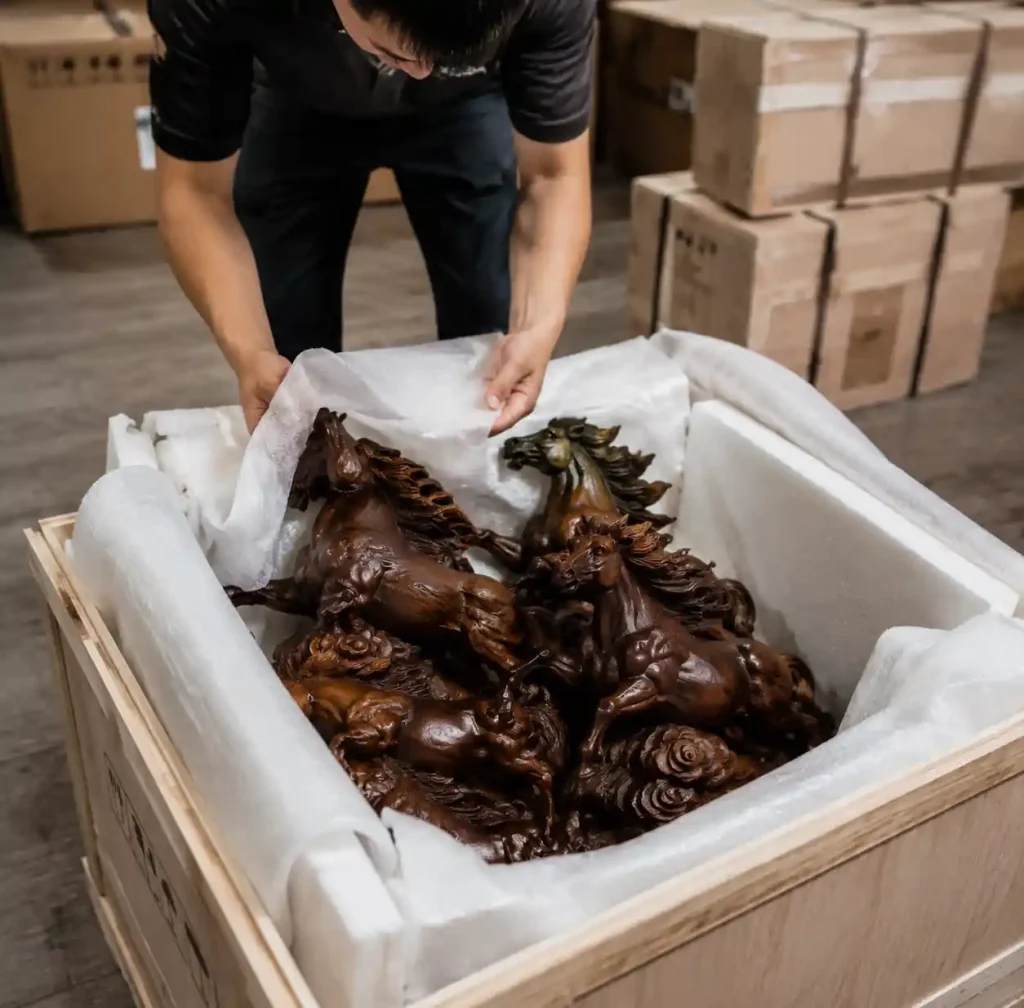
For standard pieces, expect 2-4 weeks delivery. Custom work requires 6-12 weeks. Large orders (50+ pieces) may need 8-16 weeks.
Real Project Examples
For a wealth management firm’s executive floor, we specified 15 rosewood abstract sculptures for individual offices and a 75cm hand-carved sphere for reception. Total investment: $8,500. Client feedback emphasized how wooden pieces made the space “feel expensive in a subtle way.”
For a tech startup’s open office, we used 30 small maple geometric sculptures as desk decor and department identifiers. Investment: $2,400. These also make excellent creative corporate gifts.
Häufig gestellte Fragen
How do I determine the right sculpture size for my office?
Measure your display surface and multiply width by 0.4 for maximum sculpture width. For height, add 10cm of sculpture height for every meter of viewing distance.
Are wooden sculptures appropriate for modern tech offices?
Yes, if you choose contemporary abstract pieces in lighter woods like maple or walnut with clean geometric forms. Avoid heavily carved traditional pieces.
What wood types work best in air-conditioned offices?
Dense hardwoods like rosewood, teak, walnut, and ebony handle AC environments well because they have low moisture absorption rates.
How do I clean and maintain wooden office sculptures?
Dust weekly with a soft cloth. Apply furniture wax or wood oil every 6-12 months. Avoid water, chemical cleaners, and placement near heat sources or AC vents.
Can wooden sculptures incorporate our company logo?
Yes, through base engraving, subtle carving integration, or design elements forming your logo from specific viewing angles. Most custom services require 50-100 piece minimum orders.
Fazit
Choosing wooden sculptures for office spaces requires understanding spatial constraints, selecting appropriate wood species for your climate, respecting cultural contexts, and matching existing design aesthetics. The right pieces transform generic corporate spaces into environments reflecting professionalism and cultural awareness.
Quality wooden sculptures signal investment in your environment that clients and employees both notice. Focus on hand-carved quality hardwoods that will serve your space for decades.
If you need high-quality wooden sculptures for your office or commercial project, FineWood Art offers handcrafted pieces made by skilled artisans using premium woods like rosewood, teak, and walnut. We provide custom design services, bulk ordering options, and worldwide shipping for corporate clients.
Contact us today for custom wooden sculpture solutions and wholesale pricing tailored to your project requirements.