



African Market Guide: Best-Selling Wooden Decorative Items by Region
Africa’s wooden decor market is one of the most dynamic sectors in global handicrafts. From Marrakech’s vibrant markets to Nairobi’s artisan workshops, wooden items carry centuries of tradition while adapting to contemporary design. For importers and B2B buyers, understanding regional variations in style, pricing, and consumer preferences is essential for successful market entry.
Understanding Africa’s Wooden Decor Market Landscape
Africa’s wooden decorative items market differs dramatically by region, shaped by local traditions, tourism patterns, and wood availability. The market operates on two levels: domestic consumption driven by cultural practices, and export-oriented production targeting international buyers.
Wood availability shapes regional specialties. East Africa’s access to ebony and African blackwood creates a premium carving industry, while West Africa’s forests support masks and ceremonial items. Tourism drives demand in East and North Africa, where visitors seek authentic handcrafted pieces.
North Africa: Where Tradition Meets Tourism
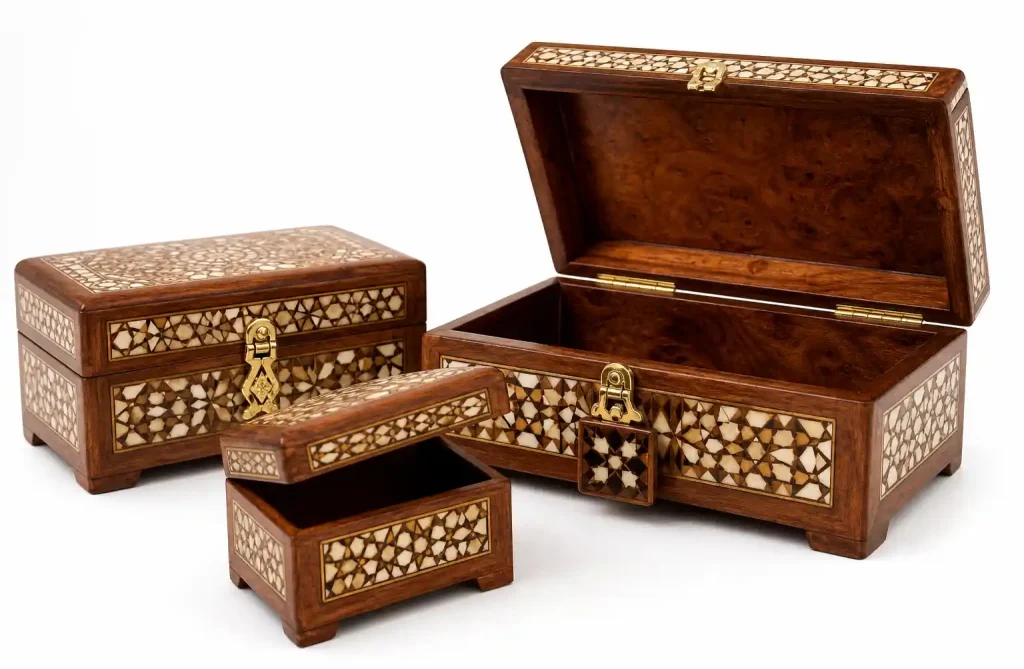
North African wooden decor markets, particularly in Morocco and Egypt, cater heavily to international tourists and export buyers. The aesthetic blends Islamic geometric patterns with Mediterranean influences.
Best-sellers: Decorative boxes with inlay work ($25-80 wholesale), lattice screens and architectural elements ($150-500), carved furniture ($200+), and tourist items like carved camels ($5-15 retail).
North Africa offers competitive pricing due to established infrastructure and European market proximity. Morocco’s cooperatives handle bulk orders with consistent quality. Wholesale buyers typically negotiate 40-50% below asking prices for orders exceeding 50 pieces.
West Africa: Cultural Heritage in Every Carving
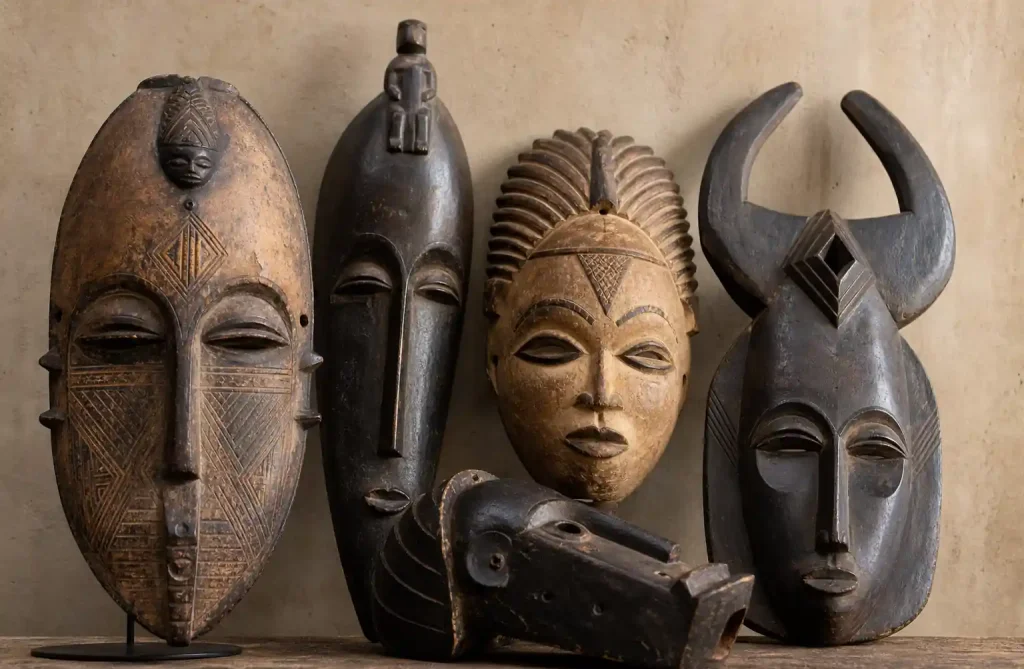
West Africa’s market centers on ceremonial and symbolic items rooted in deep cultural traditions. Nigeria, Ghana, Senegal, and Mali produce pieces with authentic tribal heritage, making this region attractive for buyers seeking genuine African art.
Top-sellers: Traditional masks ($30-200), wooden figurines depicting spiritual figures ($15-75), ceremonial drums ($50-250), and utilitarian items including stools, combs, and serving bowls ($10-40).
| Product Category | Typical Size | Wholesale Price | Best Materials | Primary Buyers |
|---|---|---|---|---|
| Traditional Masks | 20-40cm | $30-200 | Sese wood, Mahogany | Collectors, Interior designers |
| Figurines & Sculptures | 15-50cm | $15-75 | Ebony, Iroko, Mahogany | Retailers, Home decor stores |
| Ceremonial Drums | 30-60cm | $50-250 | Lenke wood, Mahogany | Musicians, Hotels |
| Carved Stools | 25-45cm | $35-120 | Dense hardwoods | Innenarchitekten |
| Decorative Bowls | 20-35cm | $10-40 | Sese wood, Teak | Gift shops |
West Africa’s pricing reflects labor-intensive traditional carving. Authenticity commands premiums. Many artisans work independently, making large uniform orders challenging but ensuring genuine handcrafted quality. Export logistics involve higher shipping costs—factor an additional 15-25% versus Mediterranean routes.
East Africa: Safari-Inspired Sophistication
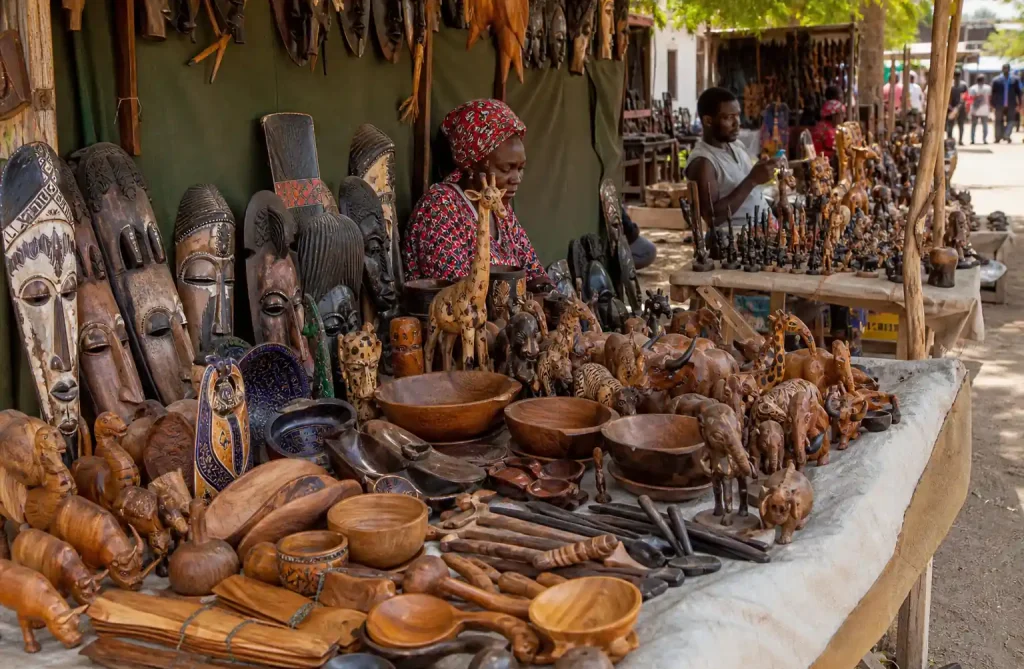
East Africa, particularly Kenya and Tanzania, has developed Africa’s most export-oriented wooden crafts industry. The region’s safari tourism and established artisan networks create a robust supply chain serving international markets.
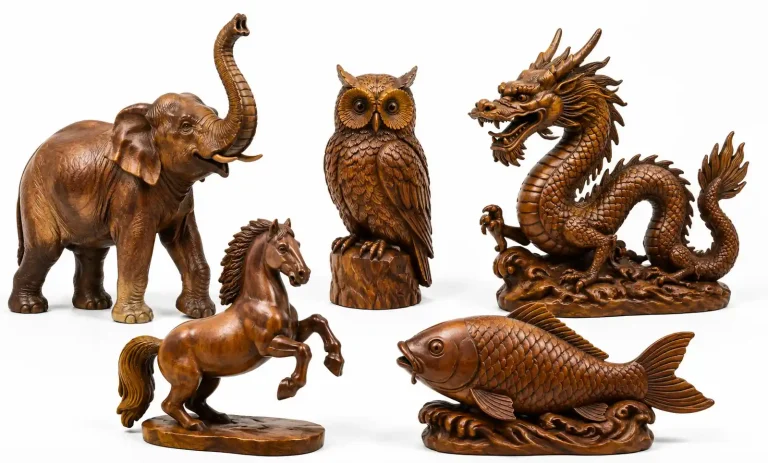
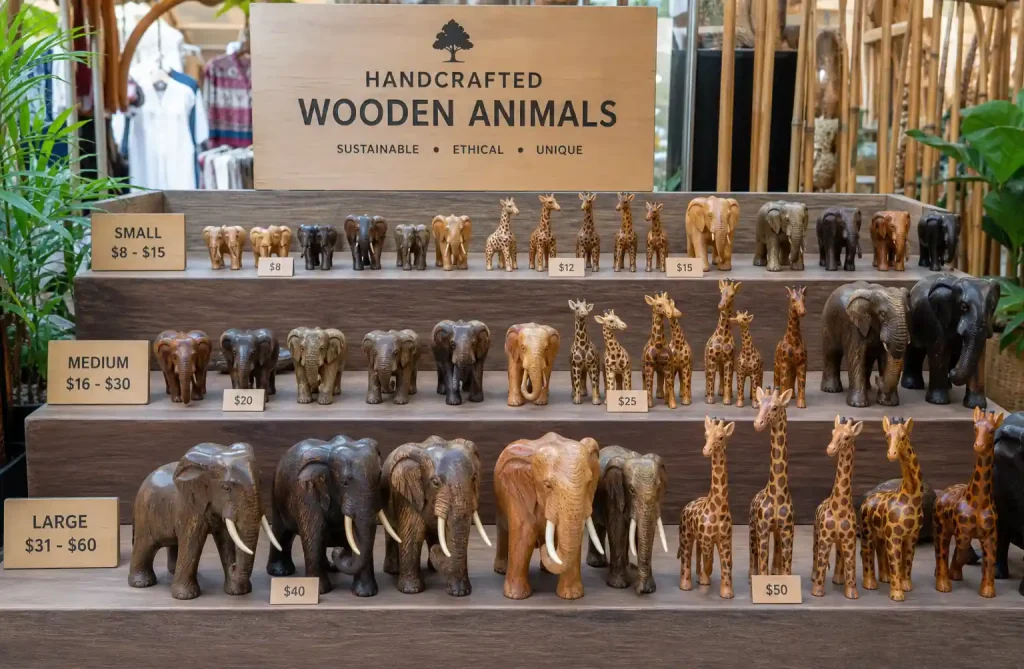
Bestsellers: Wildlife sculptures dominate—elephants, giraffes, lions, rhinos, and zebras. Big Five safari animals lead sales, with elephants at 30%. Wholesale: $8 for small pieces (10-15cm) to $200+ for large sculptures (40cm+). Maasai-inspired items ($12-45), olivewood kitchen items ($15-35 per set), and contemporary sculptures ($25-80).
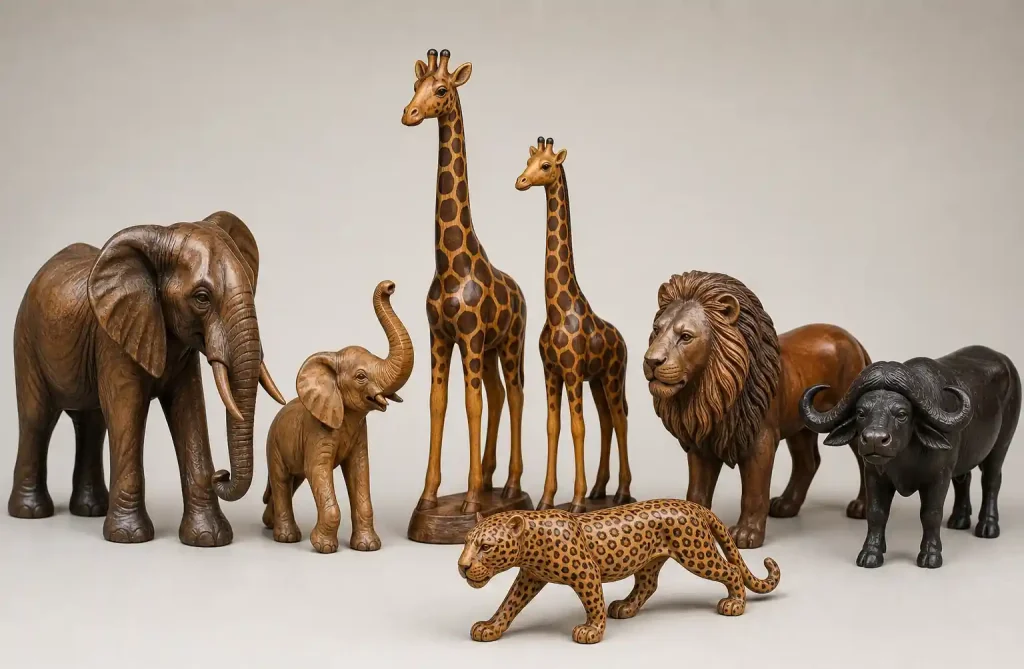
East Africa offers the best balance of quality, authenticity, and competitive pricing. Kenya’s Wamunyu region and Tanzania’s Makonde communities maintain efficient production at volume. Bulk orders of 100+ pieces achieve 35-45% discounts. Ebony carvings command 2-3× lighter wood prices but justify investment for high-end markets.
Southern Africa: Contemporary Meets Traditional
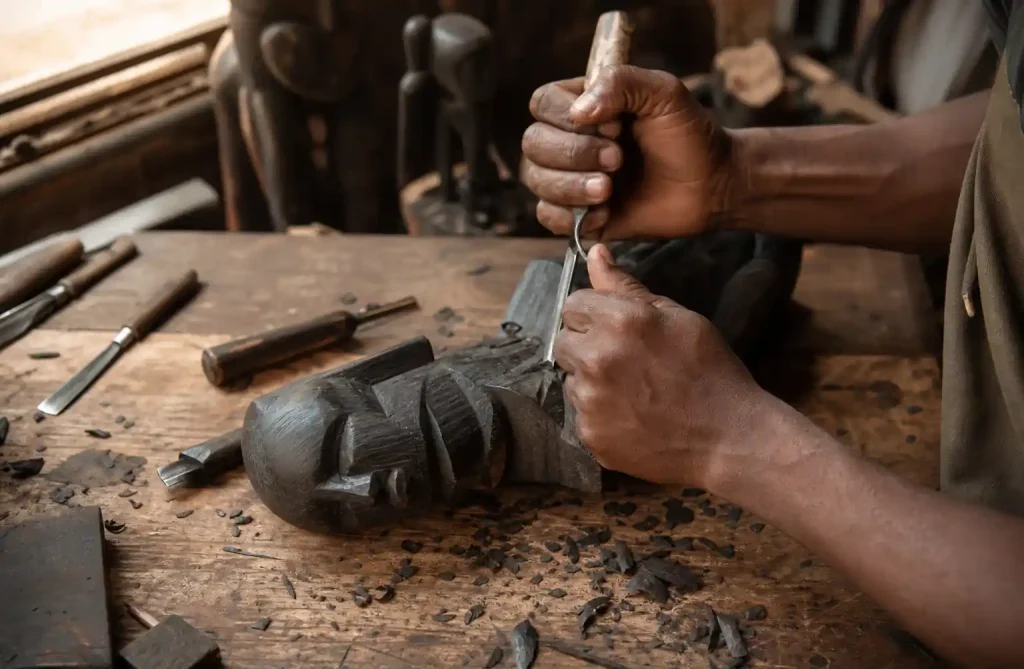
Southern Africa, led by South Africa, Zimbabwe, and Botswana, bridges traditional African aesthetics with contemporary design. The region’s developed retail infrastructure creates a sophisticated market.
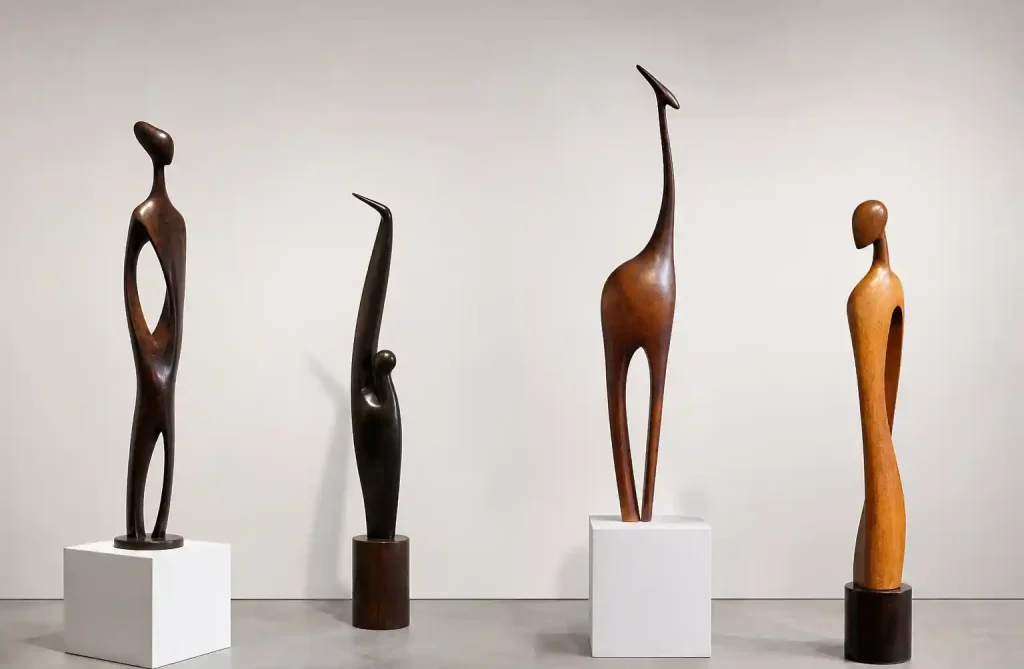
Best-sellers: Contemporary African sculptures reinterpreting traditional forms ($40-300), Shona-inspired pieces ($60-250), decorative bowls from indigenous hardwoods ($35-150), carved furniture ($200-800), and refined animal sculptures with gallery finishes ($80-500).
| Region | Signature Style | Price Positioning | Best Categories | Key Advantage |
|---|---|---|---|---|
| North Africa | Islamic geometric, inlay | Moderate-High | Boxes, screens, furniture | European market access |
| West Africa | Traditional tribal, ceremonial | Moderate | Masks, figurines, drums | Cultural authenticity |
| East Africa | Wildlife, safari themes | Low-Moderate | Animal sculptures, utilitarian | Volume capacity |
| Southern Africa | Contemporary fusion | Hoch | Modern sculptures, furniture | Design sophistication |
Southern Africa caters to affluent buyers. Quality expectations emphasize finish, grain selection, and artistic merit. Margins justify investment for upscale retailers. Political stability and logistics infrastructure reduce supply chain risks.
B2B Opportunities and Pricing Strategies
Strategic opportunities match regional strengths to target customer preferences. Tourist destination retailers should prioritize East African wildlife sculptures. High-end interior design firms benefit from West African ceremonial and Southern African contemporary work. Hotel buyers requiring volume should focus on Moroccan and Kenyan cooperatives, negotiating pricing on 200+ piece orders.
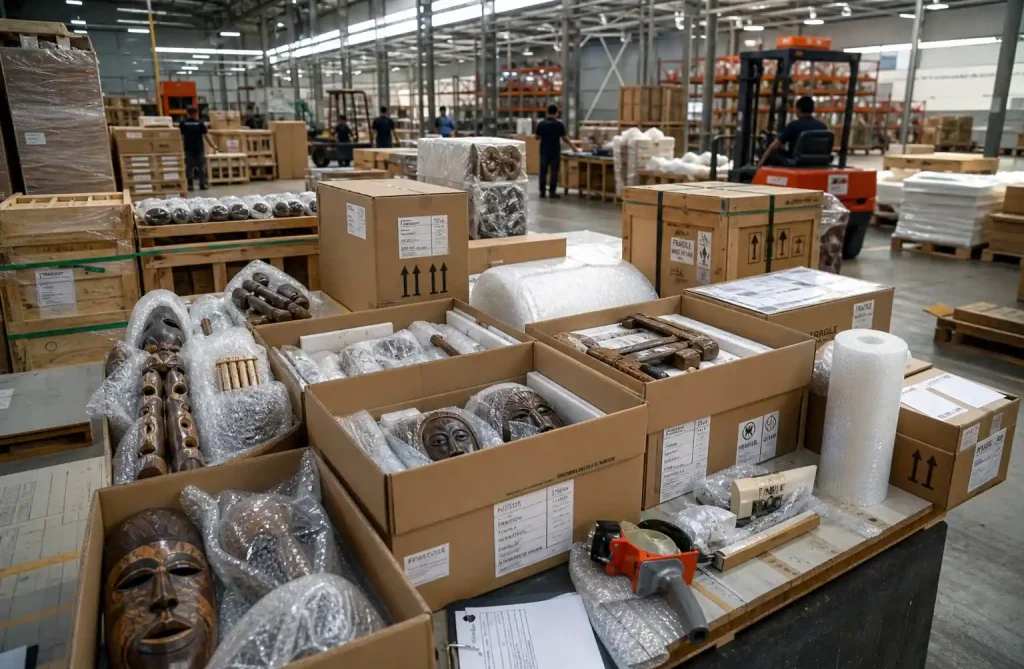
Quality verification: Request samples before bulk orders—expect to pay $50-150 for representative sets. Verify wood species for sustainability certification. Some species require CITES documentation. Payment terms involve 30-50% deposit with balance before shipping.
| Price Tier | Wholesale Cost | Typical Retail | Product Examples | Target Market |
|---|---|---|---|---|
| Entry Level | $5-15 | $15-40 | Small animals, keychains, bowls | Souvenir shops |
| Mid-Range | $15-50 | $40-120 | Medium sculptures, masks | Gift shops, home decor |
| Premium | $50-150 | $120-350 | Large pieces, detailed work | Boutique stores, designers |
| Gallery/Collector | $150-500+ | $350-1200+ | Museum-quality pieces | Galleries, high-end projects |
Calculating true landed costs: Factor in international shipping ($8-15 per kg), customs duties (4-8%), import fees, insurance (1-3%), and payment processing (3-5%). These can increase base wholesale by 30-45%.
Cultural Considerations and Sustainability
Understanding cultural context separates successful buyers from those who struggle. West African masks should be sourced with cultural awareness. Understanding traditional significance allows respectful marketing and appropriate pricing.
Animal representations carry specific meanings—elephants symbolize wisdom and strength, lions represent courage, giraffes embody grace. Incorporating these meanings adds value and authenticity.
African markets increasingly emphasize sustainable harvesting and fair trade. FSC-certified suppliers command 10-15% premiums but offer marketing advantages. Fair trade partnerships ensure equitable compensation while providing compelling brand stories.
Working with FineWoodArt
Many buyers seek established manufacturers who understand African aesthetics while providing reliable quality and delivery. FineWoodArt specializes in handcrafted wooden sculptures capturing African wildlife themes and cultural symbolism. Our artisans combine traditional carving with premium woods to create African-inspired pieces with consistent quality.
Our OEM/ODM services provide African-themed wooden decor without direct sourcing complexity—minimum orders of 50 pieces with 3-4 week lead times. Our creative gift collections include African-inspired animal figurines suitable for retailers appreciating African aesthetics with manufacturing reliability.
Häufig gestellte Fragen
What are the minimum order quantities when sourcing from Africa?
East African exporters require 50-100 pieces; West African collectives work with 20-30 pieces at higher costs; North African suppliers require 30-50 pieces.
How long does production and shipping take?
Production ranges 4-8 weeks. Add 2-4 weeks sea freight to Europe or 4-6 weeks to North America. Total: 8-12 weeks for initial orders.
Which region offers the best value for wildlife sculptures?
East Africa, particularly Kenya, provides the best quality and pricing combination. Small pieces $8-15, medium $20-50, large $80-200.
Are there sustainability concerns?
Responsible suppliers use certified sustainable sources. Avoid ebony unless CITES documentation is provided. Many offer FSC-certified options.
What documentation is needed to import wooden items?
Commercial invoice, packing list, certificate of origin. Wooden products may require phytosanitary certificates. Certain species need CITES permits.
Fazit
Africa’s wooden decor market offers tremendous opportunities for buyers who approach it with regional awareness. North Africa’s geometric sophistication, West Africa’s ceremonial heritage, East Africa’s wildlife specialization, and Southern Africa’s contemporary fusion each bring distinctive strengths.
Success requires balancing authentic African aesthetics with your market’s expectations and price sensitivity. Match regional specialties to your customers: East African wildlife for safari tourism, West African ceremonial pieces for collectors, North African items for Mediterranean design, and Southern African contemporary work for upscale markets. Understanding these regional dynamics positions your business to capitalize on this culturally rich and commercially viable market segment.