





Pourquoi les grossistes internationaux choisissent-ils des fabricants chinois pour leurs objets d'art en bois haut de gamme ?
The global wood carving market is projected to reach $3.5 billion by 2035 (CAGR 5.9%), with Asia-Pacific leading growth. Within this landscape, Chinese manufacturers have become the dominant sourcing choice for wholesalers in high-end wood arts. Here’s why.
Deep-Rooted Craftsmanship Heritage
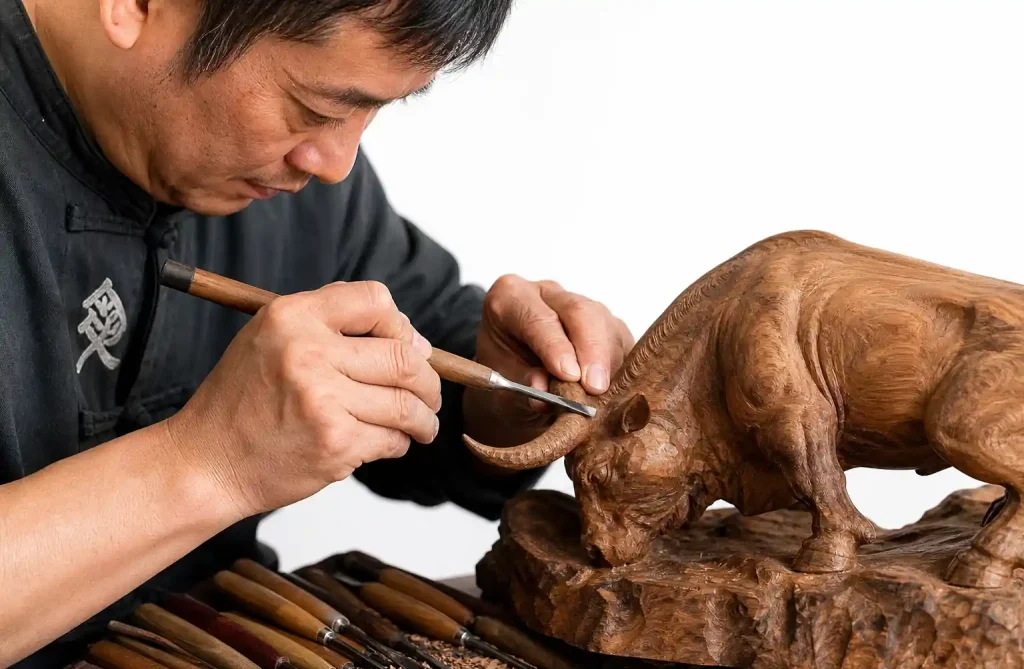
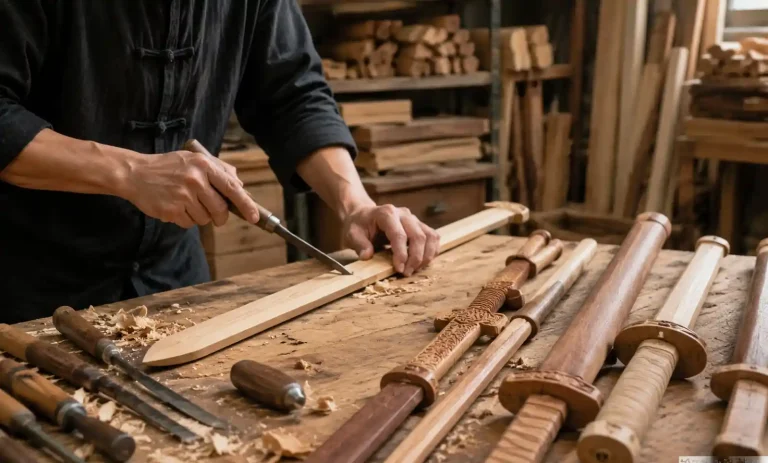
China’s wood carving tradition spans over 2,000 years. Four core techniques define modern production:
- Yuandiao (Round Carving): Three-dimensional sculptures for standalone decorative pieces.
- Fudiao (Relief Carving): Raised designs for wall panels and screens.
- Loudiao (Openwork Carving): Intricate pierced designs where negative space is part of the art.
- Zhudiao (Incised Carving): Engraved patterns for fine decorative work.
Regional specialization has produced distinct centers of excellence:
| Region | Province | Specialty |
|---|---|---|
| Dongyang | Zhejiang | Architectural carving, furniture decoration (National Intangible Cultural Heritage) |
| Putian | Fujian | Buddhist statuary, religious carvings |
| Chaozhou | Guangdong | Openwork carving, gilt wood sculptures |
| Quyang | Hebei | Figurative sculpture, character work |
This heritage provides an intuitive understanding of wood behavior, grain patterns, and carving nuances that cannot be replicated through modern training alone.
Material Expertise and Resource Access
Chinese manufacturers work with both domestic and imported premium species.
Domestic Premium Woods:
| Species | Chinese Name | Key Properties | Les meilleures applications |
|---|---|---|---|
| Camphor | Zhang Mu | Aromatic, insect-repellent, warm reddish-brown | Animal carvings, storage boxes |
| Buis | Huang Yang Mu | Dense, fine grain, ages to golden color | Miniatures, figurines, collectibles |
| Elm | Yu Mu | Beautiful grain, dimensional stability | Furniture, large decorative pieces |
| Paulownia | Tong Mu | Lightweight yet strong | Carved panels, decorative elements |
International Hardwoods: Established import channels for Southeast Asian teak, rosewood, and mahogany; African ebony and wenge; and South American purpleheart and bocote—all with CITES and FSC compliance.
| Essences de bois | Origin | Characteristics | Les meilleures applications | Fourchette de prix |
|---|---|---|---|---|
| Teck | Southeast Asia | Golden-brown, high oil content, durable | Outdoor sculptures, furniture accents | High |
| Camphor | China | Aromatic, insect-resistant, warm tone | Animal carvings, storage boxes | Medium |
| Buis | China | Dense, fine grain, golden aging | Miniatures, figurines, collectibles | High |
| Bois de rose | SE Asia/Africa | Deep red-brown, premium grain | Luxury items, Buddhist statuary | Very High |
| Acajou | Central America | Stable, classic appearance | Furniture accents, medium sculptures | Medium-High |
| Elm | China | Attractive grain, versatile | Desktop decorations, furniture | Medium |
Scalability and Production Capacity
Chinese manufacturing operates on a clustered model—workshops, suppliers, finishers, and export services concentrated in specific regions. This delivers:
- Production flexibility: Overflow work subcontracted to trusted partners.
- Supply chain efficiency: Raw materials, tools, and packaging available locally.
- Knowledge sharing: Organic exchange of techniques within clusters.
- Labor availability: Skilled carvers gravitate to regions with the most opportunities.
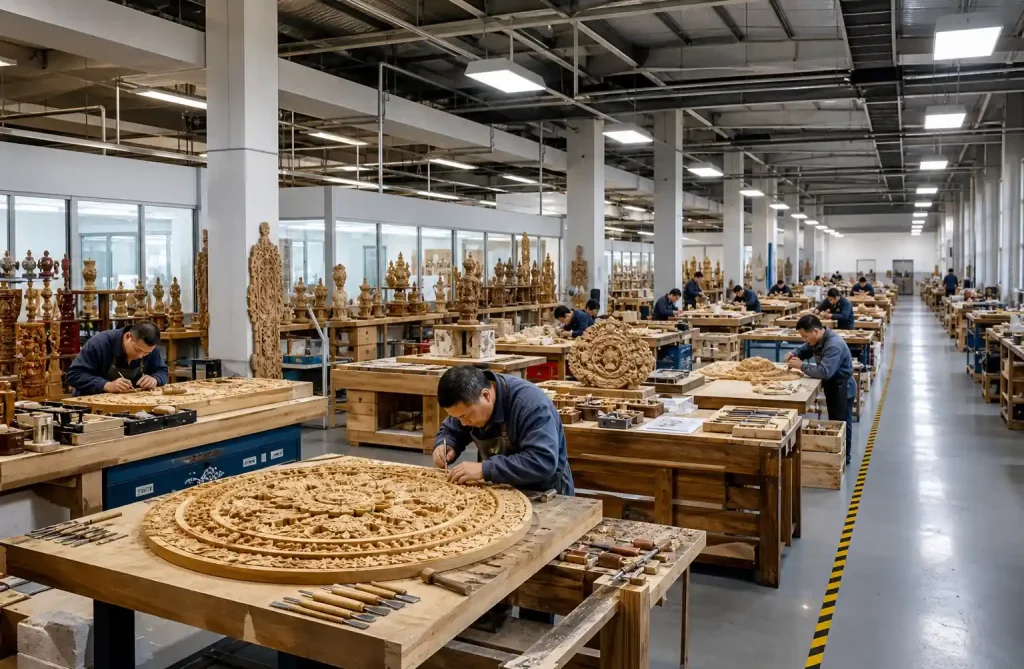
A single manufacturer may employ dozens of master carvers while maintaining relationships with hundreds of artisans. CNC machines handle roughing; master carvers focus on fine details. Dedicated QC teams inspect at multiple stages.
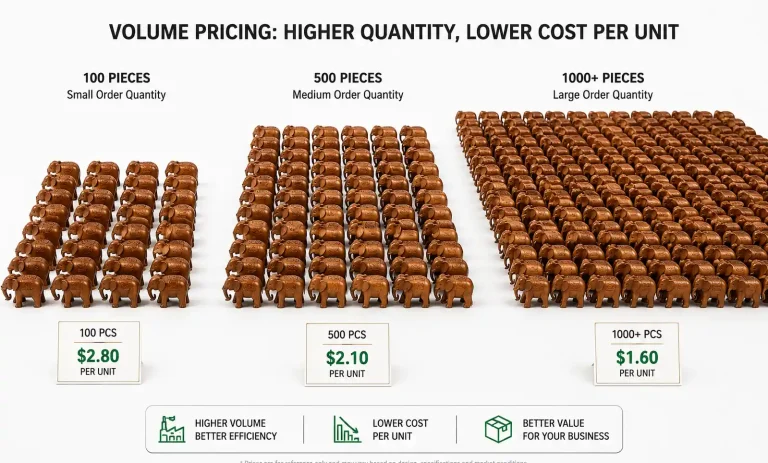
For wholesalers: Start small (100–500 pieces), scale to thousands per month, accommodate seasonal demands, and combine multiple products in mixed containers.
Cost-Effectiveness Without Compromising Quality
Cost advantages come from manufacturing efficiency, process optimization, domestic material availability, economies of scale, and shared cluster infrastructure.
| Cost Component | Chinese Manufacturer | Western Manufacturer | Savings |
|---|---|---|---|
| Skilled carver labor (per hour) | $8–15 | $35–65 | 60–75% |
| Teak (per board foot) | $18–25 | $30–45 | ~40% |
| Finishing & coating (per piece) | $2–5 | $8–15 | 60–70% |
| Tooling setup | $500–1,500 | $2,000–5,000 | ~70% |
| Packaging (per unit) | $0.50–1.50 | $2–4 | 60–70% |
| Quality inspection (per piece) | $0.30–0.80 | $2–4 | 75–85% |
Export-oriented manufacturers maintain FSC and ISO certifications, invest in modern finishing equipment, and train workers for export standards that often exceed domestic requirements. Wholesalers typically pay 40–60% less per unit while receiving comparable or superior quality.
Customization and Design Flexibility
Modern manufacturers accommodate:
- Design modification: Adjust dimensions, proportions, scale.
- Style adaptation: Minimalist for Scandinavian markets; ornate traditional for Middle Eastern buyers.
- Surface finishes: Natural oil, colored stains, distressed, or painted.
- Material substitution: Same design across multiple wood species.
- Packaging: Custom boxes, branded inserts, retail-ready packaging.
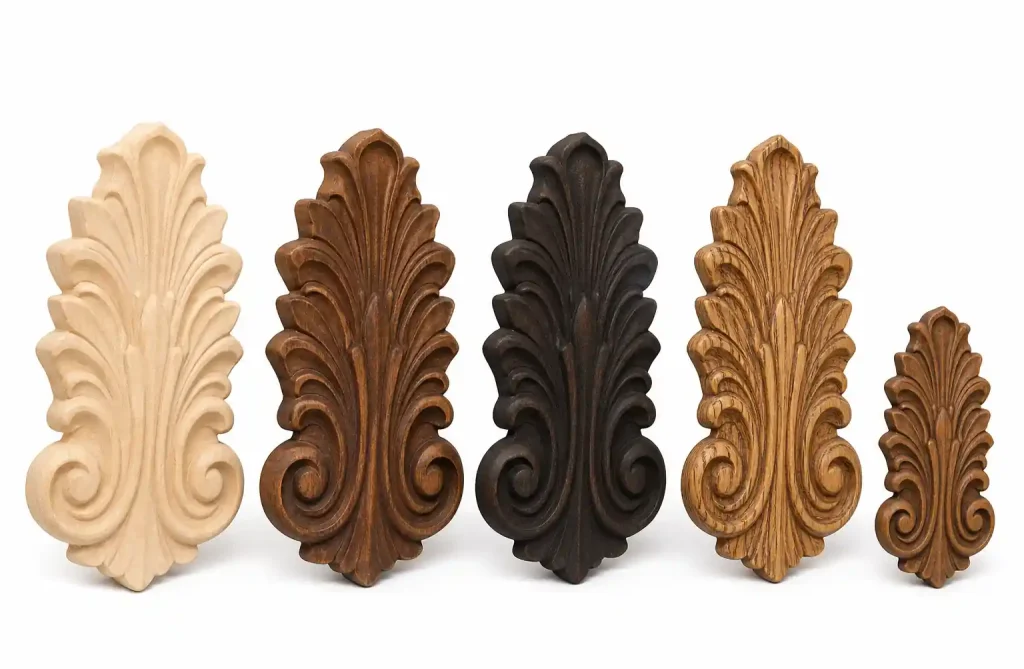
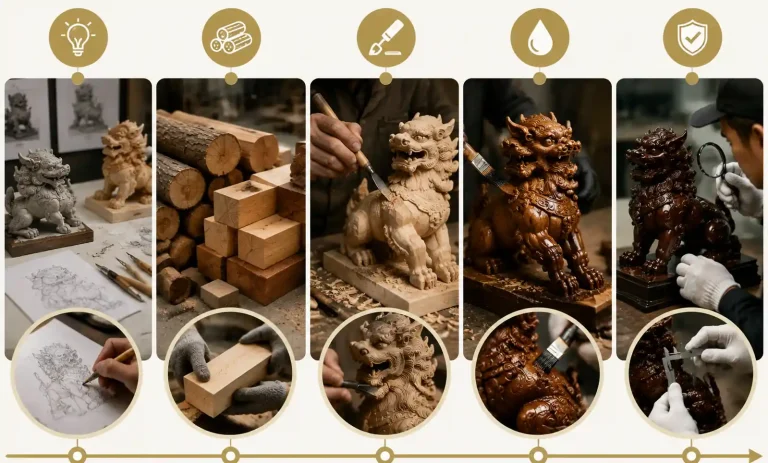
Design workflow:
- Consultation — Concepts, price points, market requirements.
- Sample development — Prototypes in 2–4 weeks with multiple finish options.
- Revision cycles — Feedback-driven adjustments in 1–2 weeks.
- Production approval — Final confirmation of all specs.
- Pilot batch — Final approval before full production.
Remote collaboration is supported by high-resolution photography, 3D rendering, CAD sharing, and responsive communication via WeChat, WhatsApp, and email.
Quality Control and International Standards
Multi-stage inspection protocols:
| Stage | What Is Checked |
|---|---|
| Raw material | Species verification, moisture content (8–12%), defect screening |
| In-process | Design accuracy, carving depth, tool marks, surface quality |
| Pre-finishing | Smoothness, dimensional accuracy, repair needs |
| Post-finishing | Coating uniformity, color consistency, adhesion |
| Final | Overall appearance, accessories, packaging, labeling |
Key certifications:
| Certification | Purpose | Why It Matters |
|---|---|---|
| FSC | Responsibly managed forests | Required by major retailers; eco-appeal |
| ISO 9001 | Quality management | Systematic QC processes |
| BSCI | Social compliance | Labor and ethical standards |
| REACH (EU) | Chemical regulation | Required for EU markets |
| CARB | Formaldehyde emissions | Required for California, expanding US |
| CE Marking | European conformity | Required for certain EU categories |
These require traceable supply chains, documented procedures, and regular third-party audits.
Export Infrastructure and Global Reach
Comprehensive export ecosystems surround manufacturing clusters:
- Documentation : Freight forwarders, customs brokers, certificate of origin providers.
- Logistics: Major ports within hours of factories; competitive rates; consolidated shipping for smaller buyers.
- Financial services: Export credit insurance, trade finance, currency exchange.
- Third-party inspection: SGS, Bureau Veritas, Intertek offices near clusters.
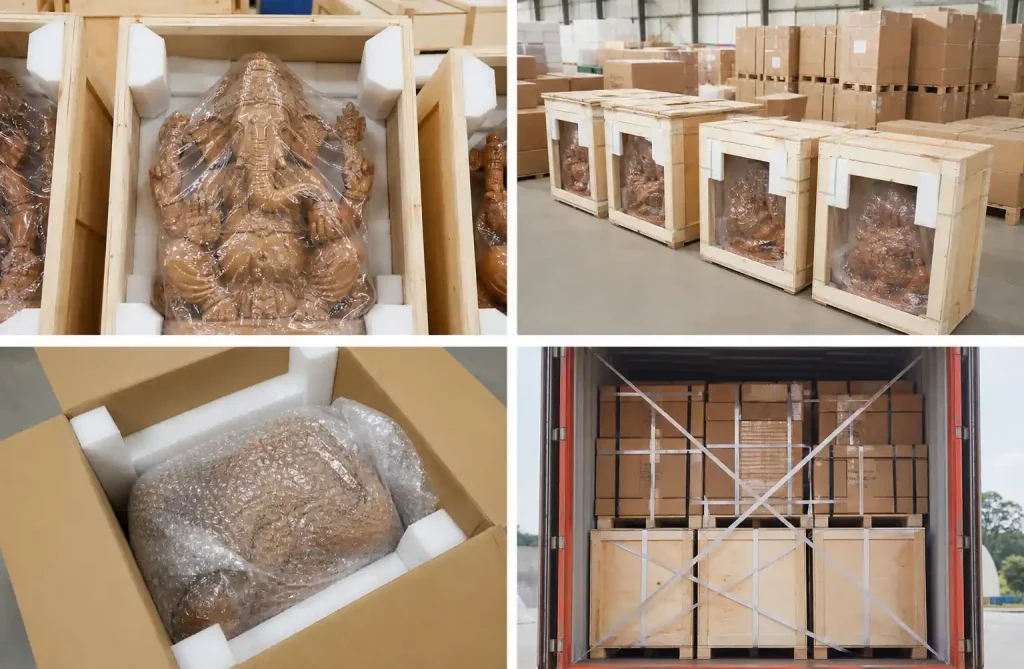
Manufacturers have adapted for international buyers: English-speaking staff, evening shifts for Western time zones, understanding of contract expectations, and proficiency with digital communication tools.
For first-time importers: Sample shipments via courier, LCL options, video factory tours, and flexible payment terms that improve with trust.
FAQ
What minimum order quantities should wholesalers expect?
Standard catalog items: 100–300 pieces. Custom designs: 300–500 pieces. Mixed container orders (typically $10,000–15,000 total value) across multiple products are often accepted. Initial trial orders can be negotiated at slightly higher per-unit prices.
How do manufacturers ensure sustainable wood sourcing?
Reputable exporters obtain FSC certification with documented chain of custody. For CITES-restricted species like certain rosewoods, CITES permits are required. Request FSC-certified products and verify certificates through the FSC database.
What quality control measures should wholesalers implement?
Use pre-production samples, third-party in-process inspections on large orders, pre-shipment inspection, detailed quality specifications with tolerance ranges, and clear defect rate agreements in purchase contracts.
How long does production typically take?
Sample development: 2–4 weeks. Production: 4–8 weeks. Sea freight: 4–6 weeks. Total: 3–4 months from order to delivery for first orders. Repeat orders move faster. Avoid scheduling around Chinese New Year (late January to mid-February).
How should wholesalers protect intellectual property?
Register trademarks in China. Document creation dates and maintain design files. Use contracts specifying IP ownership. Consider NDAs before sharing proprietary designs. Work with established manufacturers serving Western brands. For highly proprietary designs, split production across multiple suppliers.
Can manufacturers accommodate Western design aesthetics?
Yes. Export-oriented manufacturers maintain design teams studying Western trends across markets—Scandinavian minimalism, American traditional, European modern, Australian coastal. Provide clear references: Pinterest boards, competitor products, interior design images. Most will proactively suggest market-specific modifications.
What payment terms are standard?
New relationships: 30% deposit, 70% balance before shipment (after pre-shipment inspection). Methods: wire transfer, letter of credit, or platforms like Alibaba Trade Assurance. Established relationships may qualify for 30–60 day terms. Never pay 100% upfront with unverified suppliers.
What common pitfalls should wholesalers avoid?
Selecting purely on price, rushing sample approval, vague specifications, ignoring wood moisture content (causes cracking), poor communication, overlooking import regulations, and insufficient quality control. Most issues stem from poor communication, not manufacturer dishonesty. Invest time upfront in clear specs, samples, and relationship building.
Conclusion
Chinese manufacturers dominate high-end wood arts through centuries-old carving traditions combined with modern manufacturing, diverse material access, scalable production, cost advantages without quality compromise, deep customization, rigorous quality systems, and sophisticated export infrastructure.
When selecting a partner, prioritize: established export history, relevant certifications, clear communication, customization flexibility, transparent pricing, and willingness to accommodate quality control. The best relationships develop gradually—starting with small trial orders and building trust over time.
If you’re exploring high-end wood arts sourcing, our team can help navigate product selection, customization, and order logistics tailored to your market and business model.