





The Ultimate Buyer’s Guide to Bulk Handcrafted Wooden Animal Sculptures
Sourcing bulk handcrafted wooden animal sculptures requires more than finding the lowest price. Whether you’re a retail buyer stocking a gift shop, an interior designer outfitting commercial spaces, or a corporate procurement manager selecting meaningful employee gifts, understanding craftsmanship quality, cultural symbolism, and supplier reliability directly impacts your inventory success and customer satisfaction.
This comprehensive guide covers everything from material selection and cultural significance to bulk pricing structures and quality assessment criteria, helping you make informed purchasing decisions that balance artisan craftsmanship with commercial viability.
Table of Contents
- Why Handcrafted Wooden Animal Sculptures Matter in Today’s Market
- Cultural Significance and Symbolism by Animal Type
- Wood Types and Material Quality Comparison
- Craftsmanship Quality Assessment Guide
- Bulk Buying Considerations: MOQ, Pricing, and Customization
- Supplier Selection and Vetting Criteria
- FAQ
- Making Your Final Decision
1. Why Handcrafted Wooden Animal Sculptures Matter in Today’s Market
Handcrafted wooden animal sculptures occupy a unique position in the home decor and gift market. Unlike mass-produced resin figurines, each hand-carved piece carries visible tool marks, natural wood grain variations, and subtle asymmetries that reflect genuine artisan skill. This authenticity resonates particularly well with North American, European, and Australian consumers who increasingly value sustainable materials, traditional craftsmanship, and products with cultural narratives.
The retail appeal extends across multiple market segments. Interior designers specify wooden animal carvings for biophilic design projects that incorporate natural materials into commercial and residential spaces. Gift shop owners find consistent demand for animal sculptures as housewarming presents, spiritual tokens, and desk decorations. Corporate buyers appreciate wooden carvings as culturally respectful alternatives to generic promotional items, especially when sourcing gifts for international clients or milestone employee recognition.
From a bulk purchasing perspective, wooden animal sculptures offer favorable margins. Quality handcrafted pieces typically retail between $25-$150 depending on size and complexity, while wholesale costs from established Chinese manufacturers range from $6-$45 per piece at order quantities of 100+ units. The perceived value remains high because customers can see and feel the craftsmanship, justifying premium pricing compared to factory-molded alternatives.
2. Cultural Significance and Symbolism by Animal Type
Understanding the cultural meanings behind different animal carvings helps you curate inventory that resonates with specific customer intentions, whether they’re seeking feng shui harmony, personal totems, or symbolic gifts.
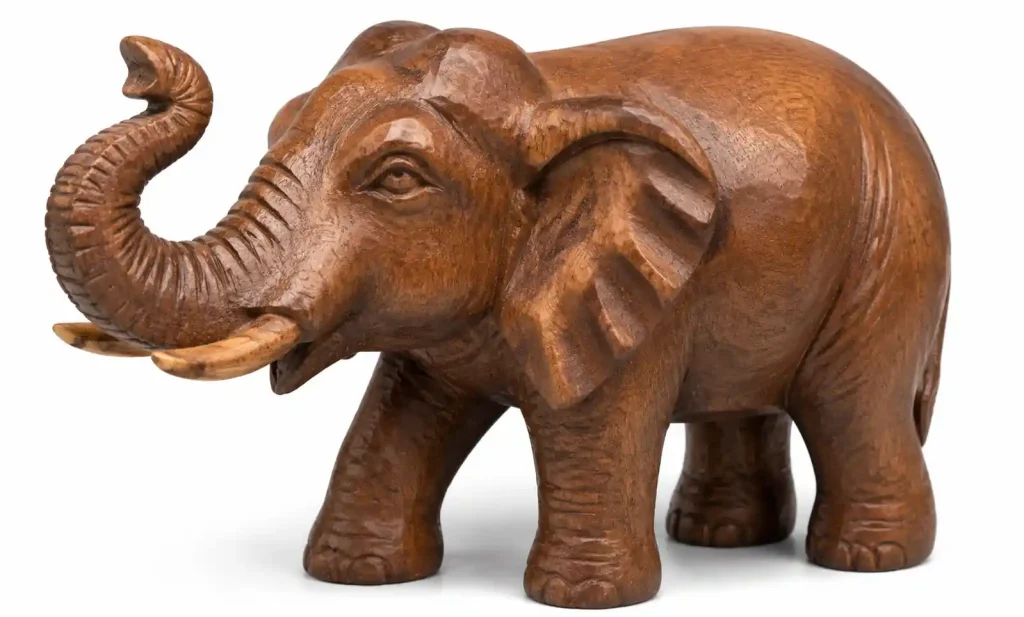
Elephant carvings hold particularly strong cross-cultural appeal. In Asian traditions, elephants with raised trunks symbolize good fortune and prosperity, making them popular for business openings and new home celebrations. The elephant’s association with wisdom and memory also makes these carvings meaningful retirement or graduation gifts. African elephant carvings often emphasize strength and family bonds, appealing to customers valuing leadership qualities.
Dragon sculptures carry powerful symbolism in Chinese culture, representing power, strength, and imperial authority. However, Western markets often associate dragons with fantasy and mysticism rather than traditional Asian meanings. When sourcing dragon carvings for bulk orders, clarify whether your target market expects Eastern cultural authenticity or Western fantasy aesthetics, as carving styles differ significantly.
Owl carvings symbolize wisdom across multiple cultures, from ancient Greek association with Athena to Native American spiritual traditions. This universal recognition makes owl sculptures particularly versatile for educational gifts, library decor, and academic achievement awards.
Horse carvings represent freedom, endurance, and success. In feng shui practice, horse sculptures facing inward attract success and recognition, making them popular desk decorations for professionals. The universal admiration for horses creates strong appeal across Western markets without requiring cultural context explanation.
Fish carvings, especially koi or carp, symbolize abundance, perseverance, and transformation in Asian cultures. These work particularly well in spa environments, meditation spaces, and wellness-focused retail settings where customers seek symbols of personal growth.
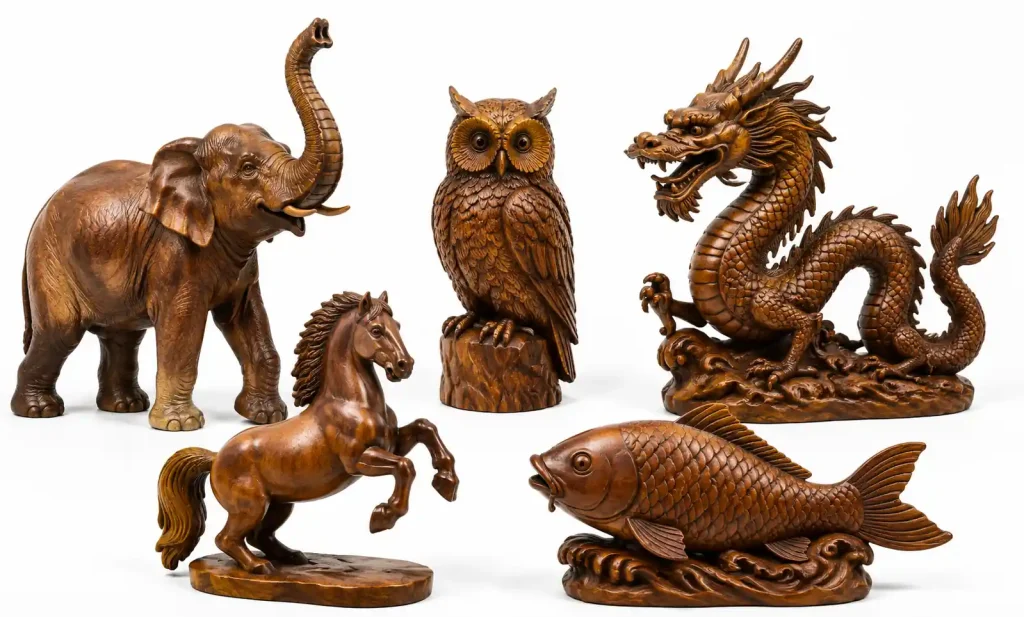
When selecting animal types for bulk orders, consider your primary customer base. Retail buyers serving multicultural urban markets benefit from diverse animal symbolism. Interior designers working on specific project themes need targeted selections. Corporate buyers should verify cultural appropriateness for their recipient demographics, as some animal symbolism varies significantly across regions.
3. Wood Types and Material Quality Comparison
The wood species directly affects durability, appearance, carving detail capability, and price point. Understanding these material differences helps you specify appropriate quality levels for different retail price targets.
| Wood Type | Color & Grain | Durability | Detail Capability | Price Point | Best For |
|---|---|---|---|---|---|
| Teak | Golden-brown with prominent grain | Excellent; naturally moisture-resistant | High; holds fine details | $$$ | Premium collections, outdoor-suitable pieces |
| Mahogany | Rich reddish-brown; straight grain | Very good; stable and strong | Very high; allows intricate carving | $$$ | High-end retail, detailed sculptures |
| Rosewood | Deep brown with darker streaks | Excellent; dense and hard | High; takes smooth finishes | $$$$ | Luxury market, collector pieces |
| Sandalwood | Light golden; aromatic | Good; requires care | Moderate; best for rounded forms | $$$$ | Spiritual/wellness market |
| Suar Wood | Varied browns; dramatic grain | Very good; naturally durable | Moderate to high | $$ | Mid-range retail, rustic aesthetic |
| Acacia | Light to medium brown | Good; requires finish | Moderate | $ | Entry-level collections, painted pieces |
Each wood type serves distinct market positioning. Teak carvings justify premium pricing due to the wood’s natural resistance to moisture and insects, making them suitable for customers in humid climates or those seeking outdoor-capable decor. The golden-brown color and prominent grain patterns create visual warmth that photographs well for online retail.
Mahogany offers the best balance of workability and visual appeal for detailed animal sculptures. Artisans can achieve fine features like feather textures on bird carvings or facial expressions on mammal pieces. The wood’s stability means minimal warping or cracking over time, reducing customer returns and warranty claims.
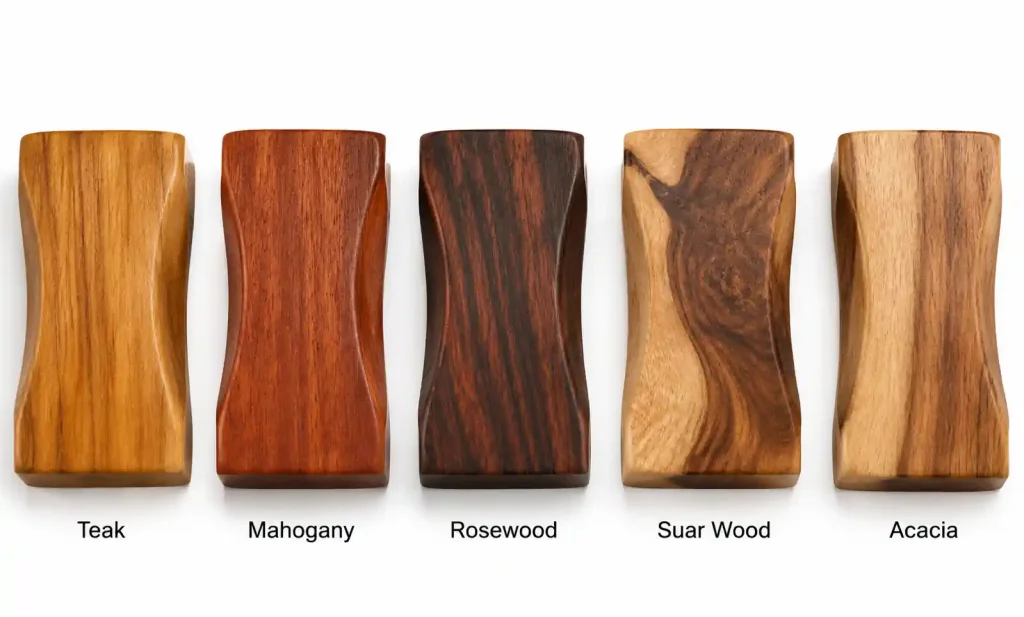
Rosewood and sandalwood occupy the luxury tier. Rosewood’s density allows mirror-smooth finishes and holds sharp carving edges, creating sculptures that feel substantial and refined. Sandalwood’s aromatic properties add sensory dimension, particularly valued in wellness-focused retail environments, though the scent fades gradually over years.
Budget-conscious bulk orders often specify suar wood or acacia. While these softer woods limit extreme detail work, skilled carvers still produce attractive pieces suitable for painted finishes or rustic decorative styles. These materials work well for larger sculptures where wood grain and natural color variations become design features rather than limitations.
When specifying wood types for bulk orders, request certified sustainable sourcing documentation. European and North American retailers increasingly face customer inquiries about forest management practices, and proper certifications prevent supply chain complications.
4. Craftsmanship Quality Assessment Guide
Distinguishing genuinely handcrafted wooden animal sculptures from machine-roughed pieces passed off as artisan work requires examining specific quality markers. This skill becomes critical when vetting new suppliers or inspecting sample pieces before committing to large orders.
Tool mark patterns provide the clearest authenticity indicator. Hand-carved pieces show irregular tool marks that follow the wood’s natural contours and change direction based on grain patterns. Machine-carved pieces display uniform, parallel marks with consistent depth. Examine less-visible areas like the sculpture’s underside or interior hollows where carvers are less likely to add hand-finishing to disguise machine work.
Symmetry and proportion reveal skill levels. Accomplished carvers create balanced compositions even when working freehand, with animal features properly scaled relative to body size. Amateur or rushed work shows misaligned eyes, disproportionate limbs, or awkward poses. However, perfect mirror symmetry often indicates machine carving or mold casting rather than handwork.
Surface finish quality demonstrates attention to detail. Premium handcrafted pieces receive progressive sanding through multiple grits, creating smooth surfaces that highlight wood grain without obscuring carved details. Lower quality work shows sanding scratches, rough patches in detailed areas, or over-aggressive sanding that blurs carved features.
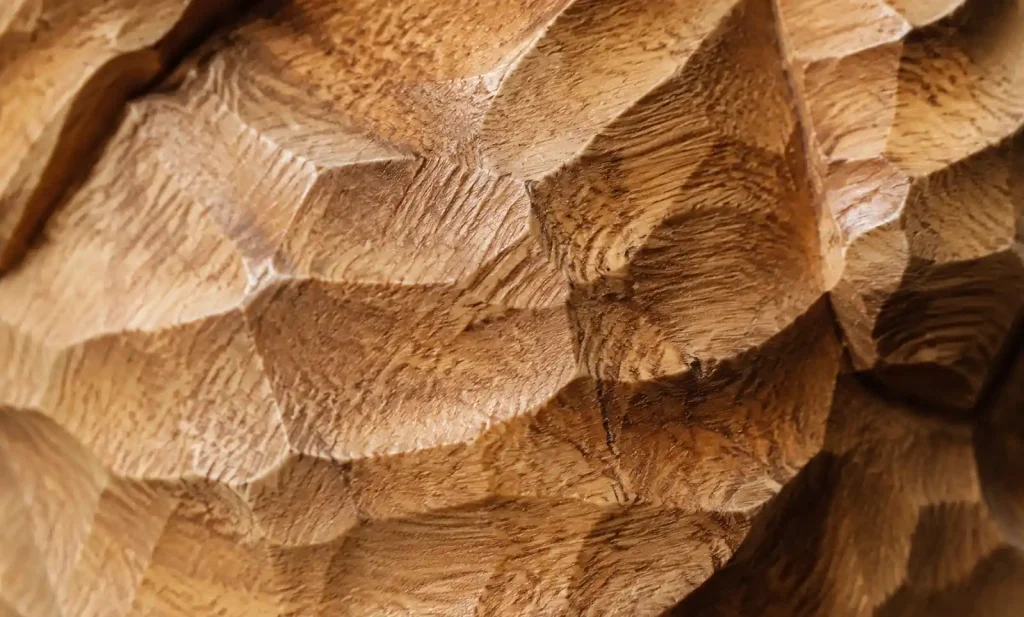
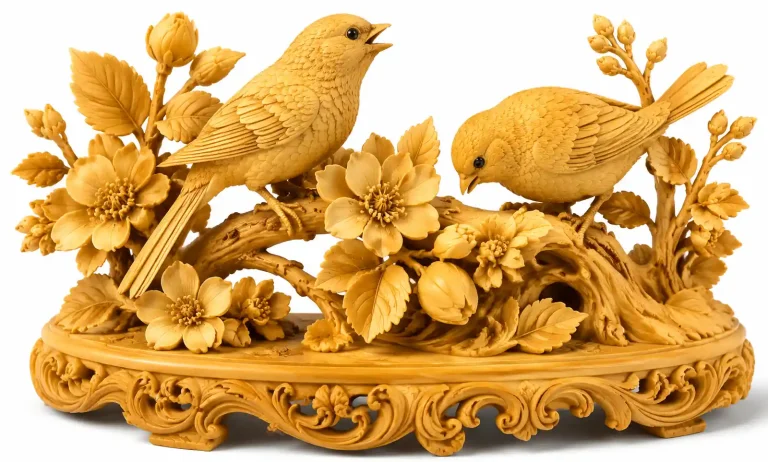
Wood grain utilization separates skilled carvers from basic production. Expert artisans position animal forms to enhance natural grain patterns—placing dramatic grain along a horse’s mane or using darker wood streaks to suggest feather patterns. They also orient pieces to avoid grain patterns that create structural weak points at thin areas like legs or tails.
Joint and assembly work matters for complex multi-piece sculptures. Quality construction uses precise mortise-and-tenon or dowel joints with grain direction matched for strength. Inferior work relies on visible glue joints, misaligned components, or joins that create obvious color mismatches between sections.
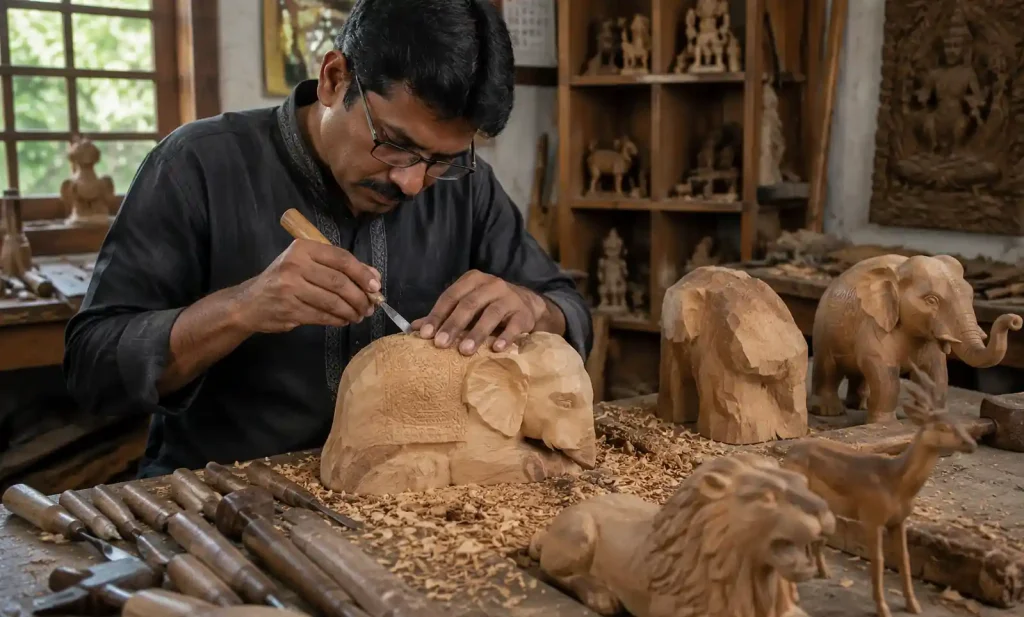
When requesting samples before bulk orders, examine pieces under good lighting and run your fingers along carved details. Premium handwork feels fluid and deliberate. Rushed or machine-assisted work feels mechanical and uniform. Don’t hesitate to request work-in-progress photos showing actual carving processes—legitimate artisan manufacturers readily provide these to demonstrate authentic handcrafting.
5. Bulk Buying Considerations: MOQ, Pricing, and Customization
Understanding manufacturer capabilities and pricing structures helps negotiate favorable terms while setting realistic expectations for bulk handcrafted wooden animal sculpture orders.
Minimum Order Quantities (MOQ) vary significantly based on manufacturer size and product complexity. Established Chinese wooden carving manufacturers typically set MOQs between 50-200 pieces for standard catalog designs. Custom designs often require higher minimums, usually 200-500 pieces, because they require dedicated artisan time for prototype development and specialized tool setup.
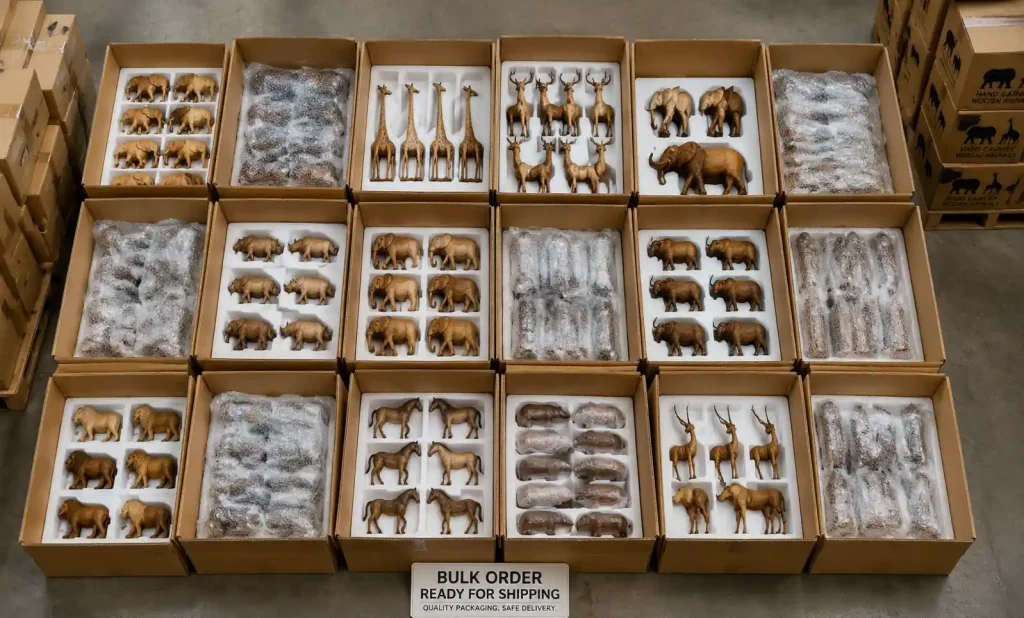
Mixed assortments allow lower per-design quantities when ordering multiple styles simultaneously. A 300-piece order might include six different animal types at 50 pieces each, meeting the manufacturer’s total volume threshold while providing inventory variety. This approach works particularly well for retail buyers testing market response across different animal symbolism and price points.
| Order Quantity | Price Range per Piece | Customization Options | Lead Time | Typical Applications |
|---|---|---|---|---|
| 50-100 pieces | $12-$25 | Limited; standard catalog items | 4-6 weeks | Gift shop inventory testing |
| 100-300 pieces | $9-$18 | Moderate; size variations, finish options | 6-8 weeks | Seasonal retail stock |
| 300-500 pieces | $7-$14 | Significant; design modifications, branding | 8-10 weeks | Interior design project supplies |
| 500-1000 pieces | $6-$11 | Extensive; custom designs, packaging | 10-14 weeks | Corporate gift programs |
| 1000+ pieces | $5-$9 | Full custom; exclusive designs, proprietary molds | 12-16 weeks | Major retail distribution |
Pricing decreases with volume, but the relationship isn’t linear. The sharpest per-unit cost reduction typically occurs between 100 and 300 pieces, where manufacturers achieve production efficiency without requiring additional artisan teams. Beyond 500 pieces, incremental savings diminish because labor costs dominate material costs in handcrafted items.
Customization tiers affect both pricing and lead times. Surface customization like alternative wood stains, painted accents, or branded packaging adds 10-20% to base costs with minimal lead time impact. Dimensional modifications—resizing existing designs or altering proportions—add 20-35% and extend lead times by 2-3 weeks for prototype approval. Entirely custom designs command 40-60% premiums and require 4-6 weeks additional for design development, prototype carving, and revision cycles.
Payment terms for bulk orders typically follow 30-50% deposit upon order confirmation, with the balance due before shipment. Established buyers with order history may negotiate net-30 terms. Factor these payment schedules into cash flow planning, particularly for seasonal inventory that must arrive well before peak selling periods.
Sampling policies vary by manufacturer. Many Chinese suppliers provide free samples of catalog items with buyers covering shipping costs ($25-45 for express delivery to North America or Europe). Custom design samples typically cost $50-150 per piece, sometimes refundable against bulk orders exceeding minimum thresholds. Always request samples before committing to large orders, even when working with recommended suppliers.
6. Supplier Selection and Vetting Criteria
Choosing the right wooden animal sculpture manufacturer affects product quality, delivery reliability, and long-term supply chain stability. Apply systematic vetting criteria rather than defaulting to the lowest quoted price.
Manufacturing verification should include facility documentation. Request photos or videos showing actual workshop conditions, artisan teams at work, and quality control processes. Legitimate manufacturers readily provide this transparency. Be wary of suppliers who only offer product photos without production documentation, as they may be trading intermediaries rather than actual manufacturers.
Quality control systems separate professional operations from inconsistent suppliers. Established manufacturers implement inspection checkpoints throughout production—wood selection review, post-carving inspection, finish quality check, and pre-packing final examination. Ask potential suppliers to describe their QC process and what percentage of pieces typically fail inspection. Professional operations acknowledge 5-8% rejection rates; claims of zero defects suggest inadequate quality standards.
Communication responsiveness predicts order management reliability. During initial inquiries, note response times, English communication clarity, and willingness to answer detailed questions. Suppliers who provide thorough, specific answers to technical questions about wood sources, carving processes, and customization limitations demonstrate operational knowledge and customer service commitment.
References and order history provide crucial validation. Request contact information for 2-3 existing customers in your market region. Professional suppliers maintain reference lists and facilitate connections with satisfied buyers. Also verify business registration, export licenses, and any relevant certifications through official channels when possible.
Sample quality consistency matters more than individual sample perfection. Order multiple samples of the same design to assess consistency across different artisans. Slight variations in handcrafted items are expected and desirable, but fundamental proportions, finish quality, and detail execution should remain consistent.
Shipping and logistics capabilities affect landed costs and delivery reliability. Experienced exporters provide clear shipping options (air vs. sea freight), handle customs documentation efficiently, and offer delivery tracking. They should clearly explain Incoterms (FOB, CIF, DDP) and help calculate total landed costs including duties and taxes for your destination country.
Flexibility and problem resolution reveal supplier reliability under pressure. Discuss hypothetical scenarios: what happens if 15% of an order arrives damaged? How do they handle delayed shipments? What recourse exists for quality issues discovered after delivery? Professional suppliers have established policies and demonstrate willingness to work through problems collaboratively.
When narrowing your supplier shortlist, prioritize manufacturers who demonstrate consistent quality, transparent communication, and reasonable business terms over those offering the absolute lowest prices. The cost difference between a $7 and $9 per-piece wholesale price becomes insignificant if quality issues require returns, damage customer relationships, or prevent reorders.
7. FAQ
What is the typical lead time for bulk orders of handcrafted wooden animal sculptures?
Standard catalog items usually require 4-6 weeks from order confirmation to shipment for quantities of 100-300 pieces. Custom designs or larger orders extend lead times to 8-14 weeks. Add 2-4 weeks for ocean freight to North America or Europe, or 5-7 days for air freight. Always build buffer time into your planning, especially for seasonal inventory that must arrive before peak selling periods.
How can I verify that sculptures are genuinely handcrafted and not machine-carved?
Examine tool mark patterns for irregularity and direction changes that follow natural wood grain. Check less-visible areas like undersides where finishing work is less intensive. Request work-in-progress photos or videos showing actual carving processes. Genuine hand carving shows slight asymmetries and organic tool marks, while machine work displays uniform, parallel patterns with mechanical consistency.
What wood types work best for outdoor or high-humidity environments?
Teak offers the best natural moisture resistance and insect deterrence, making it suitable for covered outdoor displays or humid climates. Suar wood also performs well with proper finish sealing. Avoid softer woods like acacia or untreated lighter woods in high-moisture environments. Always request outdoor-grade finishes if sculptures will face environmental exposure.
Can I request custom animal designs or modifications to existing styles?
Most manufacturers accommodate custom designs at quantities of 200+ pieces, with prototype development fees of $100-300 depending on complexity. Modifications to existing designs (size changes, proportion adjustments, finish variations) typically require lower minimums of 100-150 pieces. Expect 4-6 weeks for custom prototype development and approval cycles before bulk production begins.
What are typical defect rates for handcrafted wooden sculptures?
Professional manufacturers maintain 5-8% in-process rejection rates through quality control inspections, meaning defective pieces should not reach your shipment. Expect 1-3% damage rates from international shipping despite protective packaging. Negotiate replacement policies before ordering—reputable suppliers replace confirmed defects or shipping damage at their expense.
How should retailers price handcrafted wooden animal sculptures?
Standard retail markup ranges from 2.5x to 3.5x wholesale cost depending on your market positioning and overhead. A $12 wholesale piece typically retails at $30-42. Premium positioning with cultural storytelling and artisan background information justifies higher multiples. Online retailers can operate at lower multiples (2x-2.5x) with higher volume, while boutique shops with personalized service command premium pricing.
What documentation should I request from suppliers?
Essential documentation includes business registration, export license, product liability insurance, and sustainable sourcing certifications when applicable. Request detailed invoices with English and Chinese product descriptions to facilitate customs clearance. For larger orders, consider requesting third-party inspection reports from services like SGS or Intertek to verify quality before shipment.
Do wooden animal sculptures require special care or maintenance instructions?
Provide customers with basic care guidelines: dust regularly with soft cloths, avoid direct sunlight that fades finishes, maintain moderate humidity levels, and occasionally apply furniture polish or wood oil to preserve finish. Include these instructions with purchases to prevent returns from normal wood behavior like minor finish changes or seasonal movement. Properly finished sculptures require minimal maintenance.
8. Making Your Final Decision
Successful bulk purchasing of handcrafted wooden animal sculptures balances quality expectations, budget constraints, and market positioning strategy. Start with clear inventory goals—are you building entry-level gift shop stock, curating premium home decor collections, or sourcing corporate gifts that communicate cultural thoughtfulness?
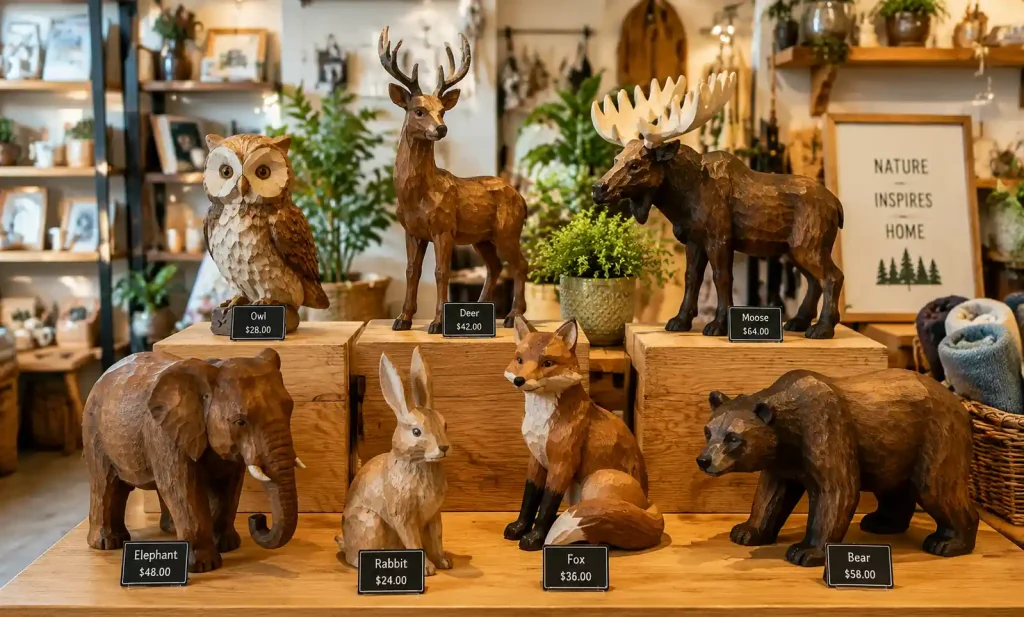
For retail buyers, begin with mixed assortments of proven bestsellers (elephants, owls, horses) in mid-range wood types like suar or mahogany at 100-200 piece totals. This approach tests market response while meeting manufacturer minimums. Monitor sell-through rates before committing to specialized designs or premium materials.
Interior designers should prioritize supplier flexibility and communication over absolute lowest pricing, as project timelines often require responsive modifications. Establish relationships with manufacturers who accommodate size variations and finish matching to existing decor palettes.
Corporate buyers benefit from suppliers experienced with branded packaging and consistent quality across large orders. The reputation impact of poorly crafted gifts distributed to important clients far exceeds the cost savings from budget suppliers.
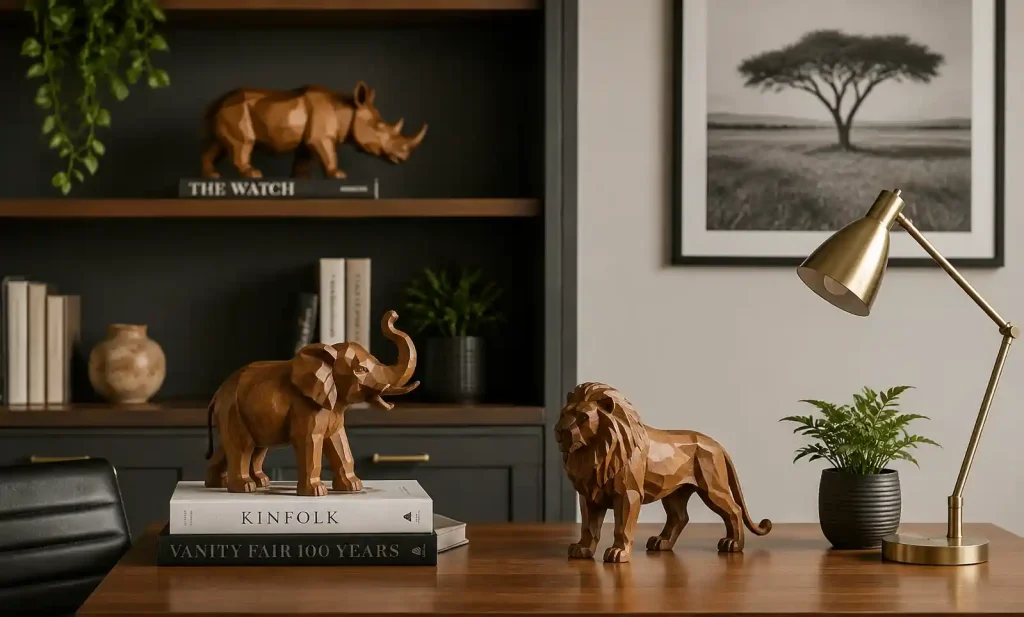
Before finalizing any bulk order, verify three critical elements: sample quality meets your standards, communication responsiveness suggests reliable order management, and total landed costs fit your pricing strategy. Remember that handcrafted wooden animal sculptures derive value from authenticity and artisan skill—buyers can see and feel quality differences. Investment in genuine craftsmanship creates customer satisfaction that supports premium pricing and repeat purchases.
For more guidance on wooden art products, explore our collections of handmade wooden swords
and decorative weapons, premium wood bead bracelets and natural accessories, carved wooden pendants and ornaments, and desktop wooden carving decorations. Contact our team for custom bulk order consultations and artisan collaboration opportunities.