





Le retour sur investissement lié à l'intégration d'œuvres d'art en bois haut de gamme dans votre boutique de décoration d'intérieur de luxe (2026)
Luxury home decor retailers constantly look for products that deliver strong margins while appealing to discerning customers. High-end wooden art pieces—handcrafted animal carvings, decorative swords, artisan desktop sculptures—offer compelling returns through cultural depth, craftsmanship storytelling, and timeless appeal. Here’s what the numbers actually look like.
Why Wooden Art Commands Premium Pricing
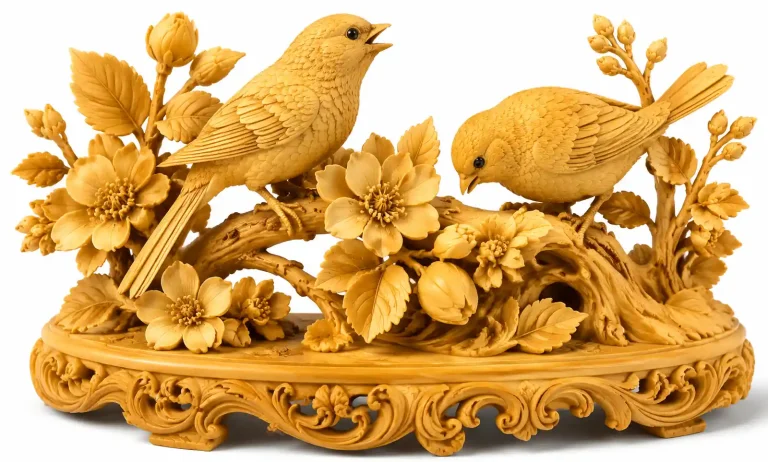
Handcrafted wood carvings carry inherent value that justifies premium pricing. Each piece represents hours of artisan work, traditional techniques passed through generations, and mastery of premium hardwoods like teak, mahogany, and rosewood. Luxury buyers understand this labor—they’re less price-sensitive when the craftsmanship story is told well.
Material authenticity adds another layer. Premium hardwoods resist moisture, develop rich patinas over time, and offer unique grain patterns that make each piece one-of-a-kind. This aligns perfectly with buyers seeking investment-quality decor rather than disposable trends.
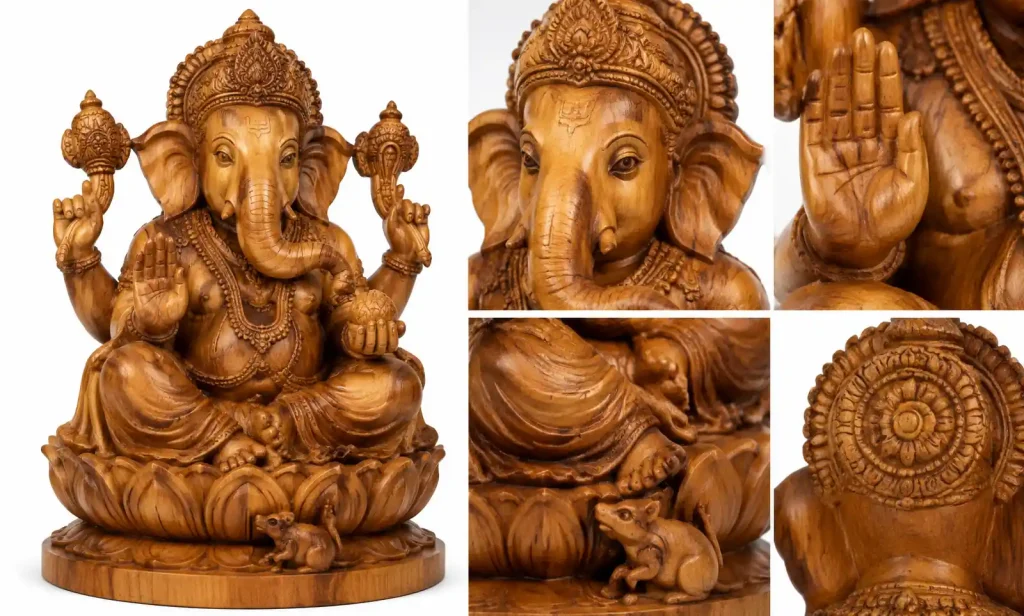
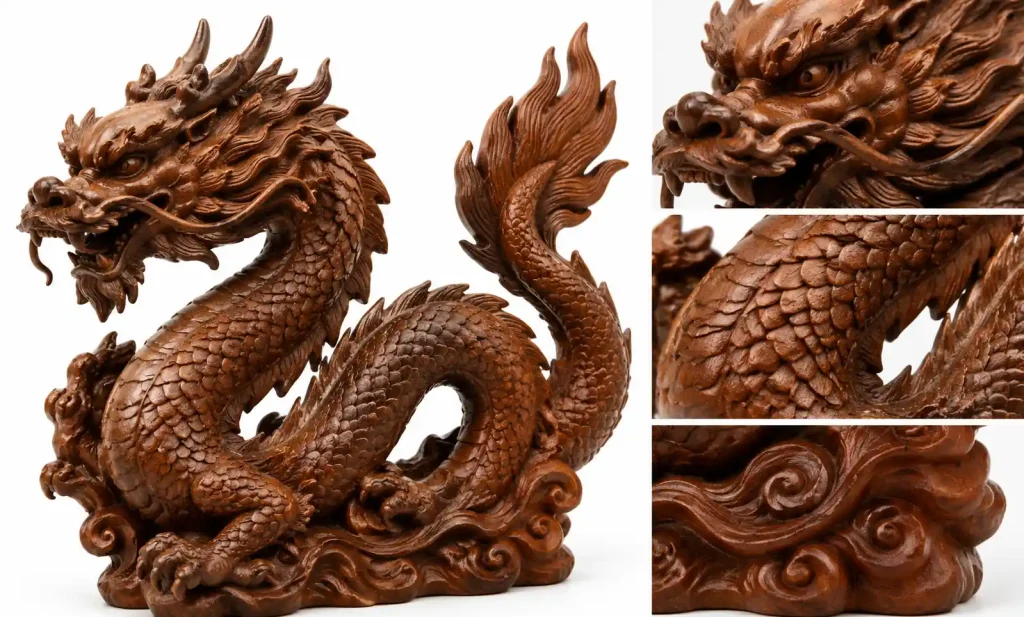
Cultural significance amplifies value dramatically. Dragon carvings symbolize power and prosperity. Elephants represent wisdom and good fortune. Buddha figures embody spiritual depth. This storytelling transforms a decorative object into a meaningful artifact, enabling retailers to command 40-60% higher margins than generic home accessories.
Who Buys High-End Wooden Art
Architecteurs d'intérieur are your highest-value B2B segment. They buy regularly for multiple client projects, purchase in sets or collections, prefer supplier relationships, and operate on project budgets where quality trumps price. Designers typically account for 30-40% of luxury home decor sales.
Affluent homeowners furnish luxury residences with statement pieces for living rooms, home offices, and entrance areas. They value exclusivity and craftsmanship, frequently purchase gifts, and show repeat behavior with lifetime values exceeding $2,000-$3,000.
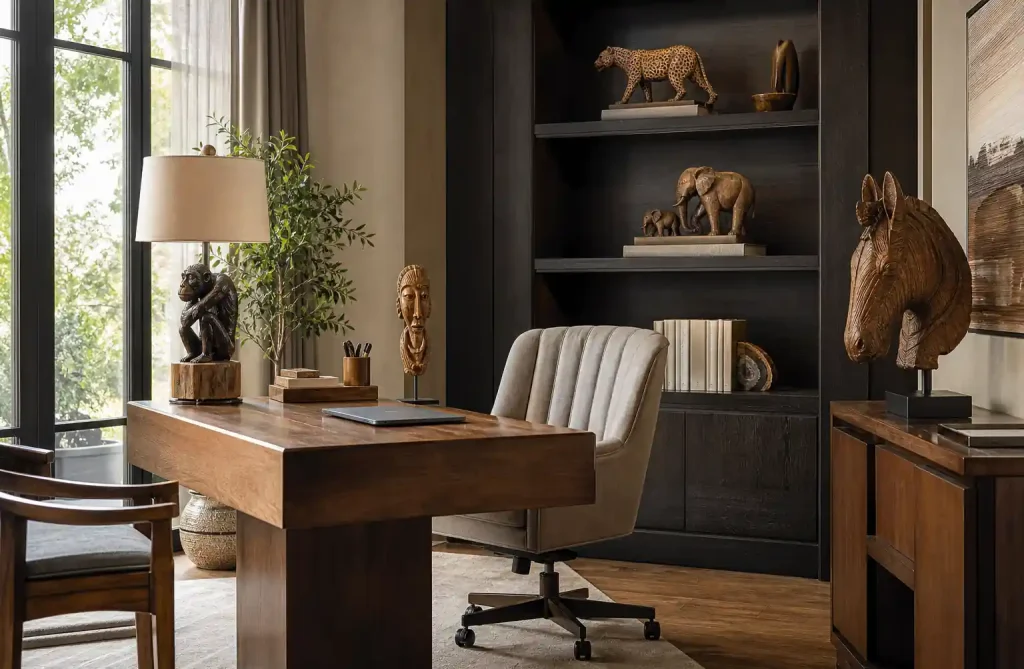
Corporate buyers and hospitality professionals source for hotels, executive offices, and resorts. They require bulk orders with consistent quality, appreciate cultural themes that enhance brand storytelling, and often request custom designs. This B2B segment offers the highest transaction values but longer sales cycles.
Collectors and art enthusiasts seek limited editions or unique pieces, demonstrate deep knowledge about wood types and carving traditions, and pay premium prices for exceptional quality. While smaller in volume, collectors drive prestige and word-of-mouth.
Profit Margins: The Financial Case
| Product Category | Avg Wholesale | Suggested Retail | Gross Margin | Turnover Rate |
|---|---|---|---|---|
| Premium wood carvings (animal, decorative) | $80-$300 | $200-$750 | 55-65% | Moderate (60-90 days) |
| Handmade wooden swords & weapons | $100-$400 | $250-$900 | 60-70% | Slower (90-120 days) |
| Desktop wood sculptures | $40-$150 | $100-$350 | 55-60% | Fast (30-60 days) |
| Generic metal sculptures | $50-$150 | $120-$300 | 45-50% | Moderate (60-90 days) |
| Canvas wall art (prints) | $30-$80 | $80-$180 | 40-48% | Fast (30-45 days) |
| Ceramic decorative pieces | $25-$90 | $65-$200 | 42-52% | Fast (45-60 days) |
For a typical luxury home decor store with 400-600 square feet, allocating 15-20% of floor space to wooden art can generate 25-30% of overall gross profit dollars—significantly outperforming space allocation.
Margin advantages come from: handcrafted nature justifying higher retail prices, premium hardwoods perceived as investment-quality, limited production creating scarcity value, and customization enabling additional margin capture.
Selecting Pieces for Maximum Returns
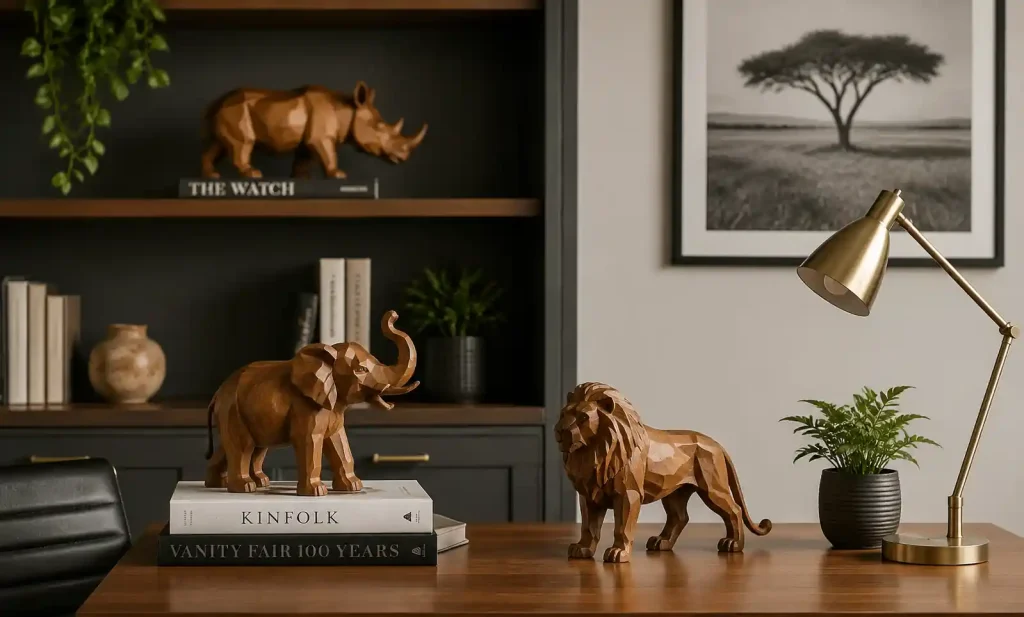
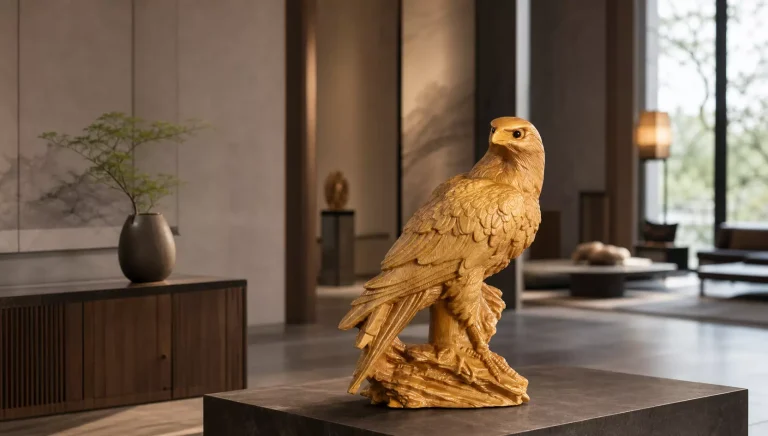
Animal wood carvings consistently top performance charts. Elephants (wisdom, prosperity), horses (success, freedom), and owls (knowledge) have universal appeal across Western and Asian markets. Size range of 8-15 inches works best for mantels, bookshelves, and office desks. The $180-$450 retail sweet spot delivers perceived value without extended consideration.
Desktop wooden sculptures offer the fastest inventory turns. $100-$250 price points suit impulse luxury purchases and gift buying. Smaller footprints enable dense displays, maximizing sales per square foot. Popular themes include abstract forms, natural elements, meditation figures, and cultural symbols.
Decorative wooden swords and weapons serve niche collectors but command premium prices. While turnover is slower (90-120 days), margins reach 65-70% with average transactions exceeding $400-$600. Allocate 5-10% of wood carving inventory to this category for margin enhancement.
| Selection Criteria | Impact on ROI | Priority |
|---|---|---|
| Cultural versatility (appeals to multiple markets) | High – increases conversion | Essential |
| Size flexibility (8-15 inch range) | High – fits most display spaces | Essential |
| Price point positioning ($180-$450) | High – maximizes margin dollars | Essential |
| Symbolic meaning clarity | Medium – enables storytelling | Important |
| Shipping durability | High – reduces returns | Essential |
Initial inventory mix: 60% core animal carvings, 25% desktop sculptures, 10% unique statement pieces, 5% specialty items. This balances turnover with margin optimization.
Merchandising and Display Best Practices
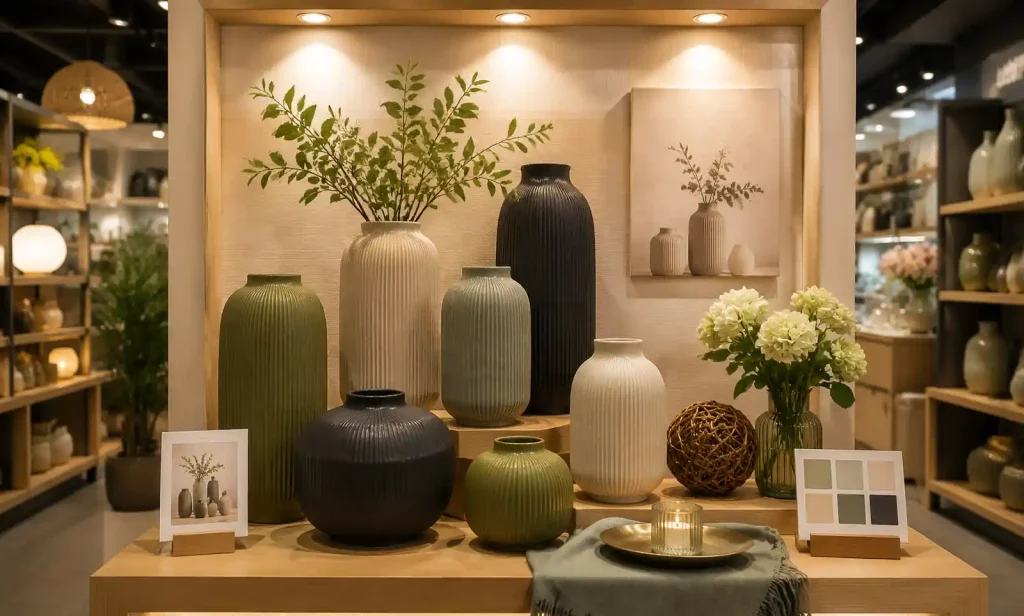
Display strategy dramatically impacts conversion. Create dedicated zones with warm LED spotlights that highlight wood grain—avoid fluorescent lighting which flattens texture.
Lifestyle vignettes outperform standalone displays by 40-60% in conversion. Style pieces in room settings: animal carvings on bookshelves with design books, desktop sculptures on styled desk setups, swords mounted on feature walls with complementary frames.
Provide information cards for each piece: wood type (teak, rosewood, mahogany), carving technique (hand-carved, traditional), cultural symbolism, dimensions, care instructions. Luxury buyers appreciate education and stories to share about purchases.
Enable tactile interaction. High-end wooden art benefits from touch—customers want to feel smooth finish, wood grain texture, and carving details. Display floor models customers can handle while keeping inventory protected.
Marketing Positioning for Luxury Buyers
Lead with craftsmanship storytelling. Highlight handcrafted by skilled artisans using traditional techniques, specify premium hardwood types and properties, explain cultural heritage and symbolic meanings. This transforms price from barrier into value indicator.
Leverage cultural authenticity. Many wooden art pieces originate from regions with centuries-old carving traditions—Chinese wood carving heritage, Indonesian teak expertise, Indian rosewood craftsmanship. Communicate these origins through signage, website content, and staff training.
Emphasize exclusivity. “Handcrafted items available in limited quantities” or “Each piece features unique wood grain patterns” creates urgency without aggressive sales tactics. For unique pieces, consider numbering them or offering authenticity certificates.
Position as investment decor. Quality hardwood carvings develop richer patinas with age, maintain or increase value over time (especially limited pieces), require no replacement unlike trend-driven decor, and can be passed down as family heirlooms.
Sales Conversion Strategies
Train staff on wood types and cultural meanings. Nothing builds credibility faster than a salesperson who can explain why teak works in humid climates, what rosewood’s natural oils contribute, or how dragon carvings traditionally face doorways in feng shui.
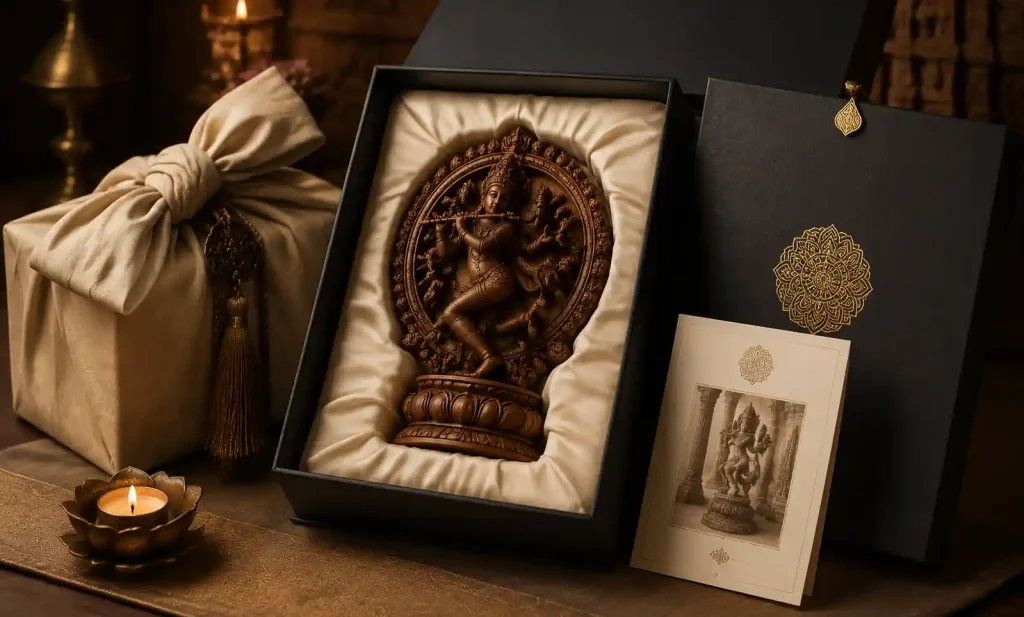
Offer gifting services. High-end wooden art makes exceptional gifts for housewarmings, executive promotions, and international business partners. Provide premium gift wrapping, cultural context cards, and complementary greeting cards.
Implement a trade program for interior designers. Offer 20-30% professional discounts in exchange for project commitments, provide design consultation, create lookbooks showing room styling options. Designers provide consistent volume and introduce your store to affluent clients.
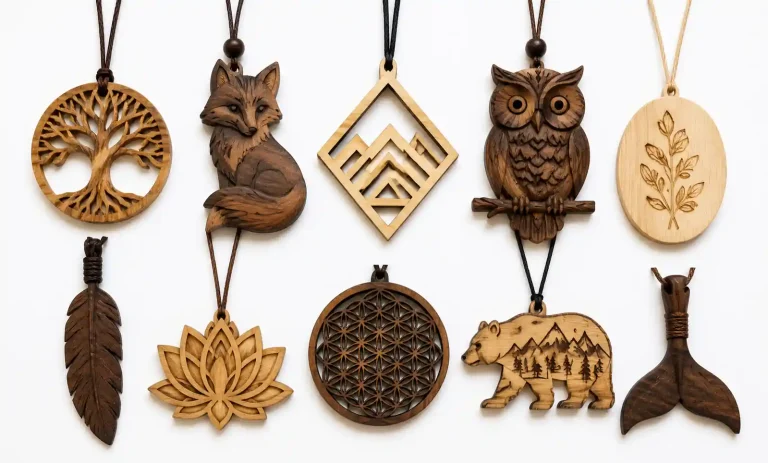
Suggest complementary pieces. If a customer selects an animal carving, recommend coordinating desktop sculptures, wood bead bracelets, or paired sets. Average transaction values increase 35-50% with proper complementary suggestions.
Enable custom design consultations. Partner with manufacturers who support custom orders, establish minimum order quantities and lead times, charge 50% deposits to qualify serious inquiries, and build 15-20% additional margin into custom pieces.
Operational Considerations
Source directly from reputable manufacturers. Eliminating middlemen improves margins by 15-25%, enables custom orders, provides better quality control, and allows exclusive designs. Establish relationships with 2-3 reliable suppliers.
Manage inventory carefully. Start with smaller orders (15-20 pieces) to test response, reorder fast movers within 30 days, keep 30-45 days of inventory on display items, and markdown slow movers after 120 days.
Implement proper care. Display away from direct sunlight to prevent fading, maintain 40-60% humidity to prevent cracking, handle with clean hands during arrangement, clean regularly with dry microfiber cloths.
Develop clear policies. Premium pricing requires premium service. Specify inspection periods (14-30 days), clarify that grain variations are natural not defects, explain custom piece returns (typically non-returnable), and offer repair services when possible.
FAQ
What profit margins can I realistically expect from high-end wooden art pieces?
Gross margins typically range from 55-70% depending on category and sourcing. Animal carvings and desktop sculptures deliver 55-60% margins, while specialty items like decorative wooden swords can reach 65-70%. Direct sourcing improves margins by 15-20 percentage points over distributor channels.
How much initial inventory investment is needed to test this category?
$2,500-$4,000 in wholesale inventory translates to 15-25 carefully selected pieces. Focus on animal carvings in the 8-12 inch range with $180-$400 retail prices. This provides sufficient variety while managing risk.
How quickly do wooden art pieces typically sell?
Desktop sculptures ($100-$250) turn fastest at 30-60 days. Animal carvings ($200-$450) move within 60-90 days. Higher-end pieces and specialty items may take 90-120 days. Proper merchandising and staff training can reduce these timelines by 25-35%.
Do I need special expertise to sell high-end wooden art effectively?
Basic knowledge significantly improves conversion. Staff should understand common wood types (teak, mahogany, rosewood, sandalwood), major cultural symbols (dragons, elephants, Buddha), basic care recommendations, and the difference between handcrafted and machine-carved pieces. This can be developed through 2-3 hours of focused training.
What’s the best way to handle custom design requests?
Establish minimum order values ($300-$500), charge 50% non-refundable deposits to qualify serious buyers, set realistic lead times (6-10 weeks), provide detailed specifications, and build 15-20% additional margin into custom pricing. Partner with manufacturers who specialize in custom work.
How do wooden art pieces compare to other luxury home decor categories in ROI?
Wooden art generally outperforms most decorative categories in gross margin dollars. While some items turn slightly slower than canvas prints, the margin differential (55-65% vs 40-48%) more than compensates. Compared to furniture or large statement pieces, wooden art requires less floor space and capital while delivering comparable margin dollars per square foot.
Conclusion
If your store serves affluent homeowners, interior designers, or corporate clients seeking distinctive decor, high-end wooden art represents a proven category for improving both profitability and brand positioning. Premium margins, cultural storytelling, and broad customer appeal make this category particularly attractive for luxury retailers.
Start with a curated test collection focused on versatile animal carvings and desktop sculptures in the $150-$400 price range. These core categories offer the strongest balance of turnover and margin while requiring moderate capital. As you gain experience and develop supplier relationships, expand selectively into statement pieces and specialty items.
Success depends equally on product selection and presentation quality. Invest time in understanding wood types, cultural symbolism, and craftsmanship details you can communicate confidently. Create lifestyle displays demonstrating how pieces integrate into luxury interiors. Train staff to tell the story behind each carving, transforming transactions into consultative relationships.
For retailers ready to explore custom design capabilities or bulk purchasing, establishing direct relationships with experienced wooden art manufacturers provides the foundation for long-term category growth. The initial effort in supplier vetting and relationship building pays dividends through better pricing, exclusive designs, and responsive service.