





Come gli ornamenti in legno personalizzati possono valorizzare il tuo portfolio di progetti di arredamento d'interni (2026)
Interior designers and décor professionals constantly seek distinctive elements that set their projects apart. Custom wooden ornaments combine artisanal craftsmanship with design flexibility, allowing you to create signature looks that resonate with clients while maintaining cohesive project narratives. These pieces demonstrate attention to detail, showcase your ability to source specialized elements, and prove your commitment to quality craftsmanship.
Introduction
Custom wooden ornaments offer a unique advantage in building a standout portfolio—they combine artisanal craftsmanship with design flexibility, allowing you to create signature looks that resonate with clients while maintaining cohesive project narratives. Unlike mass-produced décor items, handcrafted wooden ornaments provide the authenticity and uniqueness that sophisticated clients value. The strategic use of custom wooden elements also positions you as a designer who understands material storytelling, with each piece carrying inherent warmth and tactile appeal that photographs beautifully for portfolio presentations.
Types of Custom Wooden Ornaments
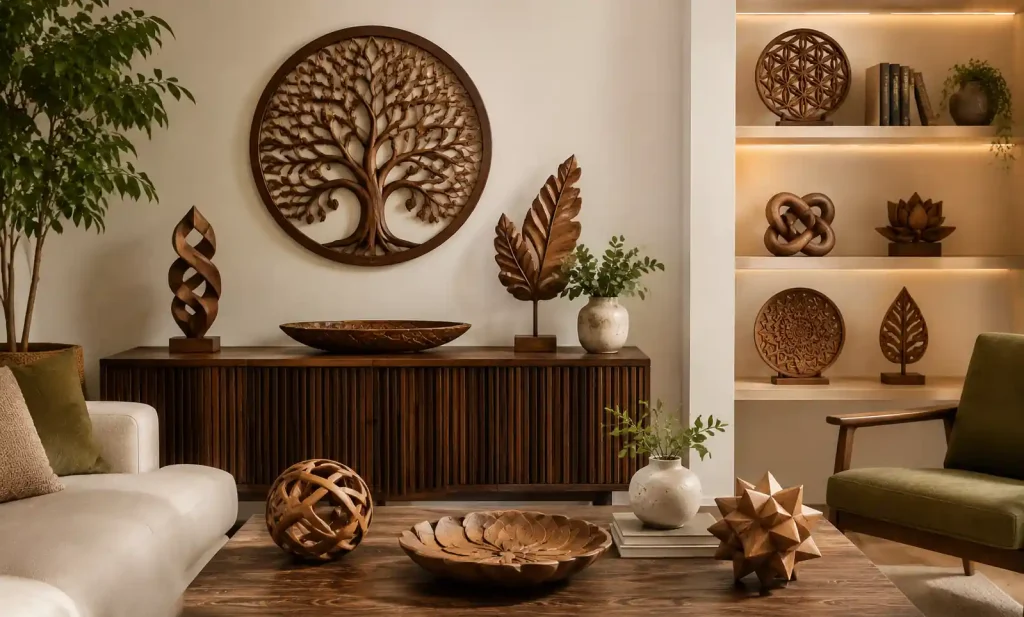
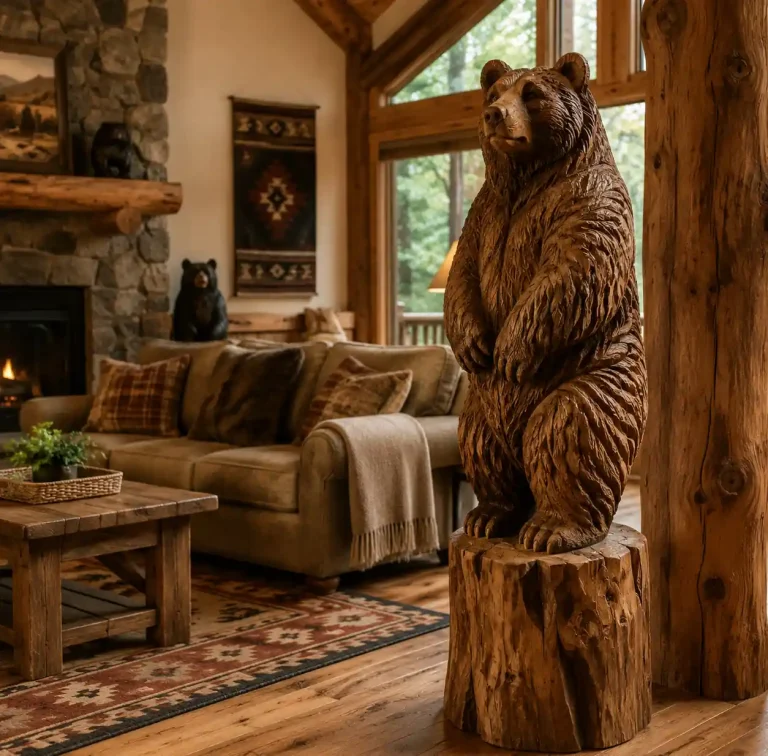
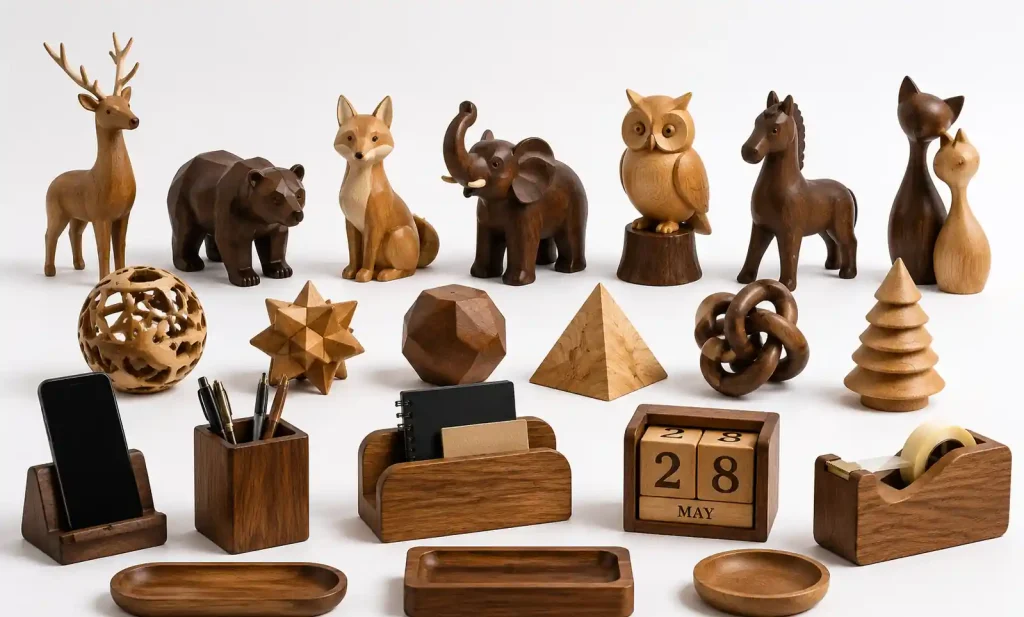
Sculptural Figurines and Animal Carvings — Animal carvings and nature-inspired sculptures work across style spectrums: from minimalist Scandinavian interiors where a single carved bird creates focal interest, to maximalist spaces where grouped animal figures add layered visual texture. Elephants convey strength and wisdom for corporate spaces; deer or forest creatures suit residential projects seeking organic connection.
Geometric and Abstract Forms — For contemporary and modern projects, geometric wooden ornaments offer clean lines and architectural appeal. Abstract forms in natural wood finishes provide visual interest through shape and grain variation rather than detailed ornamentation, ideal for spaces where subtlety matters.
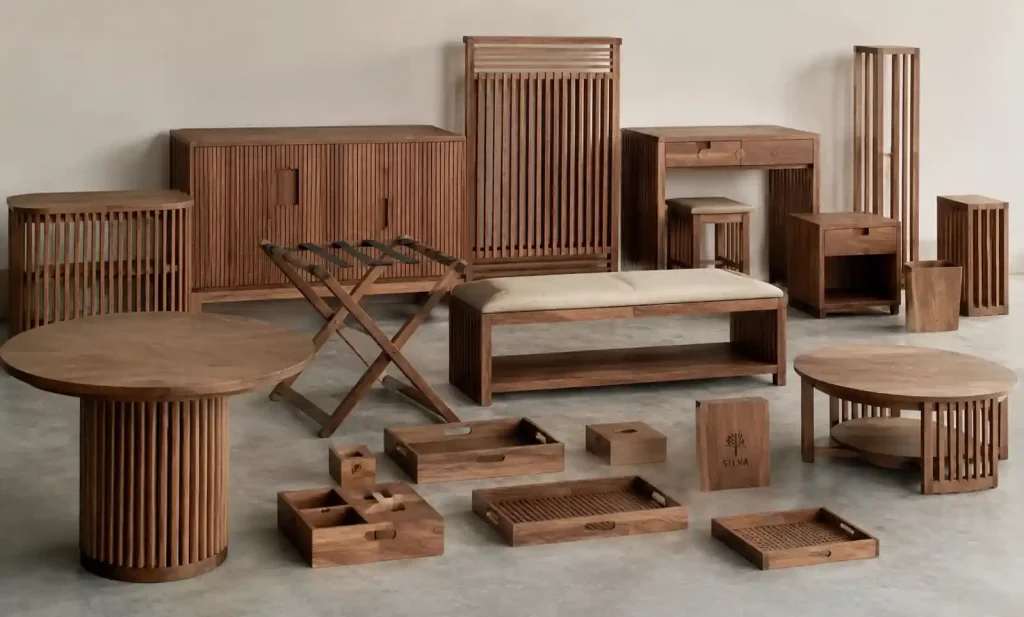
Functional Ornamental Pieces — Desktop decorations and functional ornaments serve dual purposes. Carved wooden pen holders, business card stands, and desk organizers add custom touches to office interiors while maintaining practical value. These pieces photograph exceptionally well in portfolio shots of workspace designs.
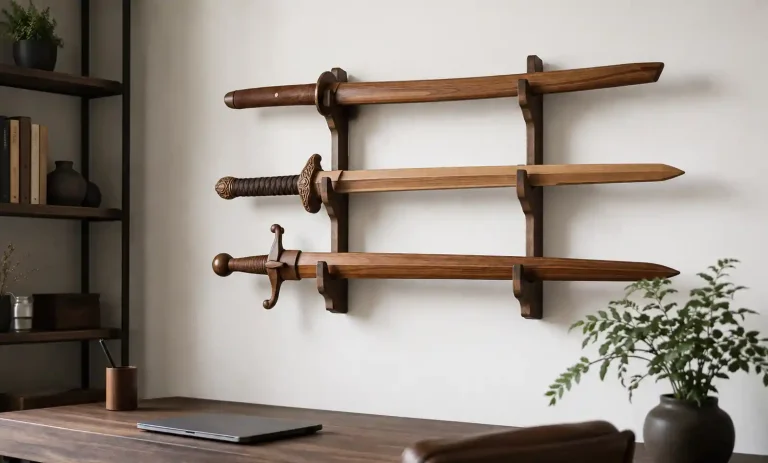
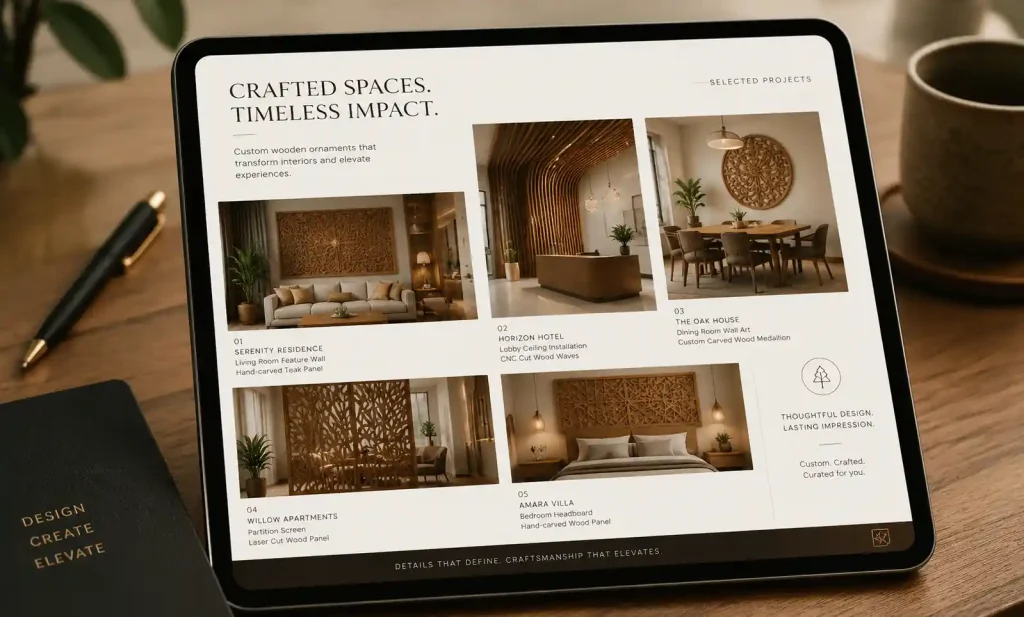
Wall-Mounted Decorative Elements — Three-dimensional wooden wall art and mounted ornaments create depth in portfolio photography while solving common design challenges like large blank walls or transitional spaces. Custom carved panels, decorative brackets, and mounted sculptural elements add architectural interest without permanent structural modifications.
Material Selection and Craftsmanship Quality
| Tipo di legno | Colore e venatura | Resistenza | Le migliori applicazioni | Price Point |
|---|---|---|---|---|
| Teak | Golden-brown with straight grain | Excellent (moisture-resistant) | Bathrooms, humid climates, outdoor-adjacent spaces | $$$ |
| Mogano | Rich reddish-brown, fine texture | High | Traditional and luxury interiors, statement pieces | $$$$ |
| Noce | Deep chocolate with dramatic grain | High | Modern and mid-century projects, accent pieces | $$$$ |
| Oak | Light to medium brown, prominent grain | Very high | Rustic, farmhouse, and traditional styles | $$ |
| Maple | Pale cream to light tan, subtle grain | High | Contemporary and Scandinavian designs, light spaces | $$ |
| Bamboo | Natural straw color, linear texture | Medium | Eco-conscious projects, Asian-inspired designs | $ |
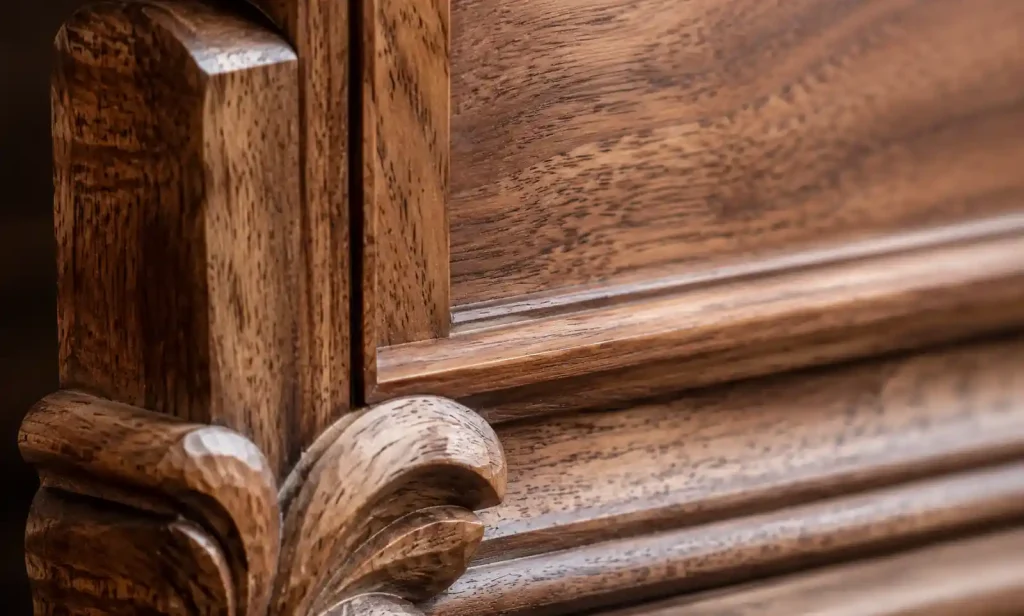
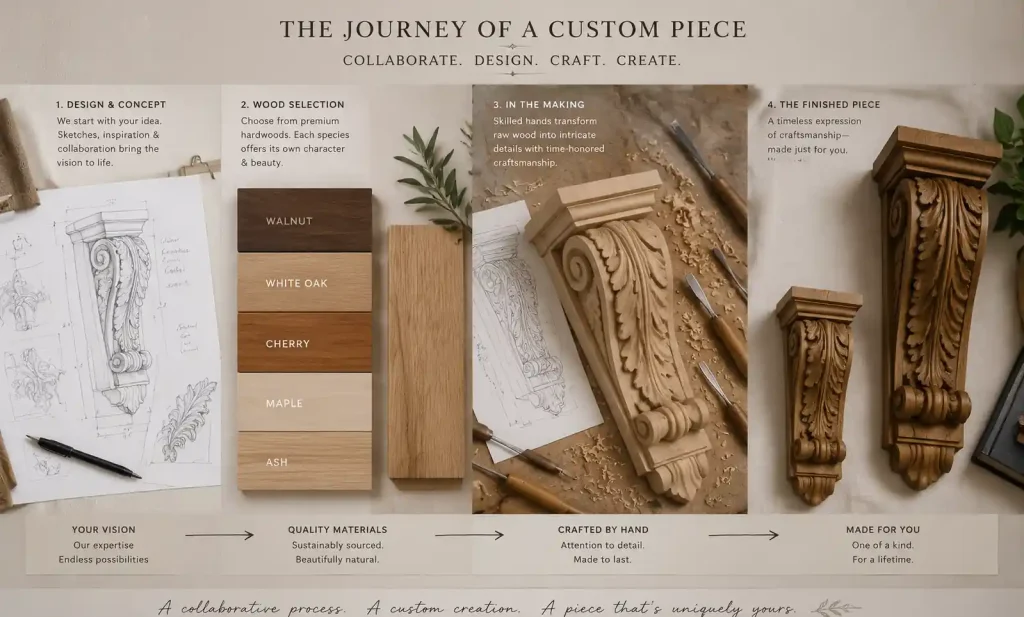
Craftsmanship Indicators: Look for subtle tool marks indicating hand-carving rather than machine replication, natural grain variations proving solid wood construction, and smooth finishes achieved through progressive sanding rather than heavy lacquer application. Pieces should show no cracks, warping, or rough edges—defects that undermine perceived quality. For commercial projects or bulk developments, request samples to verify consistency before committing to specifications.
Strategic Placement in Different Interior Styles
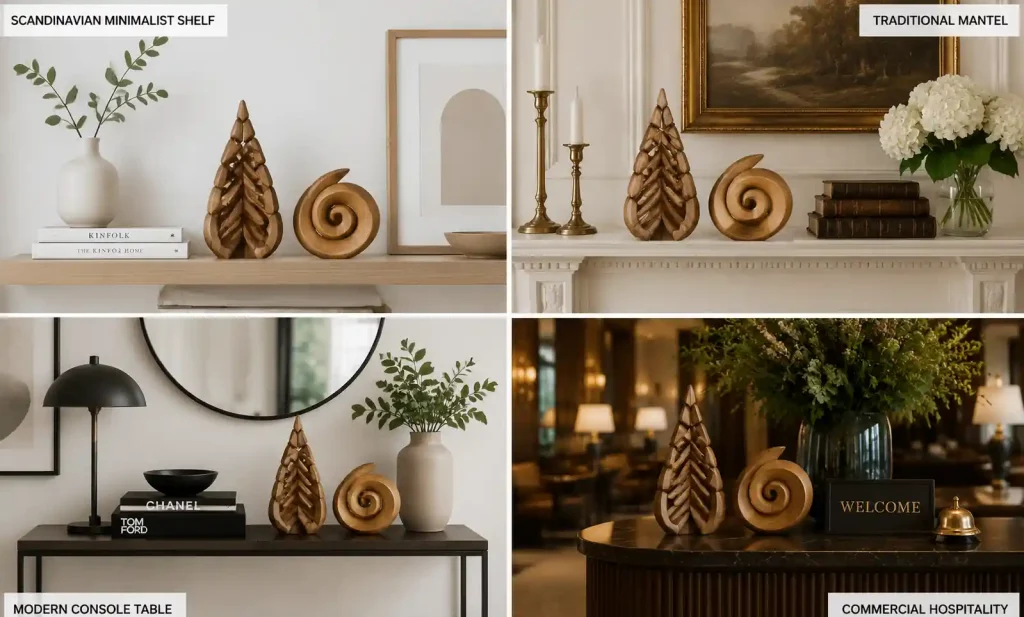
Modern Minimalist: Position a single sculptural wooden piece on an otherwise bare surface to create intentional focal points. The contrast between organic wood forms and clean architectural lines generates visual interest. Place carved objects where natural light emphasizes grain patterns and shadow play.
Traditional and Transitional: Arrange pieces of varying heights on mantels, console tables, or built-in shelving to establish rhythm and movement. Combine wooden ornaments with complementary materials like brass, ceramic, or stone. Odd-numbered groupings (3 or 5 pieces) typically photograph better than even arrangements.
Scandinavian and Organic Modern: Select pieces in lighter wood tones like birch, beech, or natural maple. Position ornaments in cozy corners, reading nooks, and intimate conversational areas to emphasize hygge principles—creating emotional resonance in portfolio images.
Maximalist and Eclectic: Mix carved pieces from different cultural traditions, combine various wood tones, and create abundant displays that maintain compositional logic. Use wooden elements to unify disparate objects through material consistency, or create deliberate contrast by pairing rustic carved pieces with refined contemporary furnishings.
Commercial and Hospitality: Specify larger-scale wooden ornaments that make immediate impressions in corporate lobbies, hotel common areas, and restaurant interiors. Commission custom carved pieces reflecting brand identity or local cultural context. For hotel chains, reproducible custom designs allow consistency across locations while maintaining handcrafted appeal.
Custom Design Options for Client Projects
Size and Scale Modifications: Professional manufacturers offer size adjustments maintaining proportional integrity while fitting designated spaces. For vertical displays in narrow alcoves, request elongated forms. For expansive console tables or reception desks, specify larger-scale pieces that command appropriate visual weight.
Finish and Color Treatments: Specify matte finishes for contemporary projects or hand-rubbed oil finishes enhancing grain depth in traditional settings. Water-based stains in custom colors allow matching specific palette requirements without obscuring wood grain.
Cultural and Symbolic Customization: Commission pieces incorporating meaningful motifs—family crests, cultural symbols, or abstract representations of client values. Document the customization process in project write-ups to demonstrate consultative approach and cultural sensitivity.
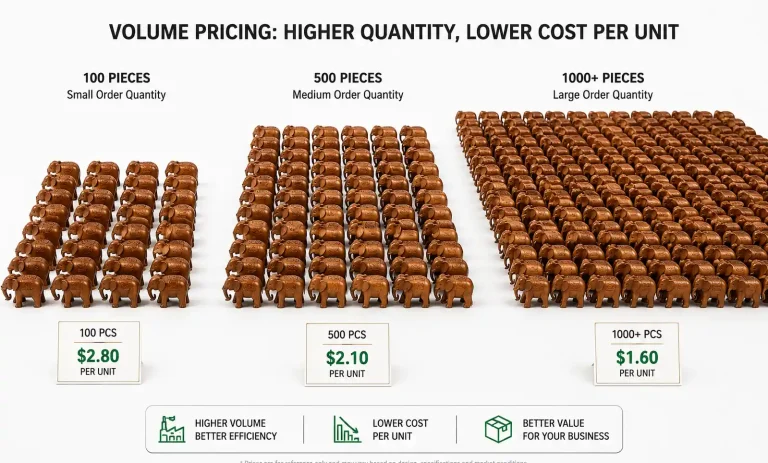
Bulk Customization for Multi-Unit Projects: Residential developers, hotel groups, and corporate campus projects require consistent custom elements across multiple spaces. Establish specifications for reproducible custom designs maintaining handcrafted quality while meeting quantity requirements.
Personalization and Branding: Commission pieces incorporating company colors through wood selection and finish treatments, or specify abstract forms echoing logo geometry. Custom wooden desk accessories with discrete brand elements serve both functional and branding purposes.
| Project Type | Recommended Customization | Lead Time | Minimum Order |
|---|---|---|---|
| Single residential project | Size, finish, minor design modifications | 4-6 weeks | 1 piece |
| Multi-room residential | Coordinated set with unified design theme | 6-8 weeks | 5-10 pieces |
| Boutique hospitality | Brand-aligned custom design, multiple scales | 8-12 weeks | 20-50 pieces |
| Corporate office | Branded elements, functional integration | 10-14 weeks | 30-100 pieces |
| Developer projects | Reproducible custom design, quality control | 12-16 weeks | 100+ pieces |
Domande frequenti
How do I specify wooden ornaments that photograph well for portfolio use?
Prioritize pieces with interesting grain patterns and dimensional depth creating natural shadows and highlights. Avoid overly glossy finishes that reflect lighting equipment. Three-dimensional carved elements photograph significantly better than flat decorative pieces.
What minimum order quantities apply for custom residential projects?
Most manufacturers accommodate single custom pieces for high-end residential projects. For multi-room projects, ordering 5-10 coordinated pieces typically qualifies for modest discounts. Communicate your designer status—many manufacturers value exposure from featured projects.
How do I verify craftsmanship quality before specifying for client projects?
Request physical samples—digital images cannot convey tactile quality, weight, or finish characteristics. Examine pieces for consistent wall thickness, smooth interior surfaces, and grain continuity suggesting solid construction. For significant projects, consider factory visits or video calls.
What wood types work best for commercial high-traffic applications?
Oak and teak offer superior durability for commercial settings, resisting denting and surface damage. Specify sealed or lacquered finishes for commercial applications to facilitate maintenance. Document these practical specifications in portfolio narratives.
How do I care for wooden ornaments to maintain project quality over time?
Wooden ornaments require only periodic dusting with soft cloths and occasional conditioning. Avoid direct sunlight or heating vents. For commercial projects, specify annual professional maintenance. Include care instructions in project delivery documentation.
How do I source wooden ornaments for projects with sustainability requirements?
Request FSC (Forest Stewardship Council) certification or equivalent sustainable forestry verification. Bamboo and reclaimed wood options satisfy eco-conscious clients. Document sustainability credentials in portfolio project descriptions to attract like-minded clientele.
Conclusione
Custom wooden ornaments provide interior design professionals with powerful tools for creating distinctive, portfolio-worthy projects. Their combination of artisanal quality, material authenticity, and customization flexibility allows you to deliver personalized solutions that photograph beautifully and generate client satisfaction—the foundation of successful practice growth.
The strategic advantage lies not merely in selecting attractive objects, but in understanding how custom wooden elements solve specific design challenges while reflecting client values and project narratives. From subtle accent pieces in minimalist residences to bold sculptural statements in commercial lobbies, these elements demonstrate your curatorial skills and attention to finishing details that separate exceptional work from adequate installations.
For designers ready to elevate their project portfolio, begin by evaluating current projects for opportunities to integrate distinctive handcrafted elements. Consider which spaces would benefit from the warmth and authenticity of quality wood craftsmanship, and explore customization options that align with client preferences and brand identities.