





Wooden Bracelets & Beads: Health Benefits, Types & Styling Guide
Sandalwood prayer beads have accompanied meditation practitioners for over 4,000 years, their subtle aroma believed to quiet mental chatter and deepen focus. Today, wooden bracelets merge this ancient wellness tradition with contemporary style, offering natural aromatherapy, tactile grounding, and cultural meaning that synthetic materials cannot replicate.
If you’re considering wooden bracelets and beads for their health properties or aesthetic appeal, understanding wood species characteristics, cultural contexts, and authenticity markers helps you select pieces that deliver genuine benefits rather than decorative placeholders.
This guide draws from manufacturing expertise and cross-cultural traditions to explain how different woods affect well-being, which styles suit various contexts, and how to maintain these natural accessories for lasting aromatherapy and symbolic value.
Why Wooden Bracelets Offer More Than Decoration
Unlike metal or plastic accessories, authentic wooden beads interact with your body’s warmth and natural oils. Porous woods like sandalwood and rosewood absorb and slowly release aromatic compounds throughout wear, creating a personal diffusion system that synthetic fragrances cannot match.
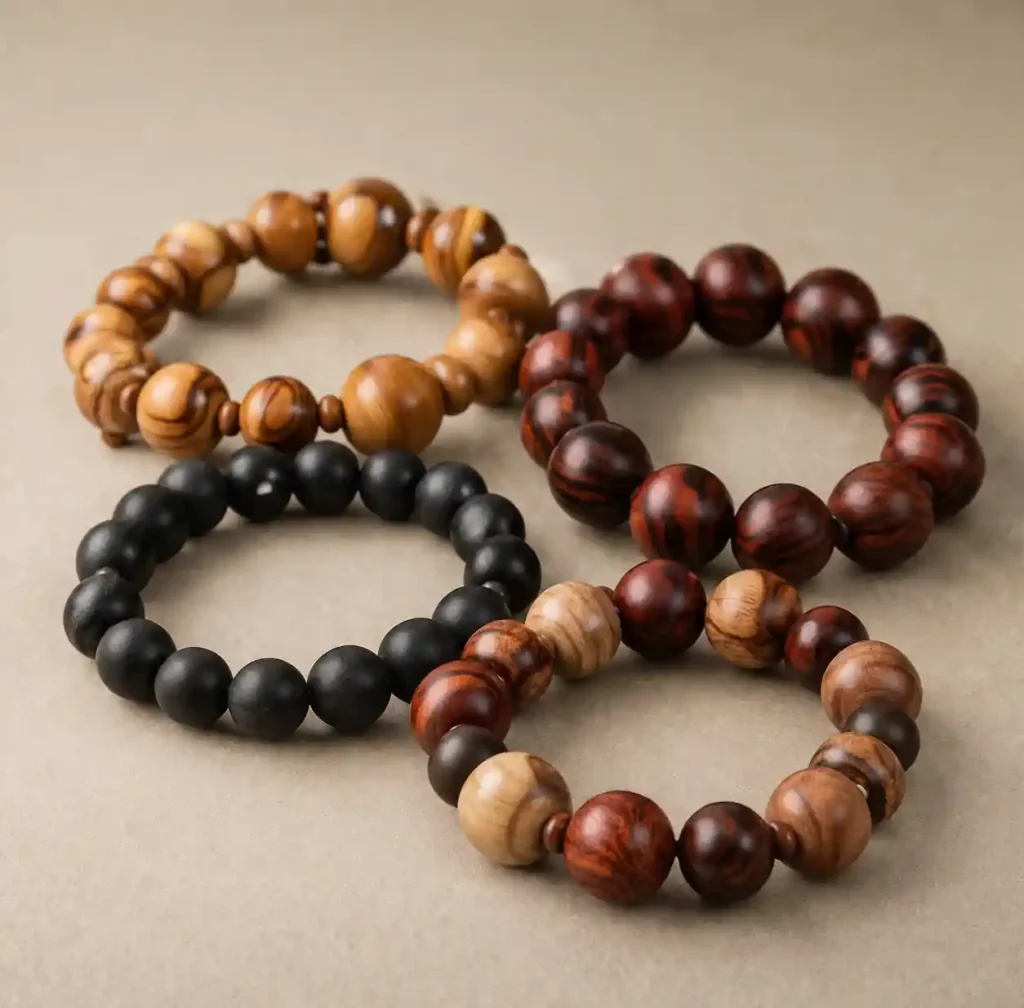
The tactile quality of wood grain provides subtle sensory input that many wearers find grounding during stressful moments. Our data shows growing demand from aromatherapy enthusiasts seeking natural stress relief, spiritual practitioners valuing traditional mala beads, and style-conscious consumers wanting sustainable accessories.
Health Properties of Different Wood Species
Wood selection determines aromatherapy potency, durability, and cultural associations. This comparison reflects direct sourcing experience with specialty hardwood suppliers.
| Tipo de madera | Natural Aroma | Aromatherapy Properties | Skin Contact Benefits | Cultural Use | Durabilidad | Rango de precios |
|---|---|---|---|---|---|---|
| Sándalo | Sweet, woody, persistent | Calming, anxiety reduction, focus enhancement | Cooling sensation, anti-inflammatory compounds | Buddhist/Hindu prayer beads, meditation | High (oils preserve wood) | $$$$ |
| Palisandro | Mild floral, subtle | Emotional balance, stress relief, mood elevation | Gentle on sensitive skin | Brazilian spiritual practices, feng shui | Very high (dense grain) | $$$ |
| Agarwood (Oud) | Rich, resinous, complex | Deep meditation, spiritual connection | Antibacterial properties | Islamic prayer beads, luxury wellness | Extremely high | $$$$$ |
| Ebony | Minimal scent | No aromatherapy (valued for appearance) | Smooth, hypoallergenic | African ceremonial jewelry | Exceptional | $$$$ |
| Bodhi Seed | Neutral, earthy | Spiritual significance over aroma | Natural texture for counting | Buddhist enlightenment symbol | Moderate (requires sealing) | $$ |
| Cedar | Fresh, woody, camphor-like | Respiratory clarity, insect repelling | Stimulating sensation | Native American purification | Moderate (softwood) | $ |
Sándalo justifies premium pricing through genuine aromatherapy efficacy. The wood contains alpha-santalol and beta-santalol—compounds studied for anxiolytic effects. Quality sandalwood maintains fragrance intensity for years; if a bracelet’s scent dissipates within weeks, authentication becomes questionable.
Palisandro (specifically Dalbergia species) offers structural advantages. Its density resists moisture absorption that causes swelling or cracking when moving between humid and arid environments. For customers purchasing home healing décor across climate zones, rosewood’s stability prevents the dimensional changes that compromise cheaper alternatives.
Agarwood represents luxury tier pricing due to supply constraints. Genuine agarwood forms only when Aquilaria trees develop fungal infections—a rare natural process. The resulting resinous wood produces complex aromatics prized in Middle Eastern and Asian markets. Given widespread counterfeiting, legitimate suppliers provide harvest documentation.
Cultural Significance Across Traditions
Understanding symbolic meanings helps select culturally appropriate pieces and appreciate their spiritual heritage.
Buddhist Mala Beads: Traditional 108-bead strands represent spiritual concepts. Sandalwood and bodhi seed remain authentic materials. The guru bead (larger terminal bead) marks meditation cycle completion.
Islamic Prayer Beads (Tasbih): Typically feature 33 or 99 beads corresponding to divine names. Agarwood and sandalwood hold particular significance in Islamic traditions.
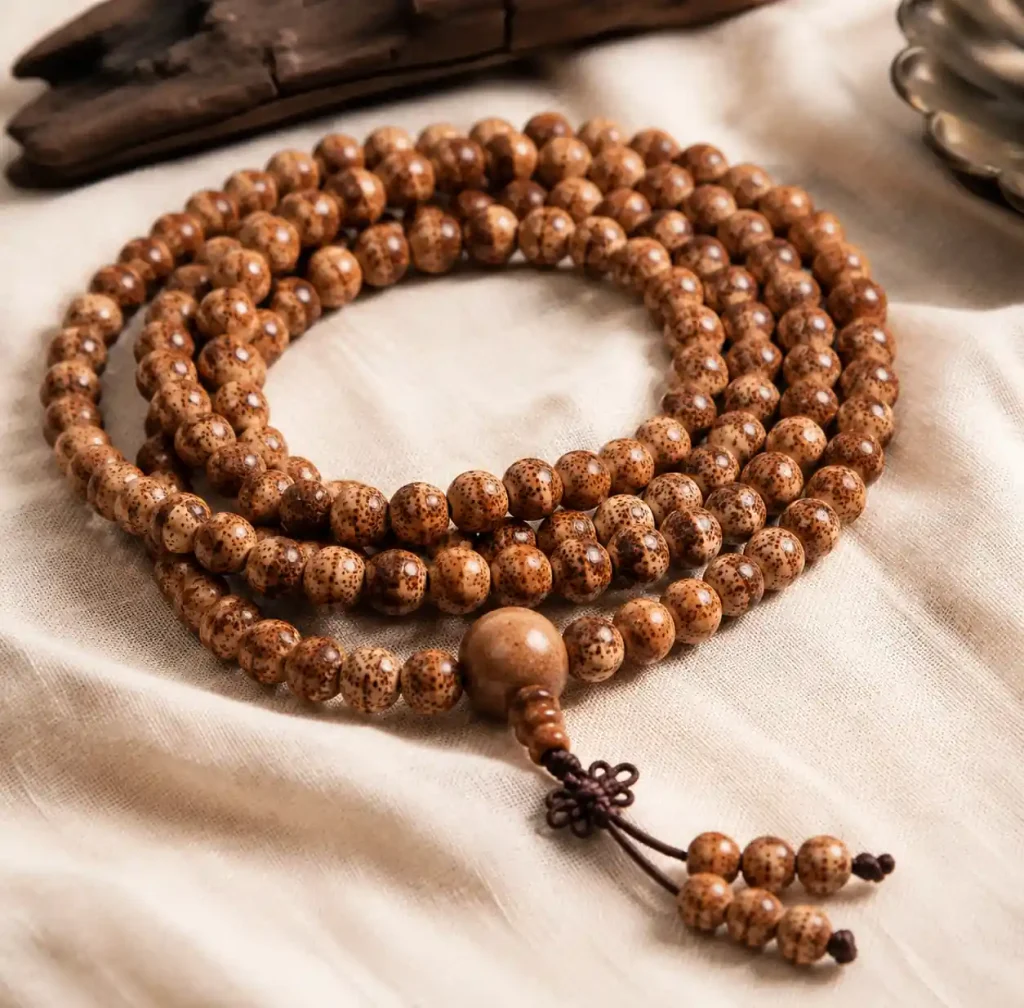
Contemporary Wellness: Modern adoption focuses on stress relief and sustainable fashion rather than religious observance. This creates design innovations—adjustable sizing, mixed wood combinations, essential oil integration—while respecting cultural origins.
Aromatherapy Benefits: What Research Shows
While traditional claims often lack rigorous clinical validation, specific compounds in aromatic woods demonstrate measurable effects.
Sandalwood’s alpha-santalol shows documented anxiolytic properties in controlled studies. When worn close to pulse points, body heat volatilizes these compounds, creating subtle aromatherapy throughout the day. This explains why authentic sandalwood maintains effectiveness while synthetic fragrances fade rapidly.
Cedarwood components (cedrol, cedrene) demonstrate respiratory benefits. Cedar bead bracelets positioned near the wrist allow periodic deep inhalation, providing mild decongestant effects.
Realistic Expectations: Wooden bracelets provide complementary wellness support, not medical intervention. They work best for mild stress management, meditation focus enhancement, and creating sensory anchors during mindfulness practice.
Styling Wooden Bracelets for Different Contexts
Wooden beads adapt across style contexts when sized and combined appropriately.
| Style Context | Recommended Bead Size | Wood Types | Styling Approach | Outfit Pairings |
|---|---|---|---|---|
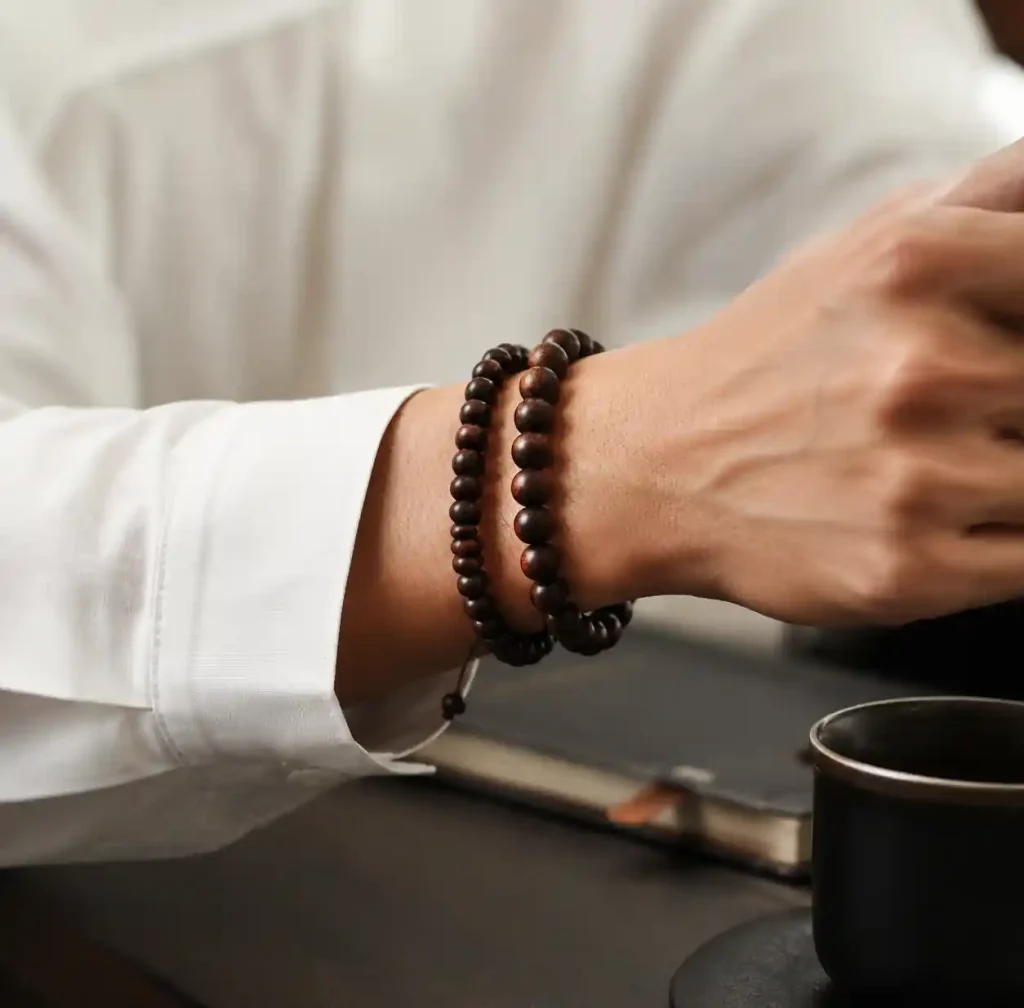
| Professional/Corporate | 6-8mm, single strand | Darker woods (rosewood, ebony) | Minimal, monochrome, worn alone | Business casual, tailored separates, neutral palettes |
| Casual/Everyday | 8-10mm, single or double wrap | Mid-tone woods (sandalwood, mixed) | Layered with other bracelets, relaxed | Denim, cotton tees, relaxed fits |
| Spiritual/Meditation | 8-10mm, 108 bead mala | Traditional woods (sandalwood, bodhi) | Worn as full mala or wrapped multiple times | Yoga wear, natural fibers, earth tones |
| Fashion/Statement | 10-12mm, bold contrast | Mixed woods, painted accents | Combined with metal, leather, contrasting textures | Contemporary streetwear, layered accessories |
| Formal Evening | 6-8mm, refined finish | Premium woods with high polish (rosewood, agarwood) | Single sophisticated strand | Evening wear, monochromatic formal attire |
Bracelet Stacking: Combine wooden beads with complementary materials—leather provides texture contrast, simple metal adds refinement. Avoid stacking multiple heavy wooden bracelets; instead, use one substantial wooden piece as the anchor with lighter accent bracelets.
Wrist Size Considerations: Standard 7-8 inch circumference fits most adults. Elastic cord allows flexibility but stretches over time. For professional contexts, ensure bracelets don’t slide excessively—snug fit maintains polished appearance.
Identifying Authentic vs. Synthetic Wooden Beads
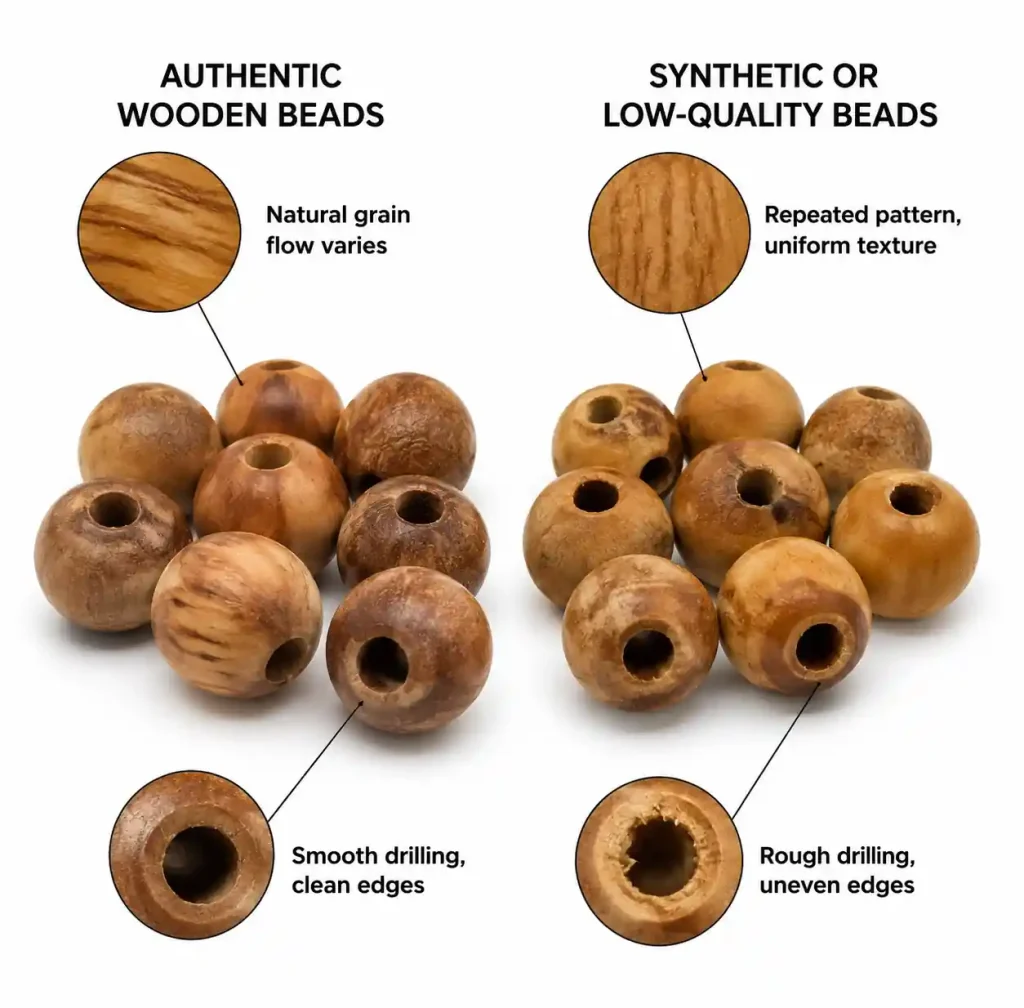
Quality assessment prevents purchasing stained pine marketed as premium sandalwood—a persistent problem in wholesale markets.
Visual Inspection:
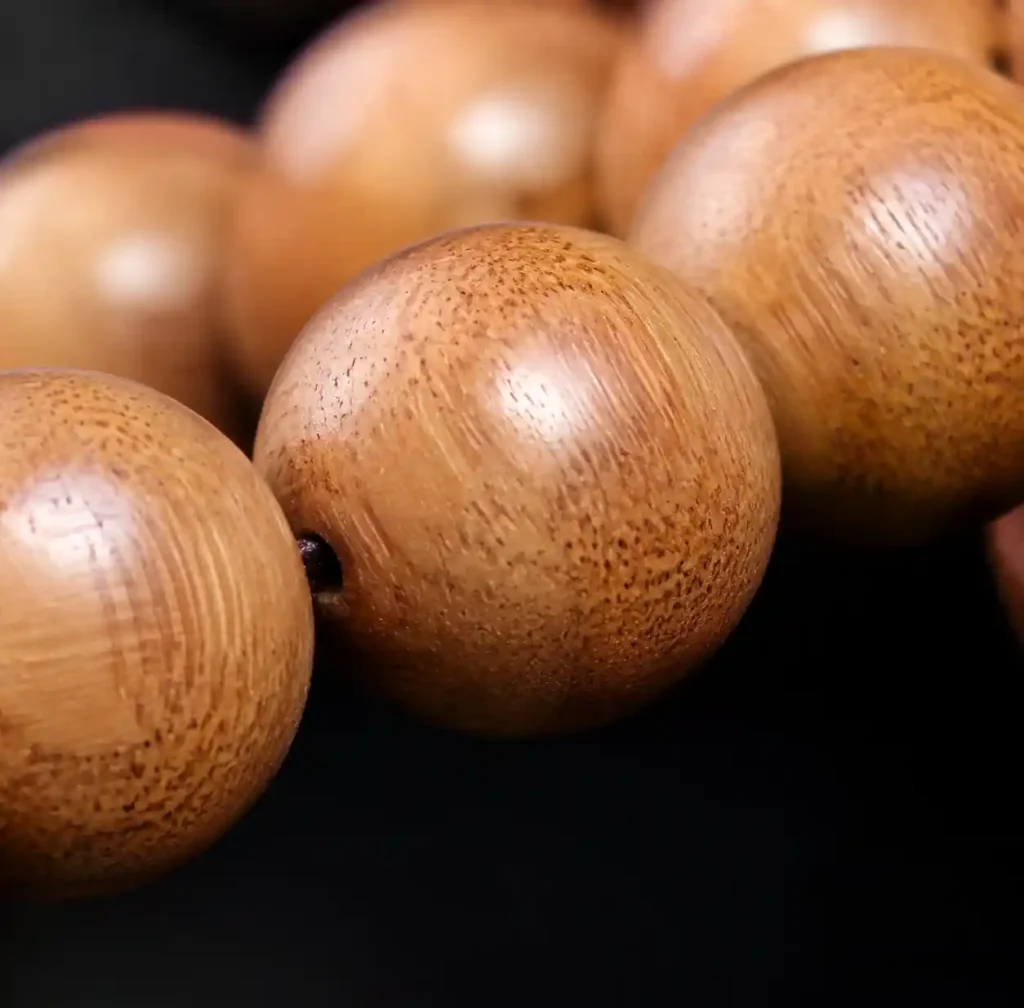
- Grain pattern consistency: Authentic wood shows continuous grain flowing across adjacent beads. Painted imitations show identical grain patterns repeated—a physical impossibility in natural materials.
- Color variations: Real wood displays subtle color gradations. Perfectly uniform color indicates staining or synthetic materials.
- Drilling quality: Premium beads show clean, precise drilling. Rough drilling suggests low-quality production correlating with material fraud.
Physical Testing:
- Weight comparison: Authentic rosewood and ebony feel noticeably heavier due to high density. Lightweight “ebony” indicates stained wood or resin.
- Warmth test: Wood feels warm and reaches body temperature quickly. Plastic and resin remain cool.
- Scent evaluation: Lightly sand a bead’s surface. Authentic sandalwood releases immediate fresh aroma. Synthetic scent or no smell indicates treatment or substitution.
Price Reality Check: Genuine sandalwood beads wholesale for $8-15 per strand (108 beads, 8mm). Retail pricing below $20 for “authentic sandalwood” suggests substitution—usually low-grade wood with synthetic fragrance.
Caring for Wooden Bead Bracelets
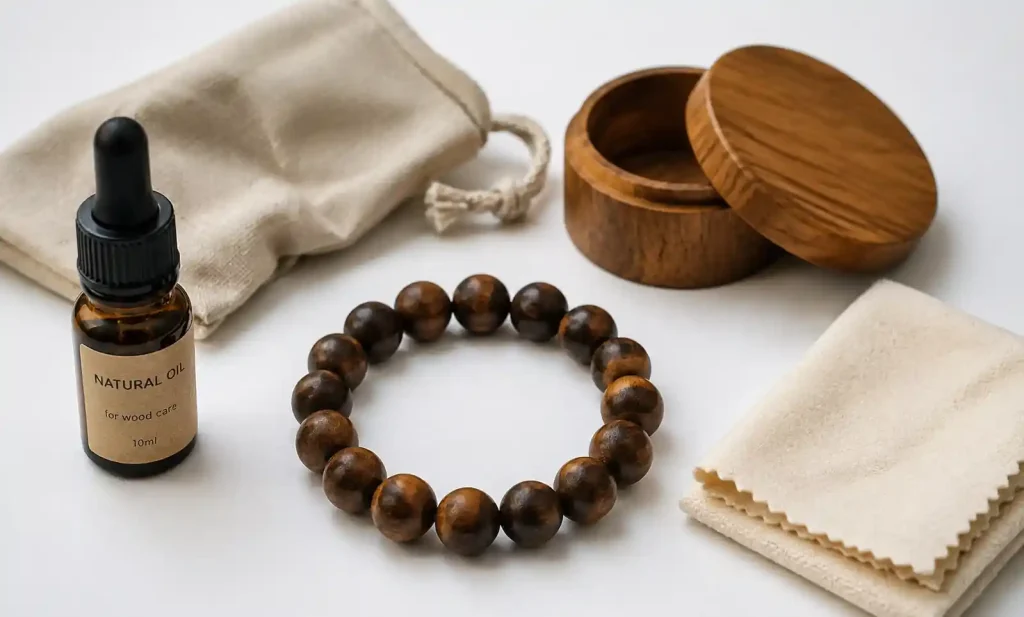
Proper maintenance preserves aromatherapy properties and prevents damage.
Daily Wear Guidelines:
- Remove before showering, swimming, or heavy exercise. Water exposure causes grain raising and accelerates elastic cord deterioration.
- Apply lotions and perfumes before wearing wooden bracelets to avoid coating barriers.
- Store away from direct sunlight. UV exposure fades wood color and degrades aromatic compounds.
Periodic Maintenance:
- Oil treatment (every 2-3 months): Apply small amount of natural oil (jojoba, argan, or food-grade mineral oil) with soft cloth. This prevents drying and maintains aromatic compound release.
- Elastic cord replacement (annually): Stretched elastic compromises fit and creates breakage risk.
- Gentle cleaning: Wipe with barely damp cloth when needed. Never soak or use detergents.
Climate Considerations: When traveling between different humidity zones, allow wooden bracelets to acclimate gradually in a sealed bag for 24 hours before exposure to prevent checking or warping.
Enhancing Aromatherapy with Essential Oils
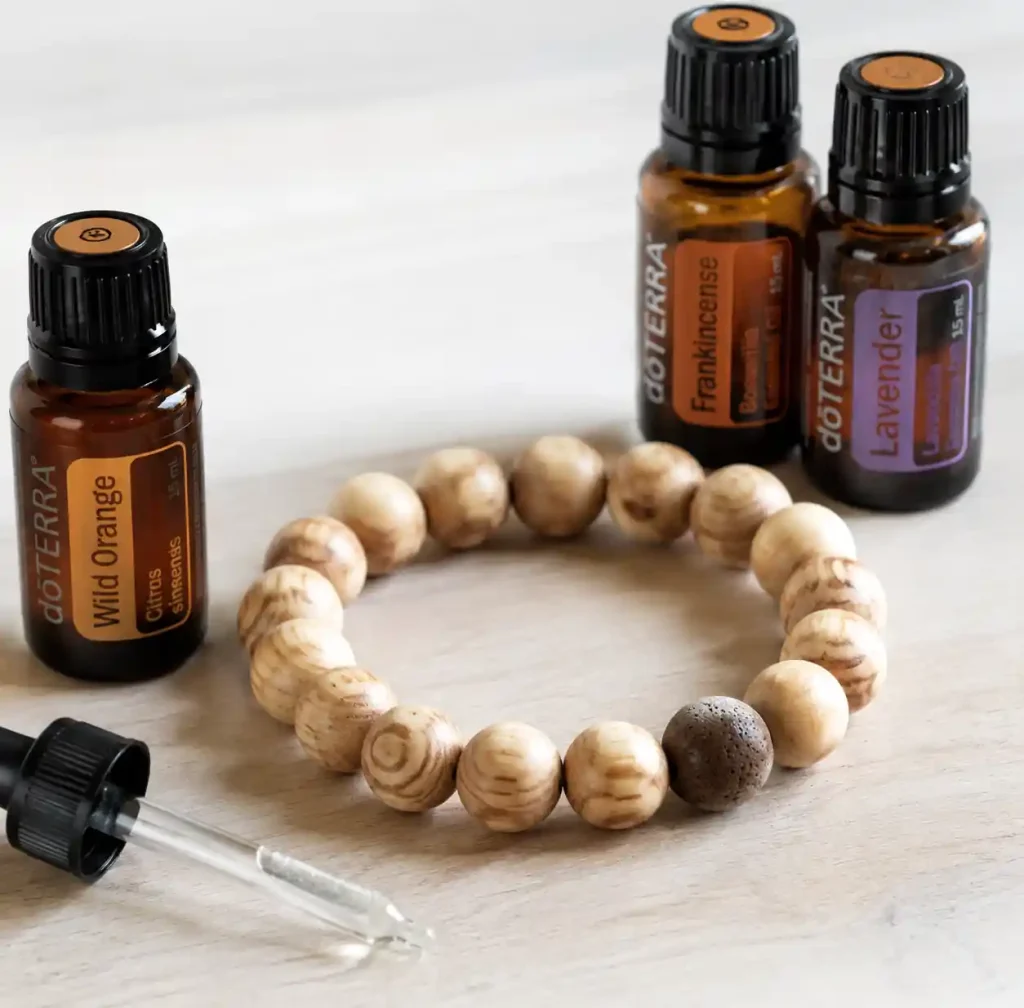
Some wearers amplify wooden bracelets’ natural aromatherapy by adding complementary essential oils.
Compatible Wood Types: Porous woods (sandalwood, cedar, light-colored woods) absorb oils effectively. Dense woods (ebony, rosewood) resist absorption.
Application Method: Apply 1-2 drops to a single bead, allow 5-10 minutes for absorption, reapply when fragrance diminishes (typically 2-3 days). Recommended oils include lavender (calming), peppermint (alertness), and frankincense (meditation). Avoid citrus oils that may irritate skin or degrade elastic cords.
Precautions: Essential oils are potent. Conduct patch tests for skin sensitivity. Never apply to bracelets before giving as gifts due to potential allergies.
Preguntas frecuentes
How long does sandalwood bracelet fragrance last?
Authentic sandalwood maintains noticeable aroma for 2-5 years with daily wear, depending on wood quality. The scent becomes subtle but never disappears. Periodic light sanding of a bead refreshes fragrance by exposing fresh wood.
Can I wear wooden bracelets in water?
Occasional brief water exposure (handwashing) causes no harm, but avoid prolonged immersion. Remove before swimming or showering to prevent wood swelling and cord degradation.
Are wooden bracelets hypoallergenic?
Most woods are well-tolerated, but individual sensitivities exist. Sandalwood and rosewood rarely cause reactions. If irritation develops, discontinue use.
How do I know if my sandalwood bracelet is authentic?
Genuine sandalwood shows pale yellow to golden-brown color with visible grain, produces sweet-woody aroma when lightly scratched, feels moderately heavy, and maintains price point above $25 retail for standard 8mm beads.
Can wooden bracelets help with anxiety?
Wooden bracelets provide complementary support through subtle aromatherapy and tactile grounding. Research on sandalwood compounds shows mild anxiolytic effects. However, they are wellness accessories, not anxiety treatment.
What’s the difference between mala beads and regular wooden bracelets?
Traditional mala beads contain 108 beads with guru bead, sized for meditation counting practice. Wooden bracelets may have any bead count, prioritizing aesthetic fit over spiritual counting.
Conclusión
Wooden bracelets and beads bridge ancient wellness traditions with contemporary sustainable style. Authentic pieces crafted from sandalwood, rosewood, or other quality hardwoods deliver genuine aromatherapy benefits, cultural depth, and natural beauty that synthetic alternatives cannot replicate.
When selecting wooden bracelets, prioritize material authenticity over trendy aesthetics—genuine aromatic woods justify their cost through years of subtle stress relief and enduring appeal. Proper care maintains both physical beauty and therapeutic properties.
If you need premium wooden bracelets and beads for retail, wellness centers, or personal use, FineWood Art offers handcrafted pieces made from authenticated sandalwood, rosewood, and specialty hardwoods. Our artisan-crafted collection combines traditional bead-making techniques with quality control that ensures aromatic potency and structural integrity.
Contact us today for authentic wooden bead bracelets, wholesale pricing, and custom design consultations.