





Wooden Swords & Decorative Weapons: History, Types & Display Ideas
Wooden swords have served martial artists, collectors, and decorators for centuries. From Japanese bokken crafted during the Muromachi period to European wasters used in medieval training, these handcrafted pieces combine functional heritage with natural beauty. Today, decorative wooden swords bridge traditional craftsmanship and modern interior design, offering safe display pieces that honor martial traditions.
Whether you train in martial arts, collect historical replicas, or design themed interiors, wooden swords provide affordable alternatives to steel while maintaining authentic weight and balance. Each piece showcases natural wood grain patterns that make it unique.
What Are Decorative Wooden Swords?
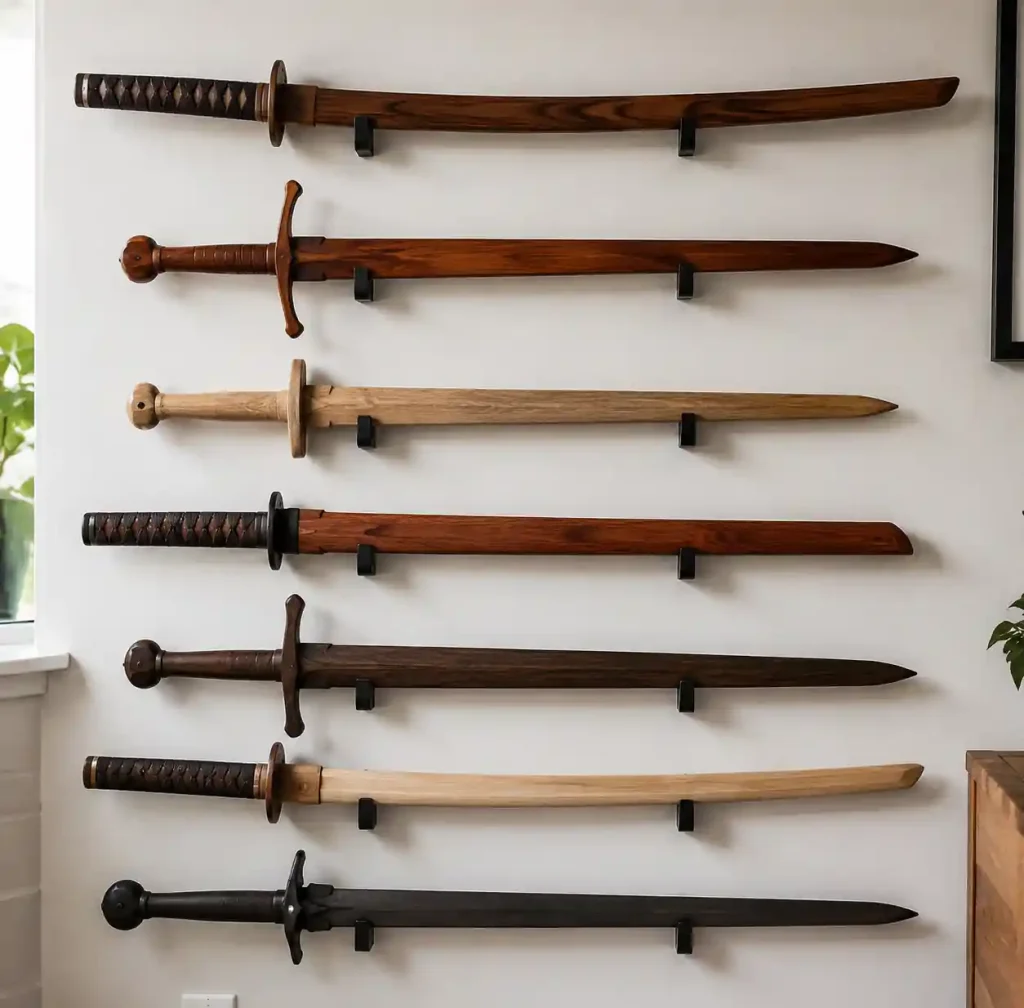
Decorative wooden swords are handcrafted replicas of historical bladed weapons carved from solid hardwoods. Unlike functional steel swords, these pieces prioritize aesthetic appeal, cultural symbolism, and safe display while maintaining historically accurate dimensions. Martial arts practitioners use them for training; collectors display them as art; decorators incorporate them into themed spaces.
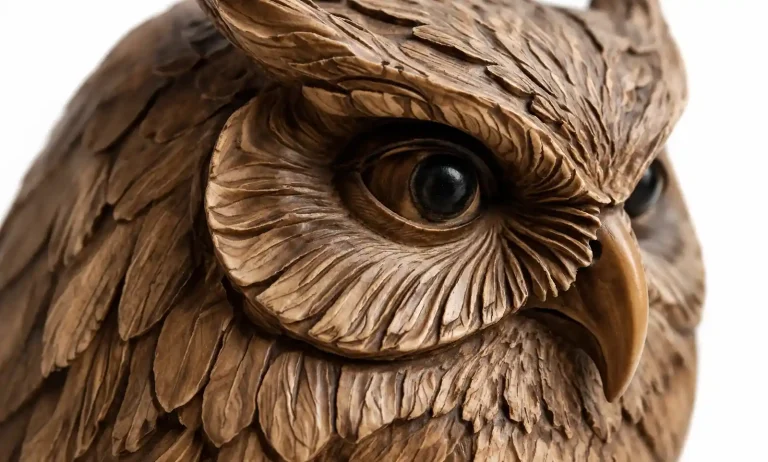
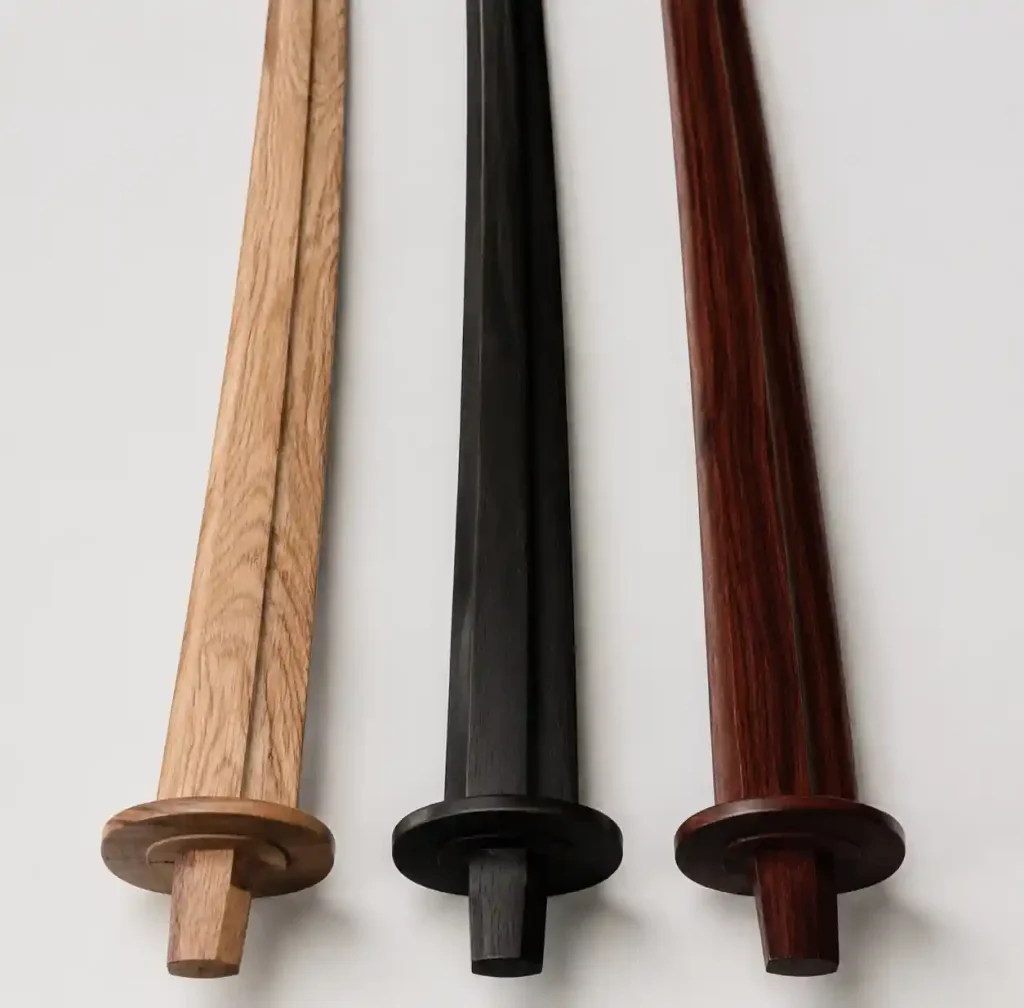
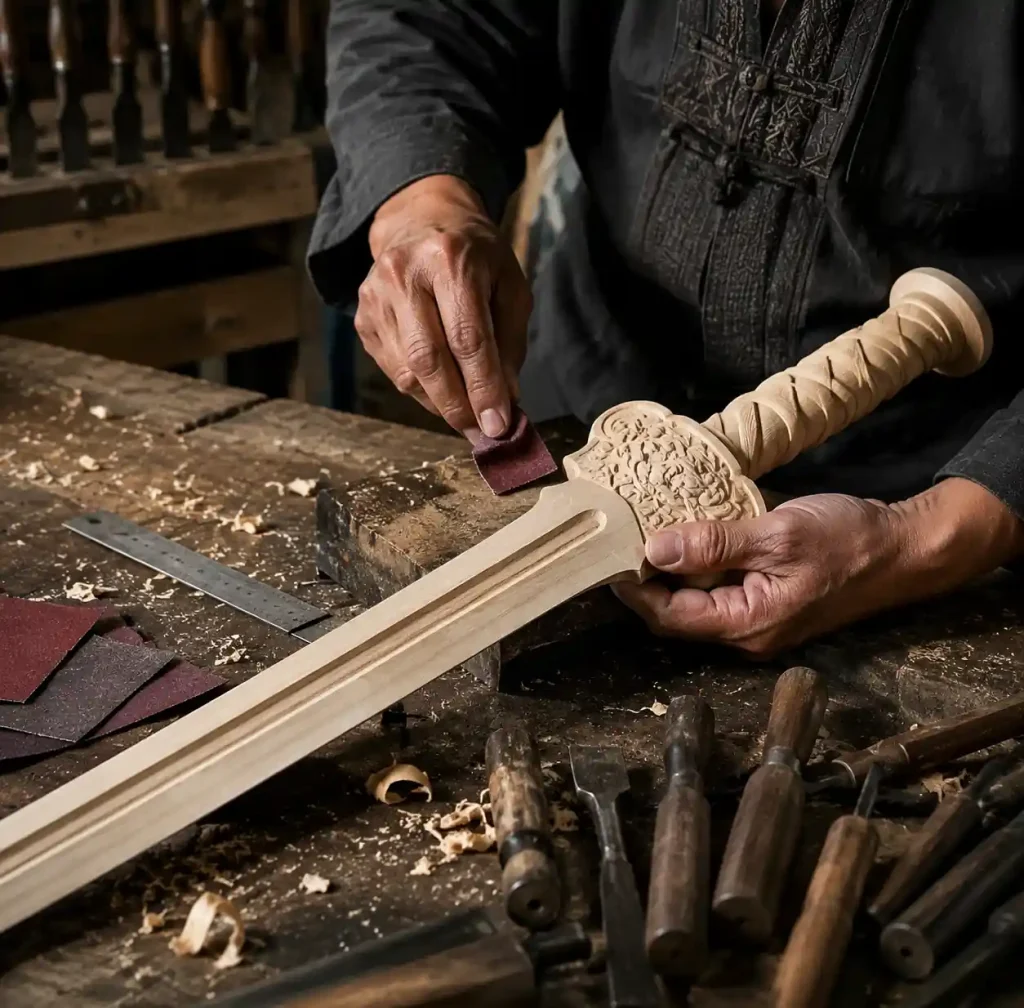
Each wooden sword features grain patterns unique to its wood species—red oak shows prominent grain lines, while ebony displays smooth, dark uniformity. Premium pieces receive hand-carved details, wrapped handles with traditional cord, and protective finishes enhancing wood’s natural character. You can display these swords on wall mounts, stands, or within shadow boxes without safety concerns.
Traditional wooden swords served practical training purposes before becoming decorative items. Japanese samurai practiced with bokken when carrying live blades became restricted during the Edo period. European knights trained with wooden wasters to develop swordsmanship without injury risk.
Historical Background of Wooden Training Weapons
Japanese Bokken Origins
Bokken emerged during Japan’s Muromachi period (1336-1600) when martial arts schools needed safer training alternatives to razor-sharp katana. As the Edo period brought peace and restricted sword carrying, bokken became essential for continued swordsmanship practice. The legendary swordsman Miyamoto Musashi famously defeated opponents using only bokken, demonstrating wooden swords’ effectiveness and transforming them into symbols of discipline and martial heritage.
European Wasters and Training Swords
Medieval European martial traditions developed wooden wasters for safe sword technique training. These practice weapons allowed knights to drill combat sequences and spar without lethal consequences. Historical European Martial Arts (HEMA) communities have revived these traditions, using wasters for longsword techniques, rapier drills, and saber practice that connect contemporary martial artists to medieval fighting systems.
Chinese Wooden Practice Weapons
Chinese martial arts developed wooden versions of dao (sabers) and jian (straight swords) for form practice and conditioning. Tai chi practitioners use wooden jian for flowing movements; kung fu students train with wooden dao to build strength. These traditional training tools serve as both functional practice equipment and decorative representations of Chinese martial culture.
Types of Decorative Wooden Swords
Japanese Wooden Swords
Bokken (Katana-Style): Standard bokken replicate katana dimensions at 101-102cm length with curved blades and traditional tsuka (handle) proportions. Red oak and white oak offer durability and authentic 500-600g weight. Premium versions feature ray skin wrap, silk cord binding, and brass tsuba (guard). These work equally well for iaido practice or mounted display.
Suburito (Heavy Training Swords): Extra-heavy bokken weighing 800g-1.2kg designed for strength-building practice. Their substantial presence and traditional construction make impressive wooden swords & weapons display pieces.
Tanto and Wakizashi: Wooden tanto (30-40cm) and wakizashi (55-65cm) complete traditional Japanese sets. Displaying all three lengths recreates the daisho pairing samurai carried. These suit wooden desktop figurines arrangements.
European Training Swords
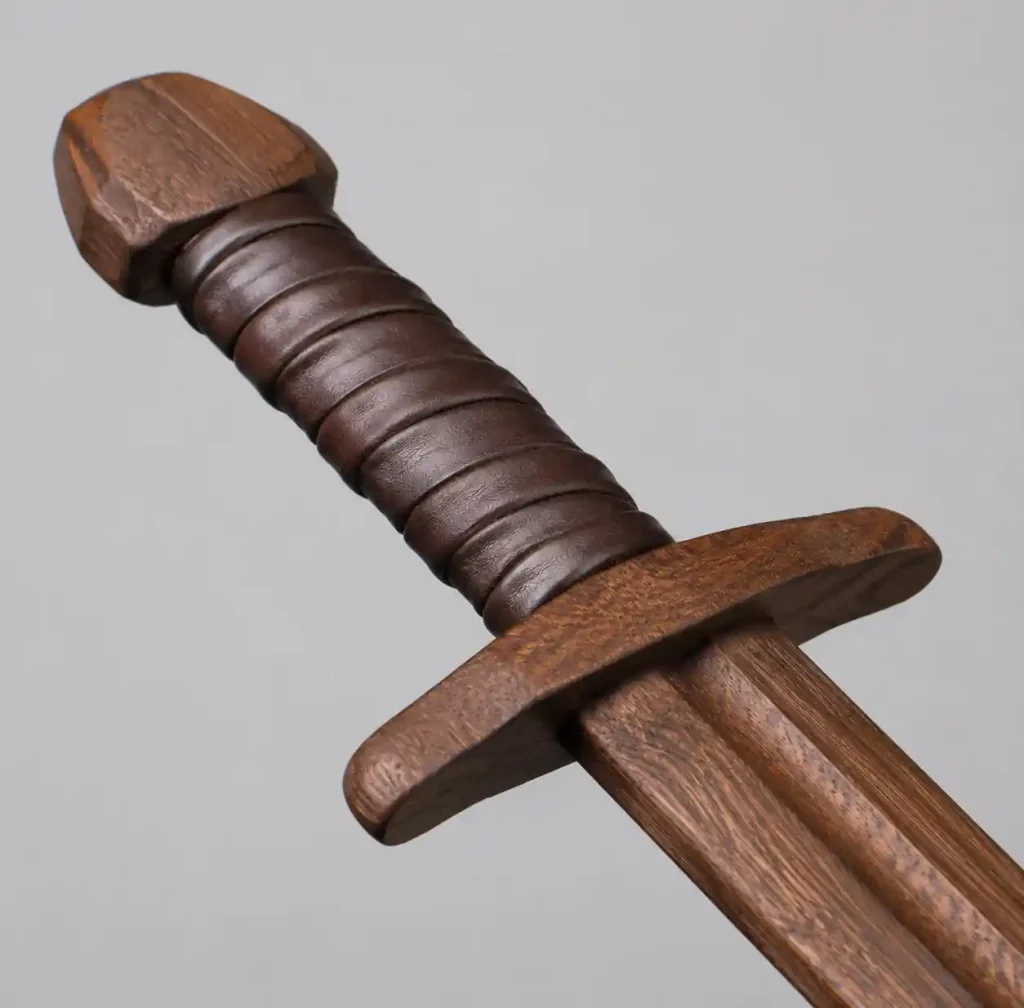
Longsword Wasters: Medieval longsword wasters measure 100-120cm with straight, double-edged profiles and cruciform crossguards. Decorative versions feature carved pommels and leather-wrapped grips. Their imposing length makes them ideal statement pieces for executive office decor with medieval themes.
Arming Sword Wasters: Shorter one-handed replicas (70-90cm) represent common medieval battlefield weapons. These versatile pieces work well in paired arrangements and fit diverse spaces better than massive longswords.
Saber and Rapier Trainers: Curved saber wasters and slender rapier trainers represent later European martial traditions with elegant designs that complement classical interior styles.
Chinese Wooden Weapons
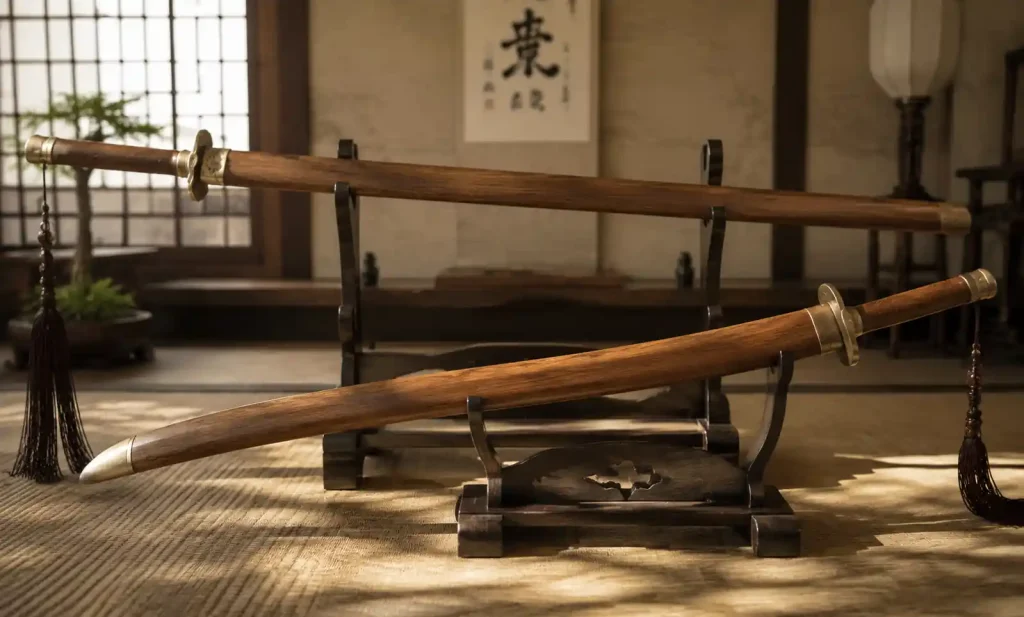
Jian (Straight Sword): The jian’s double-edged straight blade (70-90cm) and traditional guard with tassel represent refinement in Chinese martial culture. Display versions include carved wooden scabbards, making them creative gift decor options bridging martial heritage and artistry.
Dao (Saber): Chinese dao feature single-edged curved blades with distinct guard shapes. Traditional red tassels and carved handles enhance their decorative appeal for bold display pieces.
Wood Species for Sword Crafting
Wood Type Comparison
| Wood Species | Characteristics | Weight | Durability | Best For | Price |
|---|---|---|---|---|---|
| Red Oak | Prominent grain, moderate hardness | Medium | High | Training, general display | $ |
| White Oak | Denser, subtle grain | Medium-Heavy | Very High | Serious training, premium display | $$ |
| Hickory | Extremely tough, shock-resistant | Heavy | Very High | Impact training | $$ |
| Ash | Flexible, light-colored | Light-Medium | High | European wasters | $ |
| Ebony | Dense, dark, smooth | Heavy | Extremely High | Premium display | $$$$ |
| Rosewood | Rich color, beautiful grain | Medium-Heavy | Very High | Display, ceremonial | $$$ |
Choosing Wood for Your Purpose
For Training: Red oak, white oak, and hickory offer optimal durability for repeated contact. These dense hardwoods withstand striking impact while maintaining proper weight. Training swords require 10-12% moisture content to prevent cracking—our wood-working process ensures proper conditioning.
For Display: Ebony, rosewood, and premium maple provide stunning visual appeal with rich colors and distinctive grain patterns. These woods accept detailed carving and polished finishes that enhance home healing decor with natural elegance.
For Both: White oak and quality maple balance functionality with beauty, serving practitioners who also display their training equipment.
Display Ideas for Wooden Swords
Wall Mount Displays
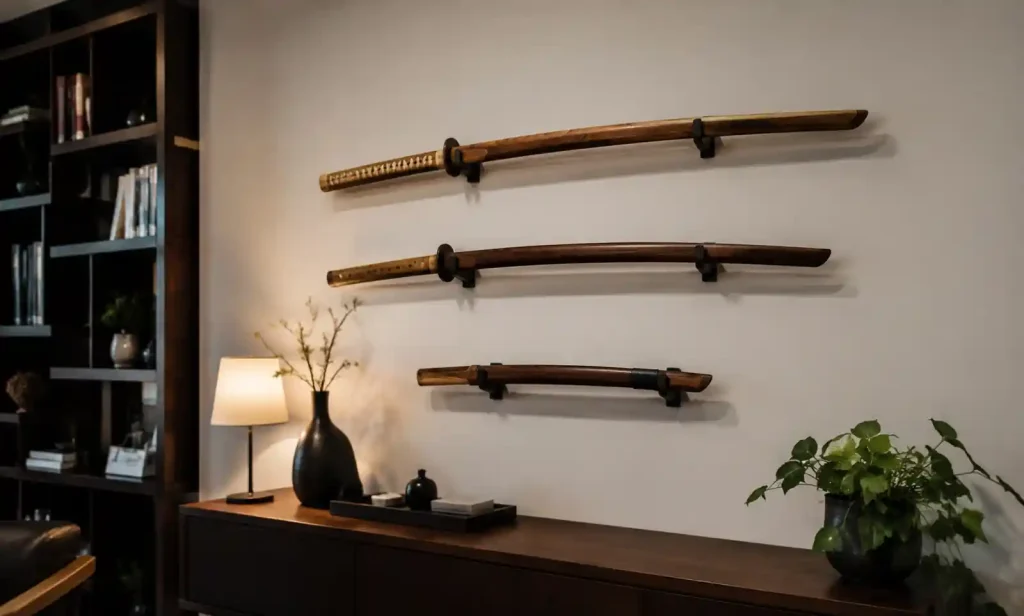
Traditional Horizontal Mounts: Single or multiple horizontal mounts showcase swords at eye level. Position bokken or longswords with 30-40cm spacing, or create arrangements with 3-5 swords of varying lengths.
Vertical Displays: Vertical mounting emphasizes length while conserving wall width. Katana-style swords displayed vertically with tip downward follow traditional Japanese positioning.
Crossed Arrangements: Paired swords crossed at 45-degree angles create dynamic visual interest with matching Japanese pairs or contrasting styles.
Stand and Rack Displays
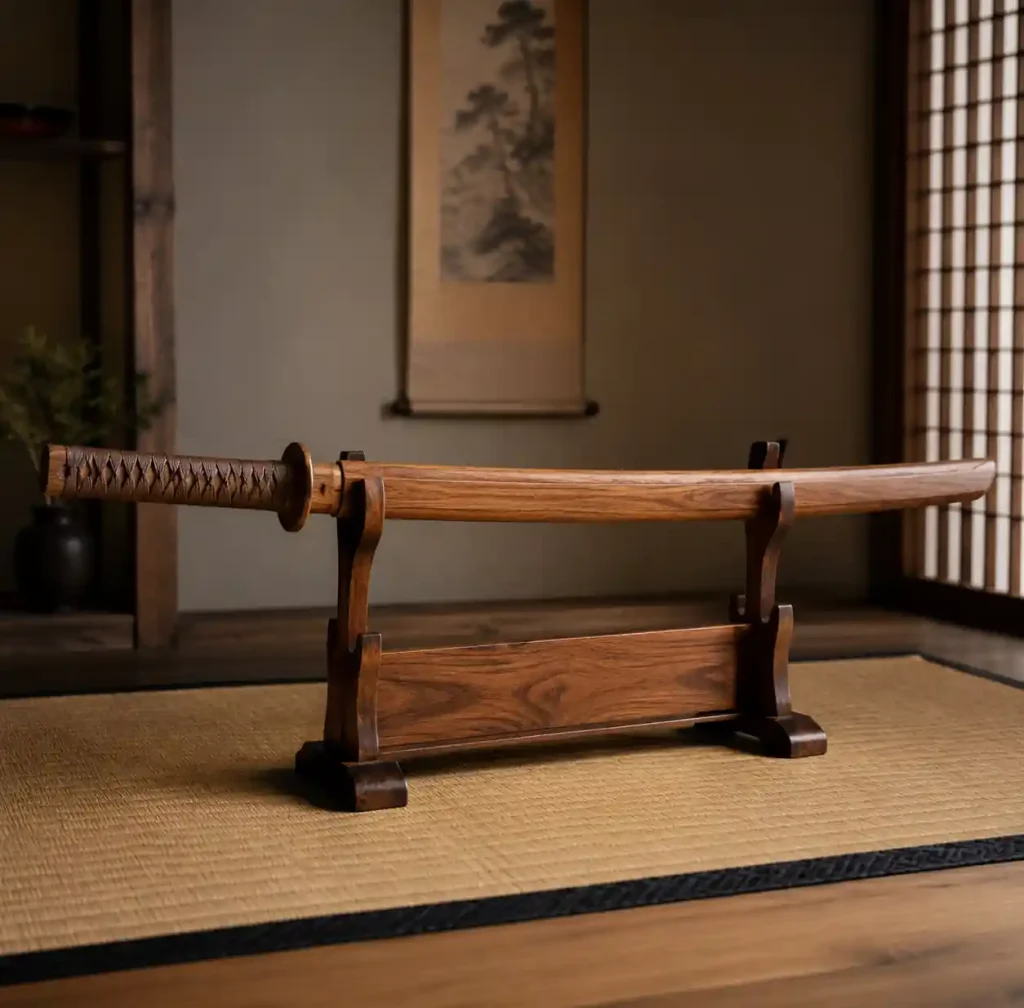
Traditional Sword Stands: Wooden katana stands (katana-kake) hold 1-3 swords horizontally with blade edges upward, working beautifully on wooden desktop figurines arrangements.
Multi-Tier Racks: Floor racks display 4-8 swords while maintaining organized storage for active practitioners.
Creative Display Concepts
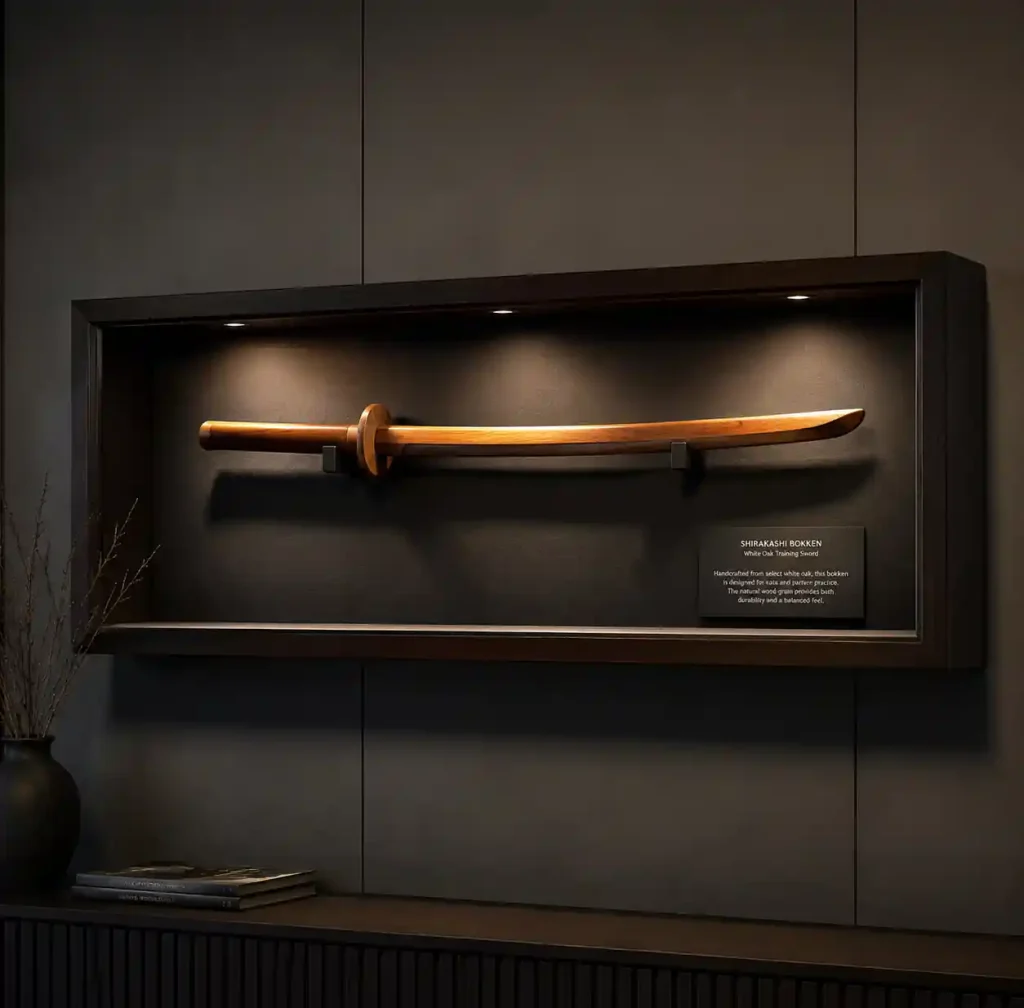
Shadow Box Presentations: Shadow boxes create museum-quality displays protecting swords while framing them as art. Include historical information cards or related items.
Themed Rooms: Integrate wooden swords into cohesive themes. Japanese-style rooms pair bokken with shoji screens and calligraphy. Medieval themes combine wasters with tapestries. Asian fusion designs blend jian with wooden animal sculptures.
Lighting Enhancements: LED strip lights positioned above horizontal mounts create dramatic effects. Warm temperatures (2700-3000K) enhance natural wood tones.
Maintenance and Care
Regular Cleaning
Dust wooden swords weekly with soft, dry microfiber cloths. For deeper cleaning, lightly dampen cloths with distilled water—never soak wooden weapons. Training swords accumulating sweat require gentle cleaning after each use to prevent oil darkening and bacterial growth.
Oil Treatment
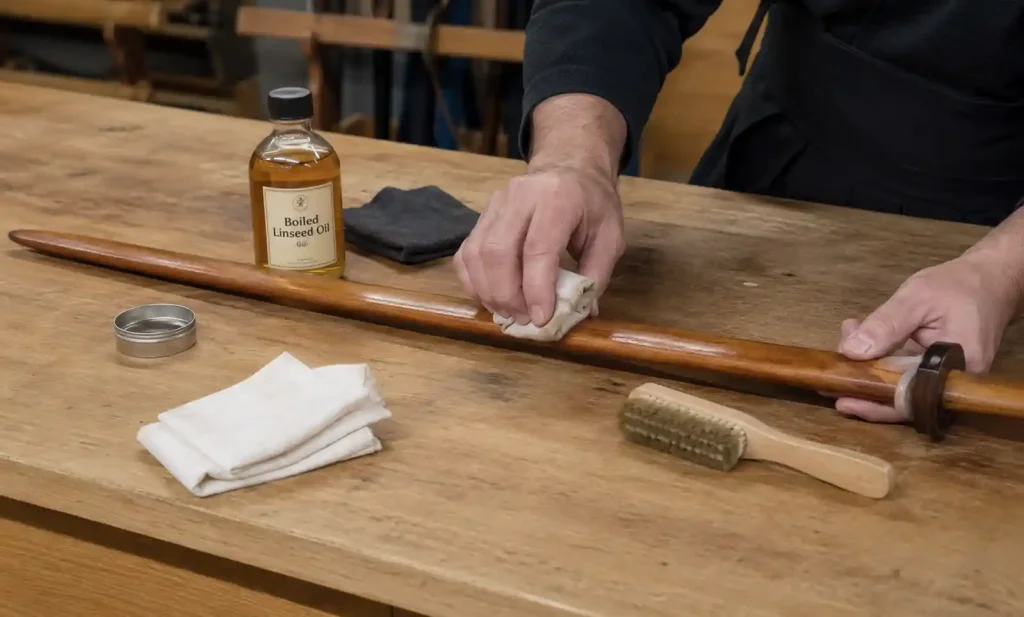
Apply natural wood oil (linseed, tung, or specialized sword oil) every 3-6 months to maintain moisture and prevent cracking. Use thin coats with lint-free cloths, following grain direction. Training weapons benefit from monthly oiling; display pieces need less frequent treatment. Our understanding moisture content guide explains seasonal wood behavior.
Storage Considerations
Store in climate-controlled environments maintaining 40-60% humidity. Avoid placement near heating vents, air conditioners, or windows with direct sunlight. Long-term storage requires horizontal positioning with full-length support. Wrap in breathable cotton cloth—never plastic. Inspect quarterly for damage or pest activity.
Buying Guide for Decorative Wooden Swords
Quality Assessment
Grain Orientation: Premium swords feature grain running parallel to blade length, maximizing strength. Examine grain patterns carefully—straight, consistent grain indicates quality.
Weight and Balance: Authentic replicas maintain historical weight distributions. Katana-style bokken should balance 10-15cm from the guard.
Construction Details: Look for seamless construction from single wood pieces. Check handle wrapping for tight, even spacing.
Sizing Considerations
| Sword Type | Length | Best For | Display Space Needed |
|---|---|---|---|
| Tanto | 30-40cm | Desktop displays | Minimal – shelves |
| Wakizashi | 55-65cm | Paired displays | 70cm+ wall width |
| Katana/Longsword | 100-120cm | Statement pieces | 130cm+ mounting space |
| Greatsword | 150-180cm | Large rooms | 200cm+ height clearance |
Measure your display area before purchasing. Account for mounting hardware adding 5-10cm beyond sword dimensions.
Customization Options
FineWoodArt offers custom wooden sword crafting with exact dimensions, premium wood species including ebony and rosewood, and personalized engravings. Bulk services accommodate martial arts schools and retailers. MOQ starts at 20 pieces for standard designs; 50 pieces for fully custom projects.
Frequently Asked Questions
How do I prevent wooden swords from cracking?
Maintain stable humidity (40-60%) and avoid temperature extremes. Apply natural wood oil every 3-6 months. Store horizontally with full support away from direct sunlight and heating vents.
What’s the best wood type for Japanese bokken?
White oak offers optimal durability and traditional appearance for serious practitioners. Red oak provides excellent affordable alternative. For display-only bokken, consider rosewood or ebony for aesthetics.
Can wooden swords be displayed outdoors?
Not recommended. Outdoor exposure to moisture and UV radiation rapidly degrades wooden weapons. If outdoor display is necessary, use covered areas protected from direct rain and sun.
How much weight can wall mounts support?
Quality wall mounts support 1-3kg safely when installed into wall studs. Typical bokken weigh 500-700g. Always anchor into studs or use heavy-duty hollow-wall anchors rated for 5kg+ per anchor point.
Conclusion
Decorative wooden swords bridge martial heritage and interior design, offering safe alternatives to steel weapons while maintaining authentic dimensions and natural beauty. Quality wooden swords showcase unique grain patterns and develop character through proper care. Choose wood species matching your purpose—durable oak for training, exotic rosewood for display. Select mounting displays complementing your space while ensuring proper support.
FineWoodArt crafts premium wooden swords & weapons using sustainable hardwoods and traditional techniques. Our artisans create custom designs from historical patterns or your specifications, with options for training durability or display aesthetics. We offer individual pieces and bulk orders for schools, collectors, and retailers.
Contact us today for custom wooden sword solutions, detailed catalogs, and consultation on selecting pieces matching your martial tradition or design vision.